
Physics Just Gave Four Separate Proofs The Universe Is A Simulation — The Last One Is The Most Disturbing | Tom Deepdive
This presentation explores the hypothesis that we live in a simulation, building the argument through four distinct signatures from different branches of physics. The speaker examines the Fermi paradox, fine-tuning of physical constants, quantum resolution limits, and the computational nature of mathematics.


- 01
Drake's equation predicts millions of detectable alien civilizations in our galaxy, yet we observe complete cosmic silence
- 02
Von Neumann machines could colonize the entire galaxy in 1-2 million years at one-tenth light speed according to Hart's calculations
- 03
The cosmological constant is off by 10^120 from quantum field theory predictions, yet perfectly calibrated for life
- 04
Reality has a resolution floor at the Planck length (10^-35 meters) where physics equations break down completely
- 05
Newton and Leibniz independently discovered identical calculus systems without communication, suggesting math is discovered not invented
- 06
Eugene Wigner called mathematics' effectiveness in describing reality 'a miracle, a gift that we neither understand nor deserve'
- 07
Four physics signatures point to simulation: cosmic silence, fine-tuning, resolution limits, and computational mathematical structure
- 08
The universe operates on predetermined mathematical rules that turn inputs into outputs like computational code
Get the latest ideas from Tom Bilyeu.
Plus the best new takeaways from other top podcasts — read in minutes, not hours.
By continuing, you agree to Podbrain's Terms and Privacy Policy.
These notes may contain occasional inaccuracies. Learn how Podbrain notes are made
This presentation explores the hypothesis that we live in a simulation, building the argument through four distinct signatures from different branches of physics. The speaker examines the Fermi paradox, fine-tuning of physical constants, quantum resolution limits, and the computational nature of mathematics.
Starting with Frank Drake's 1961 equation predicting millions of alien civilizations, the analysis moves through von Neumann's self-replicating machines, the precise calibration of physical constants, quantum mechanics' discrete limits, and the unreasonable effectiveness of mathematics in describing reality.
The argument culminates by connecting these seemingly unrelated phenomena into a coherent framework suggesting either we live in a simulation or that simulation provides the best metaphor for understanding our universe's computational structure.
The Fermi Paradox and Cosmic Silence
Drake's equation from 1961 uses seven variables to predict detectable civilizations: star formation rate, planetary fractions, life development probability, intelligence emergence, technology detection, and signal duration.
Even conservative calculations suggest millions of civilizations should exist in our galaxy, yet we observe complete silence across the cosmos.
Von Neumann proved self-replicating machines are possible in the 1940s, and Hart calculated in 1975 that such machines could colonize the entire galaxy in 1-2 million years at one-tenth light speed.
The Copernican principle suggests other civilizations would share humanity's exploratory impulses, requiring only one civilization to launch probes for galaxy-wide colonization.
Common explanations like the Great Filter, rare earth hypothesis, and zoo hypothesis all require statistically improbable coordination across billions of years.
Fine-Tuning of Physical Constants
The universe operates on roughly two dozen physical constants that must be set within microscopic precision windows for atoms, chemistry, and life to exist.
The strong nuclear force dial turned down even half a percent would prevent atoms heavier than hydrogen from forming.
The cosmological constant represents the most extreme fine-tuning problem: quantum field theory predicts empty space energy 10^120 times larger than observed reality.
Richard Feynman called the fine structure constant precision 'one of the greatest damn mysteries of physics, a magic number that comes to us with no understanding by man.'
A simulation designed to produce conscious actors would naturally require precisely calibrated physics, just as video games calibrate gravity for playable mechanics.
Quantum Resolution Limits and Digital Floors
Classical physics predicted infinitely divisible space, but reality has a floor at the Planck length of 10^-35 meters where equations stop working.
Time also has a minimum unit called Planck time at 10^-44 seconds, below which duration becomes meaningless.
Below these scales, quantum mechanics and general relativity give contradictory answers, suggesting space-time behaves like discrete blocks rather than smooth continuity.
Information systems necessarily have minimum resolutions and frame rates because infinite detail cannot be stored in finite systems.
A truly continuous universe wouldn't need smallest units, but computational systems require resolution limits for processing finite information.
Mathematics as Universal Source Code
Newton and Leibniz independently discovered identical calculus systems in the 1660s without communication, suggesting mathematics is discovered rather than invented.
Three mathematicians independently discovered non-Euclidean geometry in the early 1800s, documenting identical mathematical structures.
Bernhard Riemann developed curved space geometry in the 1850s as pure abstraction, which Einstein later found perfectly described gravity 60 years later.
Imaginary numbers, created as mathematical workarounds in the 1500s, became essential for quantum mechanics equations 300 years later.
Murray Gell-Mann used 1830s group theory to predict the omega minus particle in the 1960s, which was confirmed experimentally in 1964 with exact predicted properties.
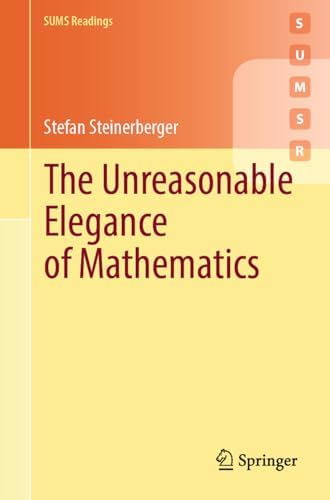
Eugene Wigner's 1960 paper The Unreasonable Effectiveness of Mathematics in the Natural Sciences called math's accuracy in describing reality 'a miracle, a gift that we neither understand nor deserve.'
The universe operates by turning inputs into outputs through mathematical rules, making it fundamentally computational rather than just descriptive.
These notes may contain occasional inaccuracies. Learn how Podbrain notes are made
More in Self-Development

Apple Just Filed the Lawsuit That Could Destroy OpenAI
Jul 13, 2026
Why Everyone Is Drowning In Debt (and how to get out) - Caleb Hammer - #1123
Jul 13, 2026Why This DSA Win Should Terrify Every American
Jul 11, 2026
Is AI The Next Stage Of Human Evolution? - Robert Wright - #1122
Jul 11, 2026
Iran Ceasefire is DEAD, Spencer Pratt Quits & the DSA Says the Quiet Part Out Loud| The Tom Bilyeu Show
Jul 10, 2026
.svg)