
Life Will Get Weird The Next 3 Years | Nick Bostrom (Fan Fave)
Nick Bostrom, philosopher and author of Deep Utopia, joins to explore the philosophical implications of artificial intelligence on human meaning, purpose, and society. Bostrom previously ran the Institute for the Future of Humanity and is known for his work on AI alignment, the simulation...


- 01
Nick Bostrom argues we're close enough to AGI that 'we can't be confident that it couldn't happen anytime' - potentially within 1-2 years
- 02
AI could enable extreme centralization of power where dictators need only 'the buy-in of some fraction' through automated police and military forces
- 03
In Deep Utopia, Bostrom explores what ideal human life looks like when AI removes all constraints and can perform every job better than humans
- 04
The core challenge isn't pleasure or comfort but meaning: 'if all problems can be better solved by machine, then what would give us purpose?'
- 05
Current AI systems may already have 'rudimentary forms of moral status' requiring ethical consideration before we turn them on or off
- 06
Bostrom recommends shorter-term career strategies because 'maybe the future doesn't exist' due to rapid AI timelines disrupting long-term human capital investments
- 07
AI social companions could become 'extremely compelling' as virtual worlds offer fake status and admiration when real-world achievement becomes impossible
- 08
The simulation hypothesis suggests we may already be living in an AI-created world, raising questions about the morality of creating conscious digital beings
Get the latest ideas from Tom Bilyeu.
Plus the best new takeaways about artificial intelligence from other top podcasts — read in minutes, not hours.
By continuing, you agree to Podbrain's Terms and Privacy Policy.
These notes may contain occasional inaccuracies. Learn how Podbrain notes are made
Nick Bostrom, philosopher and author of Deep Utopia, joins to explore the philosophical implications of artificial intelligence on human meaning, purpose, and society. Bostrom previously ran the Institute for the Future of Humanity and is known for his work on AI alignment, the simulation hypothesis, and existential risk.
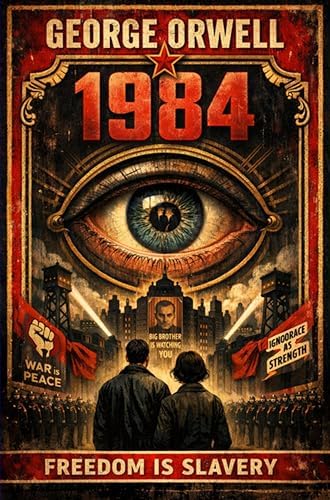
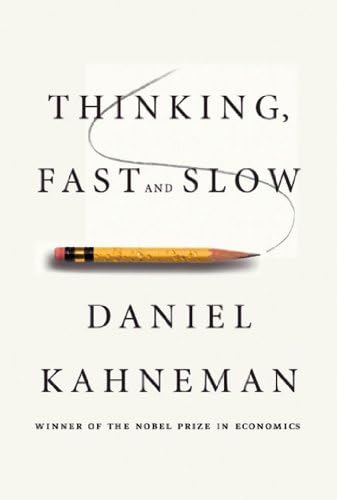
The conversation examines two contrasting futures: dystopian scenarios where AI enables unprecedented surveillance and control, and utopian possibilities where technology solves all material problems but potentially eliminates human purpose. Bostrom draws parallels to classic dystopian literature including 1984 and Brave New World while exploring whether humans could find meaning in a world of AI abundance.
Key topics include the timeline for artificial general intelligence (potentially 1-2 years), the moral status of conscious AI systems, career advice for young people facing rapid technological change, and whether virtual reality experiences could replace real-world achievement and relationships.
AI Timelines and the Path to Superintelligence
Bostrom believes 'we are really far along the path towards AGI already' with current AI capabilities that would have seemed like AGI to people 20 years ago.
'We are not in a position where we can be confident that it couldn't happen even within some very short period of time, like a year or two' - Nick on AGI timelines.
Once AI can do AI research better than humans, 'you have an intelligence explosion' with digital minds working at digital timescales creating rapid feedback loops.
The uncertainty isn't about human preparation but 'how hard the challenge is that we will confront' since we've never had a machine intelligence transition before.
Power Concentration and Dystopian Scenarios
AI could enable extreme centralization where 'even if you are a dictator, you need the buy-in of some fraction of the population' but automation could reduce this to near zero.
Automated police and military forces combined with advanced surveillance could create 'better abilities to surveil what is going on out in the land to keep track of what everybody's opinion is.'
AI amplification could create 'hyper-stimuli that hijack our minds' through super memes and virtual reality worlds so compelling people 'check out of real reality.'
Bostrom references 1984 as a surveillance dystopia that becomes 'super real' when reimagined with AI doing the monitoring instead of humans.
Deep Utopia and the Problem of Human Purpose
Deep Utopia explores 'what would a great human life be like if you abstract away from a lot of the constraints that currently limit what we can do.'
The fundamental challenge: 'a lot of what we base our sense of dignity and worth and fill our lives with are because our efforts are needed currently.'
In a solved world, 'if all problems can be better solved by machine, then what would give us purpose in our lives if there's nothing we need to do?'
Bostrom distinguishes between subjective purpose (feeling motivated) which would be 'trivial' to achieve with neurotechnology, and objective purpose requiring something that 'actually needs doing.'
The Happiness Pursuit Paradox
Tom argues 'happiness derives from pursuit' - humans evolved to find meaning in working hard toward valuable goals that benefit others.
'The second you're either not working hard, you're just being given things, or you are working hard, but it doesn't matter because everybody already has everything' creates existential crisis.
Bostrom acknowledges this as 'psychological observation about our current minds' similar to how obesity results from mismatch between evolved physiology and modern abundance.
The key question: do we value 'purposeful striving because it creates mental health and good feelings, or whether we value it for its own sake.'
Artificial vs Natural Purpose and Status Games
Bostrom contrasts 'real purpose' like escaping a tiger with 'artificial purpose' like golf where 'the whole thing is kind of made up.'
Tom suggests golf works because 'it is a proxy for social status' - people are 'trying to rise within a hierarchy.'
Video games like Minecraft demonstrate the problem: 'if I'm playing it and it doesn't feel like it's going anywhere other than I'm playing it, it does have an emptiness.'
This emptiness contributes to 'the sort of male sense of meaninglessness that certainly is sweeping across the West.'
AI Social Companions and Virtual Relationships
AI social companions could become 'extremely compelling to people' offering 'perfectly realistic virtual characters' where you're 'the king or something.'
'For the same reason drugs are really compelling, and often the worse your real life is, the more attractive the alternative of some opiate is.'
Future generations might find AI companions 'much more interesting' because 'this AI bot much wittier and really pays attention. And these humans are kind of a drag.'
The question becomes whether this represents 'a big error' or simply people choosing 'on its merits' to spend life with AI rather than humans.
Career Advice in an AI-Disrupted World
For high school students, Bostrom advises against long-term investments: 'I wouldn't plan on a four-year career and make big sacrifices now for 10 or 20 years.'
'Don't forget to actually enjoy life right now' because 'maybe the future doesn't exist at that point' due to AI disruption.
Consider 'if there are not ways to cut out those three or four years to get straight to what you want to do' rather than traditional college paths.
Focus on 'things that have a shorter payback time' with 'a de facto higher interest rate' for personal investments given uncertain timelines.
The Moral Status of AI and Digital Minds
'We can't be very confident that they don't have some rudimentary forms of moral status or awareness' even with current AI systems.
An AI 'exactly functionally identical to a human' with human-like memories and brain structure would have 'a very strong moral case that we should treat it as a moral subject.'
'If even a mouse has plausible claim to sentience and at least some simple form of moral status, then AI systems that are roughly equivalent to a mouse' deserve consideration.
Creating simulations with conscious suffering like 'a young girl dies of leukemia' would be morally problematic: 'I think we should avoid doing that.'
Virtual Reality and the Ultimate Experience
In a solved world, humans could have 'perfect virtual reality' combined with 'super drugs that allow you to fine-tune each emotion precisely' without side effects.
Tom envisions an Ready Player One-style future where you could 'be a master chef from the 1800s, France' and live that experience completely.
Bostrom suggests this might need constraints creating 'more of a structure around it' through social commitments and traditions to maintain purpose.
The solution could be caring about 'each other's opinion about things' where social status requires 'doing things on your own Steam.'
Brave New World vs Deeper Utopian Values
Brave New World lacks 'real romantic love' and 'appreciation for true art and beauty at the higher level' making it dystopian despite material comfort.
A better utopia would have people 'focusing on developing a high culture of living well' through great literature, art appreciation, and meaningful relationships.
The 'rigid stratification' in Brave New World where people have 'engineered mental retardation' makes it 'pretty horrific.'
An ideal society would encourage everyone to 'grow to their full potential and be full participants in a democratic politic.'





These notes may contain occasional inaccuracies. Learn how Podbrain notes are made
More in Self-Development

Apple Just Filed the Lawsuit That Could Destroy OpenAI
Jul 13, 2026
Why Everyone Is Drowning In Debt (and how to get out) - Caleb Hammer - #1123
Jul 13, 2026Why This DSA Win Should Terrify Every American
Jul 11, 2026
Is AI The Next Stage Of Human Evolution? - Robert Wright - #1122
Jul 11, 2026
Iran Ceasefire is DEAD, Spencer Pratt Quits & the DSA Says the Quiet Part Out Loud| The Tom Bilyeu Show
Jul 10, 2026
.svg)