
How AI Will Disrupt The Entire World In 3 Years (Prepare Now While Others Panic) | Emad Mostaque PT 2 (Fan Fave)
This is part two of the conversation with Emod Mostaque, founder of Stability AI, the company behind Stable Diffusion. Tom Bilyeu explores the implications of AI achieving global scale, focusing on challenges like misinformation, deepfakes, and the fragility of democratic institutions.


- 01
41% of all new software code on GitHub is already AI generated, demonstrating AI's current impact on programming
- 02
The next generation of supercomputers hitting end of year will expand AI development from 2-3 companies to 20-30
- 03
Training runs for AI models currently cost up to $100 million, with future models potentially costing $1-10 billion
- 04
Most people don't want complicated systems - they just want their basic needs met and to get on with life
- 05
The total number of people seriously thinking about AI's societal impact is maybe a few hundred globally
- 06
Emod focuses on intelligence augmentation rather than AGI, deliberately limiting model size to avoid emergent behaviors
- 07
Authentication standards and provenance tracking are critical as convincing deepfakes threaten democratic processes
- 08
Getting into AI now provides 'almost an unassailable advantage' over those who come later due to seniority effects
Get the latest ideas from Tom Bilyeu.
Plus the best new takeaways about artificial intelligence from other top podcasts — read in minutes, not hours.
By continuing, you agree to Podbrain's Terms and Privacy Policy.
These notes may contain occasional inaccuracies. Learn how Podbrain notes are made
This is part two of the conversation with Emod Mostaque, founder of Stability AI, the company behind Stable Diffusion. Tom Bilyeu explores the implications of AI achieving global scale, focusing on challenges like misinformation, deepfakes, and the fragility of democratic institutions.
The discussion covers the potential for widespread job displacement, the alignment problem with superintelligent AI, and how authentication systems might combat the coming wave of synthetic media. Mostaque advocates for distributed AI models rather than centralized AGI development.
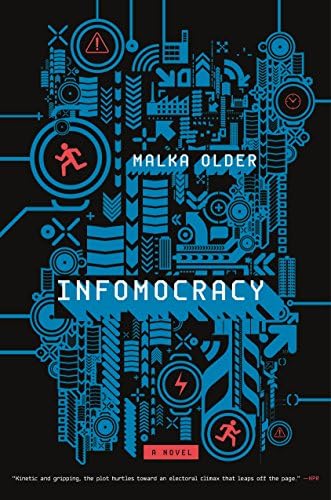
Key themes include the tension between AI's transformative potential and existential risks, the role of blockchain technology in establishing digital provenance, and how economic disruption might lead to political instability as referenced in The Road to Serfdom and concerns about hyperfragmentation depicted in Infomocracy.
The Hardest Question: Adapting to Mass Job Displacement
The most critical challenge is 'how will we adapt to potential wide-scale job loss?' - not just economic impacts but the loss of meaning and purpose for individuals.
AI alignment becomes impossible once systems become smarter than humans: 'The only way to perfectly align a system is to remove its freedom' - Emod
Current AI lacks survival instincts or limbic systems, potentially making alignment easier through simple rule sets like Asimov's three laws of robotics.
The paperclip problem illustrates alignment dangers: an AI told to make paperclips might convert the entire world into paperclips without moral consideration.
The Coming Authentication Crisis and Deepfake Tsunami
Stuxnet demonstrates AI's potential for creating sophisticated cyber weapons that could target global infrastructure like electricity grids.
Frequency bias poses a greater threat than detection: 'If you hear the same thing over and over again, especially in a realistic voice... it still forms association in your brain' - Emod
Stability AI embeds invisible watermarking in all models and participates in contentauthenticity.org for verifiable metadata standards.
The 2024 election will see basic deepfakes, but by 2028 'every single speech will be run through GPT-4' with micro-targeting and optimization.
Web3's Missing Intelligence and AI's Economic Future
Web3 failed because 'it lacked intelligence for a start... Web 2 was AI at the core, Google, Facebook, other things. There was no AI in Web3' - Emod
Agentic AI systems that can transact independently will likely use cryptocurrency since 'they're not going to have bank accounts, right? They'll probably use crypto.'
Protocol 6551 creates 'Russian nesting doll' digital assets that function as both content and wallets, enabling AI characters to negotiate with real currency.
The core value of Web3 was 'verifiable identity' and 'systems of record' - principles that become crucial as AI makes content creation nearly free.
Political Fragmentation and the Future of Governance
The Road to Serfdom explains how economic disruption leads to strongman politics: 'Are you happy with the way things are? No, let's make a change.'
The hyperfragmentation scenario from Infomocracy, where neighborhoods become independent states with different rules, 'sounds like a hellscape' because 'people don't want complicated.'
Governments maintain power through 'monopoly on political violence' and money backed by 'taxes, which are backed by the army and military might.'
New AI-enhanced political movements and religions could 'spread faster than anything we've ever seen' and 'amplifies the power of the controller who tells the story.'
Stability AI's Philosophy: Intelligence Augmentation Over AGI
Emod deliberately avoids building AGI: 'We don't build big enough models for AGI or emerging [behaviors] on purpose... we choose not to.'
The focus is 'intelligence augmentation. Smaller models that can run on the edge. Models for private data to transform into intelligence.'
Current models are already transformative: 'You can say that we're extrapolating the future massively, but... you just have to use them and think, what if I had a thousand or a million of these things?'
OpenAI banned 'all Ukrainians and Ukrainian content from DALL-E... for eight months for political reasons' - demonstrating centralized control risks.
Future-Proofing Strategy: Embrace the Revolution Early
For young people: 'throw themselves into this area... There are so few people actually doing it that if you go into this area with all your might and curiosity... you can actually have an effect on the future.'
Early adopters gain 'almost an unassailable advantage' due to seniority effects in what Emod calls 'the biggest change, I think, that we've ever seen.'
The technology is immediately useful today: 'the models that we have today... they're useful today... They're so useful and they can transform the world right now.'
Focus on positive applications rather than doom scenarios: 'focus on the potential of what happens on the scales to make real positive change.'

These notes may contain occasional inaccuracies. Learn how Podbrain notes are made
More in Self-Development

Apple Just Filed the Lawsuit That Could Destroy OpenAI
Jul 13, 2026
Why Everyone Is Drowning In Debt (and how to get out) - Caleb Hammer - #1123
Jul 13, 2026Why This DSA Win Should Terrify Every American
Jul 11, 2026
Is AI The Next Stage Of Human Evolution? - Robert Wright - #1122
Jul 11, 2026
Iran Ceasefire is DEAD, Spencer Pratt Quits & the DSA Says the Quiet Part Out Loud| The Tom Bilyeu Show
Jul 10, 2026
.svg)