
AGI Is Here — And Society Isn’t Ready | Peter Diamandis On Impact Theory
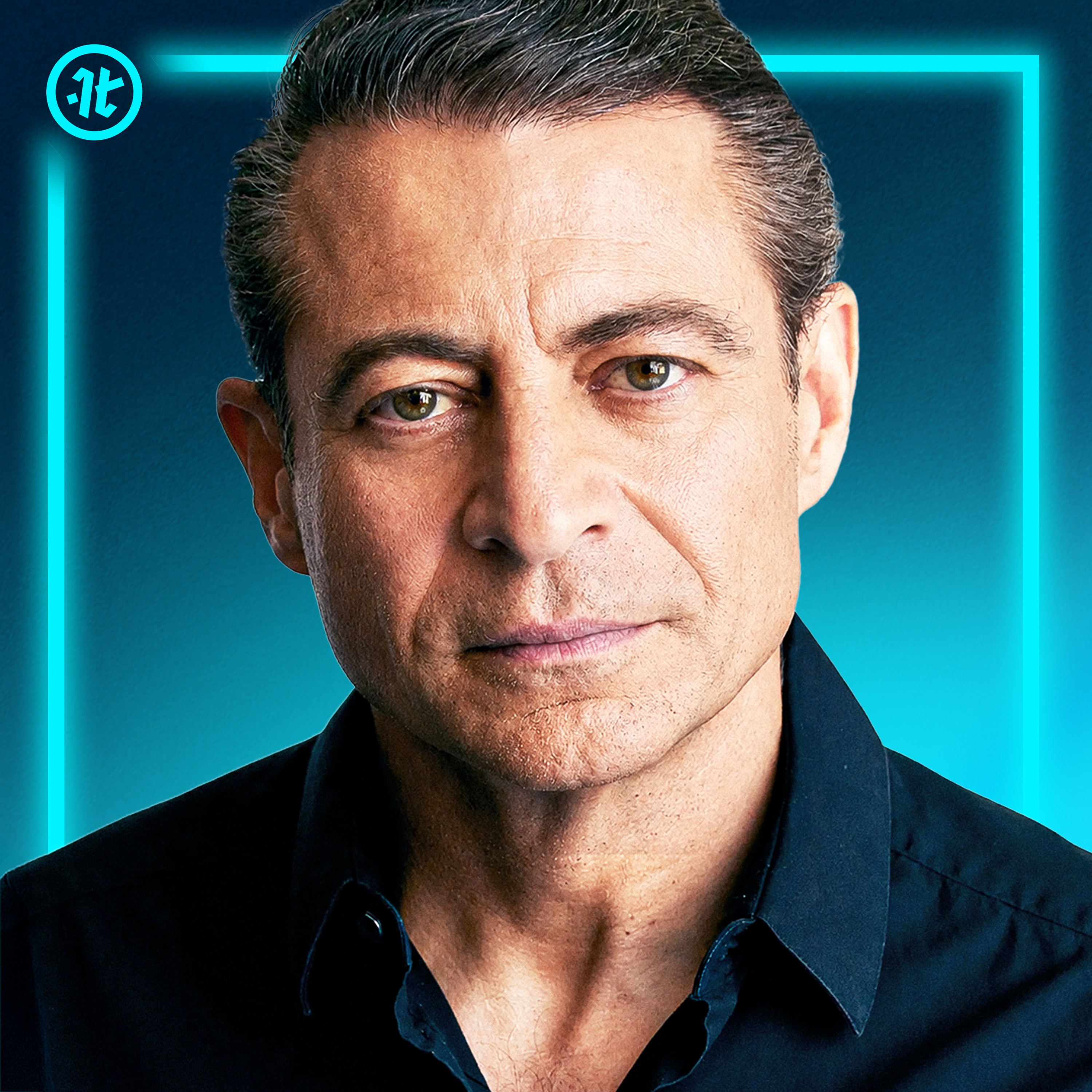
Peter Diamandis, founder of the XPRIZE Foundation and Singularity University, joins Tom Bilyeu to discuss his declaration that artificial general intelligence has arrived and its implications for society.


- 01
Peter Diamandis declares AGI has arrived, predicting companies will downsize to 20% of current workforce while solopreneur businesses have doubled in the last quarter
- 02
Demis Hassabis believes we will cure all diseases within a decade, while Dario Amodei predicts doubling human lifespan within 10 years
- 03
Elon Musk forecasts triple-digit GDP growth in 5 years and believes Optimus robots will outperform human surgeons within 3 years
- 04
Universal Basic Income at $3,000 monthly is predicted within 2 years as government response to AI displacement and social unrest
- 05
Solar and wind energy now produce more electricity globally than natural gas, crossing a critical abundance threshold
- 06
AI models are solving previously unsolvable mathematical problems through self-play and novel exploration beyond training data
- 07
The barrier to starting companies has collapsed from hundreds of thousands to near-zero using AI for research, development, and marketing
- 08
Young men aged 22-28 face growing unemployment rates, creating potential for testosterone-driven social unrest and extremism
Get the latest ideas from Tom Bilyeu.
Plus the best new takeaways about artificial intelligence from other top podcasts — read in minutes, not hours.
By continuing, you agree to Podbrain's Terms and Privacy Policy.
These notes may contain occasional inaccuracies. Learn how Podbrain notes are made
Peter Diamandis, founder of the XPRIZE Foundation and Singularity University, joins Tom Bilyeu to discuss his declaration that artificial general intelligence has arrived and its implications for society.
The conversation explores the collapse of traditional career paths, the emergence of AI-powered entrepreneurship, and predictions from leading technologists like Demis Hassabis and Elon Musk about radical breakthroughs in healthcare, robotics, and economic growth.
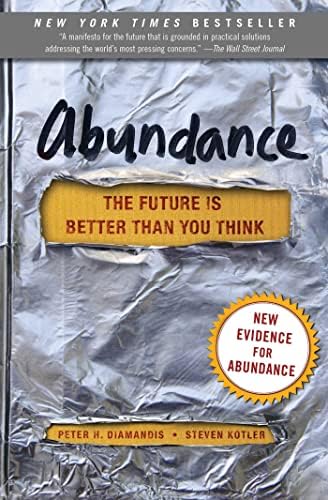
Diamandis draws from his books Abundance The Future Is Better Than You Think and We Are as Gods to argue that while AI will cause significant disruption, it represents humanity's greatest opportunity to solve existential challenges from disease to climate change.
The discussion addresses growing social tensions, potential government responses including universal basic income, and the philosophical implications of technological abundance in a world where Tom references Determined by Robert Sapolsky to question human agency in adapting to unprecedented change.
The Death of Traditional Career Paths and Rise of AI Entrepreneurship
The social contract of 'do well in high school, get into a good college, get a degree, get a job' is fundamentally broken due to AI advancement
Companies will downsize from 100% employment to 20% of their workforce using AI, while solopreneur businesses have doubled in the last quarter
The barrier to starting a company has collapsed from hundreds of thousands of dollars to near-zero, as AI can handle research, engineering, marketing, and website creation through simple descriptions
A young Moroccan entrepreneur exemplified this shift, using ChatGPT to identify e-bike touring as a viable business model based on his skills and location, now earning more than his peers
Breakthrough Predictions from AI Leaders
Demis Hassabis of Google DeepMind believes we will cure all diseases within a decade through AI-accelerated drug discovery and biological understanding
Dario Amodei predicted at Davos that AI will double human lifespan within 10 years, focusing on healthspan rather than just longevity
Ray Kurzweil predicts longevity escape velocity by 2033, where science extends life by more than a year for every year lived
Elon Musk forecasts triple-digit GDP growth within 5 years and believes Optimus robots will outperform human surgeons within 3 years
AI models are solving previously unsolvable Erdős mathematical problems through novel exploration beyond their training data, suggesting breakthrough capabilities in physics, chemistry, and biology will follow
The Economics of AI Abundance and Universal High Income
Solar and wind energy now produce more electricity globally than natural gas, demonstrating technology's ability to make scarce resources abundant as described in Abundance The Future Is Better Than You Think
Autonomous vehicles from multiple companies will drive transportation costs down by 5x through competitive pricing, while humanoid robots at $20,000 purchase or $300 monthly lease will reduce construction labor costs
Elon Musk envisions Universal High Income rather than UBI, where purchasing power increases dramatically even if wages don't, as AI and robotics make goods and services nearly free
Healthcare costs will plummet as AI diagnostics outperform human doctors and robotic surgery becomes available at the cost of electricity and equipment maintenance
Social Unrest and Government Response Predictions
Unemployment among ages 22-28 is growing due to hiring freezes rather than layoffs, creating a generation unable to afford cars, houses, or marriage
The FBI is tracking increasing extremism and terrorist threats against AI infrastructure, including potential attacks on data centers
Government will likely implement $3,000 monthly payments within 2 years as a response to social unrest, similar to COVID relief but at a higher level
Bernie Sanders proposed giving 50% public ownership of AI companies, which Diamandis considers overreach but acknowledges some redistribution mechanism may be necessary, possibly 5-10%
The Philosophy of Human Agency in an AI World
We Are as Gods examines how humans have become godlike in abilities compared to previous generations, with omniscience, omnipotence, and omnipresence through technology
Tom Bilyeu references Determined by Robert Sapolsky to argue humans lack free will, being deterministic creatures who nonetheless can be changed by ideas and adapt over time
The critical choice is between being a consumer who passively receives AI benefits or a creator who uses AI tools to build something valuable - essentially choosing between WALL-E and Star Trek futures
Purpose-driven and curiosity mindsets are essential for navigating the next decade, with the key being to view AI as happening 'for you' rather than 'to you' to maintain agency


These notes may contain occasional inaccuracies. Learn how Podbrain notes are made
More in Self-Development

Apple Just Filed the Lawsuit That Could Destroy OpenAI
Jul 13, 2026
Why Everyone Is Drowning In Debt (and how to get out) - Caleb Hammer - #1123
Jul 13, 2026Why This DSA Win Should Terrify Every American
Jul 11, 2026
Is AI The Next Stage Of Human Evolution? - Robert Wright - #1122
Jul 11, 2026
Iran Ceasefire is DEAD, Spencer Pratt Quits & the DSA Says the Quiet Part Out Loud| The Tom Bilyeu Show
Jul 10, 2026
.svg)