
BIll Gurley
Bill Gurley, former Benchmark Capital partner and Wall Street analyst, discusses his transition from public markets to venture capital, his decision to step back from active investing, and his new book Running Down a Dream. The conversation explores VC decision-making, regulatory...

Episode

- 01
"I'm more uncomfortable in bubbles than dark days. In dark days, I'm very calm" - Bill on navigating market cycles as a former Wall Street analyst
- 02
The biggest VC error was missing Google's Series A due to pattern recognition red flags like two PhD co-CEOs wanting equal control
- 03
Benchmark's equal partnership structure creates healthy peer pressure where "if you're not in it and going and running" you naturally step aside
- 04
"What could go right?" - Bruce's phrase that reframes VC decision-making around asymmetric upside rather than downside protection
- 05
90% of adults fall short on essential vitamins despite modern nutrition knowledge, highlighting systematic gaps in health optimization
- 06
Six in ten people surveyed by Wharton said they would choose a different career if they could go back in life
- 07
"Life is a use it or lose it proposition" - Kevin Harvey's phrase about seizing opportunities before they disappear
- 08
OpenAI's burn rate is five times larger than Uber's peak spending, representing unprecedented venture capital scale
Get the latest ideas from Tetragrammaton with Rick Rubin.
Plus the best new takeaways from other top podcasts — read in minutes, not hours.
By continuing, you agree to podbrain's Terms and Privacy Policy.
These notes may contain occasional inaccuracies. Learn how podbrain notes are made
Bill Gurley, former Benchmark Capital partner and Wall Street analyst, discusses his transition from public markets to venture capital, his decision to step back from active investing, and his new book Running Down a Dream. The conversation explores VC decision-making, regulatory capture, and systematic approaches to career success.
Drawing inspiration from Born Standing Up by Steve Martin, Gurley reflects on knowing when to step away at peak performance. His book examines the methodical approaches of successful people across diverse fields, from Bobby Knight to Bob Dylan to restaurateur Danny Meyer, offering tools for pursuing meaningful work.
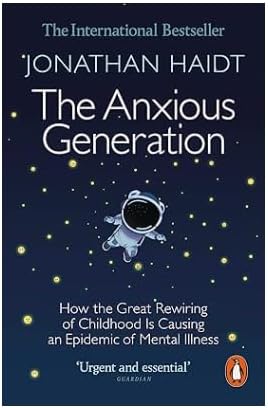
The discussion covers venture capital dynamics, from missing Google's early rounds to the current AI bubble, while exploring themes from The Anxious Generation, Atomic Habits, and The Power of Regret about career transitions and following one's fascination rather than conventional passion.
From Wall Street Analysis to Silicon Valley Investing
Gurley's Wall Street background created a conservative investing approach that made him "more uncomfortable in bubbles than dark days" where traditional analysis breaks down.
Sell-side analysts theoretically use "math and models and understanding of the business" to determine valuations, but 80-90% now just regurgitate company-provided predictions.
Elliot Spitzer's rules separating analysts from bankers reduced investment in independent analysis, contributing to the decline in analytical rigor.
The Biggest Miss: Google's Series A Red Flags
Benchmark failed to invest in Google's Series A despite the search market collapse providing context - "Excite had gone bankrupt, Yahoo's stock had fallen from 82 to 10."
Pattern recognition created false negatives: "Both founders who were PhD students wanted to be co-CEO. That's usually the pattern recognition of a red flag."
Mike Moritz and John Doerr successfully "found their way out of the box that we got trapped in" and completed the investment.
Stepping Away from Benchmark: The Steve Martin Moment
Born Standing Up provided the framework for Gurley's departure decision - Martin quit performing when he noticed empty upper decks in Vegas despite years of expanding venues.
Benchmark's equal partnership creates "healthy peer pressure that says if you're not in it and going and running" you naturally step aside rather than hanging on too long.
"I think I've gotten all I need to get out of it. And there's other things to do in life" - recognizing when peak performance requires energy you no longer have.
Venture Capital Decision-Making and Group Dynamics
Benchmark used simple 1-10 voting with "no fives" and majority wins, creating distributed power across the equal partnership structure.
Twitter was an obvious unanimous decision: "I don't even know if we voted. We just started talking about how we were going to try and win the deal."
"What could go right?" - Bruce's reframing question that addresses the asymmetric nature of venture returns where missing a winner is worse than backing a loser.
Investment Waves vs. Unique Opportunities
"The majority of venture investments are in waves" because VCs use pattern recognition and platform elements enable multiple similar companies.
Social media wave was enabled by "everyone has a computer in your pocket all the time" creating the framework for Discord, Pinterest, Reddit beyond the initial grouping.
Founders often force unique ideas into trending waves because "the world goes that direction" and corporate customers demand strategies around hot topics like AI.
The Current AI Bubble and Unprecedented Scale
"Almost certainly" there's an AI bubble with "companies doing transactions that I would say are of questionable accounting" while everyone seems comfortable with it.
OpenAI's burn rate is "five times" larger than Uber's peak spending, representing "not your father's venture capital" in terms of scale.
The belief in "increasing returns, power laws, and waves" has become universal, causing everyone to "invest way ahead of the curve" with unprecedented capital deployment.
Running Down a Dream: Systematic Approaches to Success
Running Down a Dream emerged from studying Bobby Knight, Bob Dylan, and Danny Meyer - three different fields with similar "programmatic, intentional approaches" to success.
Atomic Habits author James Clear discovered Gurley's presentation on YouTube and promoted it, providing validation before Brian Koppelman's directive to "make this a book."
The book alternates profiles with principles because "if it were just a list of principles, it would read like a textbook" rather than inspiring action.
Wharton survey revealed "six in ten people say yes" when asked if they would choose a different career, supporting the book's thesis about career regret.
Fascination vs. Passion and Learning from Legends
Seinfeld's concept of "fascination" differs from overused "passion" - it requires "the desire to learn all the time" without energy cost because "it doesn't cost you any energy to go do it."
Grit author Angela Duckworth reflected that teaching children only perseverance without genuine interest leads to exhaustion: "if what they're doing isn't something they love, they get to a point of exhaustion."
Studying industry legends creates differentiation - Magnus Carlsen won a chess trivia contest, demonstrating how "knowing the history and the bedrock" enables innovation on top.
Regulatory Capture and Policy Reform
Nobel laureate Stigler's regulatory capture theory shows "regulation most often ends up protecting the incumbent" rather than constraining them as the public believes.
"Once your senator or congressman gets on a committee, they can go raise money from every bank around the country" - a system that "just doesn't seem appropriate."
"Our most broken industries are our most regulated: finance, healthcare, telecom" - evidence supporting the regulatory capture thesis.
The Power of Regret and Permission to Pursue Dreams
The Power of Regret identifies "boldness regrets" as the most powerful - "the thing you didn't do that you always thought you wanted to do" haunts people most.
Greenlights story of McConaughey's father saying "don't half-ass it" when he switched to film provided "blessing and consent, approval and validation, honor, freedom, responsibility, and rocket fuel."
The book's "altruistic goal is to disinhibit as many people as possible to let them think they can go do these things" rather than live with career regret.






These notes may contain occasional inaccuracies. Learn how podbrain notes are made
More in Philosophy
You Need An Ethical Will | Lt. Gen. Mark Hertling
Jun 21, 2026
Hollywood, The CIA & UFOs: The History Beyond Spielberg
Jun 20, 2026
What Our Fathers Teach Us, For Better Or Worse | Tom Junod
Jun 20, 2026
How To Love Your Country Without Lying About It | Ty Seidule
Jun 19, 2026
Recognize These Signs of Weakness | 7 Daily Habits That Will Change Your Life
Jun 15, 2026

.svg)