
A Stoic's Guide To Looksmaxxing
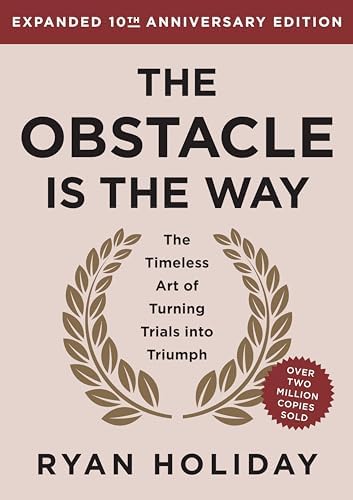
Ryan Holiday, author of Discipline is Destiny and The Obstacle Is the Way, addresses the "looksmaxing" trend dominating social media and its impact on young men obsessed with physical appearance and social validation.

Episode


- 01
Epictetus taught that beauty comes from choices, not genetics: "If your choices are beautiful, then you will be beautiful"
- 02
Theodore Roosevelt's father told him "you have the mind but you haven't got the body," leading to his transformation through disciplined training
- 03
Marcus Aurelius warned against prioritizing physical training over character: "Why work so hard to be a better wrestler instead of a better citizen?"
- 04
Epictetus said don't show me your weights or exercises, "show me your shoulders" - meaning what weight can they carry in life
- 05
The Latin principle "Mens sano in corpore sano" - strong mind in strong body - guided ancient Stoic philosophers who were also warriors
- 06
Marcus Aurelius observed the paradox: "We love ourselves more than other people, but care about other people's opinions more than our own"
- 07
Seneca advocated exercise should be "short and simple" and "tire the body rapidly" without consuming the main chunk of our day
- 08
Agrippinus said society is like a garment where most threads are white, but "I preferred to be the red thread" that stands out
Get the latest ideas from The Daily Stoic.
Plus the best new takeaways about stoicism from other top podcasts — read in minutes, not hours.
By continuing, you agree to podbrain's Terms and Privacy Policy.
These notes may contain occasional inaccuracies. Learn how podbrain notes are made
Ryan Holiday, author of Discipline is Destiny and The Obstacle Is the Way, addresses the "looksmaxing" trend dominating social media and its impact on young men obsessed with physical appearance and social validation.
Drawing from ancient Stoic philosophers including Marcus Aurelius, Epictetus, and Seneca, Holiday explores how the Stoics approached physical fitness, beauty, and self-improvement through the lens of character and function rather than vanity.
The discussion covers Theodore Roosevelt's transformation from sickly child to robust leader, the proper role of physical training in a meaningful life, and why seeking external validation compromises integrity according to Stoic principles.
Beauty Through Choices, Not Genetics
Epictetus taught that "beauty wasn't in our genetics. It was in our choices" and "if your choices are beautiful, then you will be beautiful," emphasizing that true attractiveness comes from the process and priorities behind physical appearance.
A person might be physically stunning but "if those looks are a result of vanity and self-obsession and endless amounts of time primping in the mirror, she'll actually turn out to be an unattractive person when you get to know her."
Holiday advocates making "attractive choices" daily: "Pick up a book instead of a TV remote. Pick up whole food instead of fast food. Journal instead of wasting time on social media."
Roosevelt's Transformation and the Strenuous Life
As detailed in Discipline is Destiny and The Obstacle Is the Way, Theodore Roosevelt was born "sickly and weak" and struggled with health problems for his first 12 years.
Roosevelt's father delivered a pivotal message: "Your mind isn't enough. You've got the mind but you haven't got the body," to which young Theodore responded "All right, Dad, I will make my body."
Roosevelt's physical transformation complemented rather than competed with his intellectual pursuits - "this was not at all at odds with his love of learning, with his love of reading, with his love of birdwatching and science and literature."
Stoic Philosophers as Warriors and Athletes
Ancient philosophers embodied the Latin principle "Mens sano in corpore sano" - strong mind in strong body, with Marcus Aurelius loving "boxing and wrestling and running and sports."
Socrates was "not just a philosopher, but also a soldier who's renowned for his bravery and discipline, also for his ability to endure cold."
Epictetus, despite being "crippled due to torture he undergoes as a slave," maintained that physical limitations were "only an impediment to part of my body, not to the mind" and believed in keeping the body strong through "good health and training."
Function Over Aesthetics in Physical Training
For Stoics, "fitness and strength was about function" and "the purpose was functionality, not aesthetics" - they wanted to "preserve their health" and maintain "fighting weight" for practical reasons.
Marcus Aurelius questioned misplaced priorities: "Why are you working so hard to be a better wrestler instead of being a better citizen, a better person, a better resource in tight places?"
Epictetus made the crucial distinction: "Don't show me the weights, don't show me your exercises. Show me your shoulders" - meaning demonstrate what weight they can carry in real life, not the gym.
The Danger of External Validation
Holiday recalls reading Meditations at age 20 and being struck by Marcus Aurelius' insight: "We all love ourselves more than other people, but for some reason we care about other people's opinions more than our own."
Epictetus warned that "whenever you're tempted to look outside yourself for approval, you have compromised your integrity" and advised "if you need a witness, be your own."
The looksmaxing trend is "predicated on impressing other people" through "getting likes on social media" and "supposedly attracting the attention of women or men," which contradicts Stoic principles of self-reliance.
Ego Versus Authentic Confidence
Drawing from Ego Is the Enemy, Holiday explains that "egotistical people are masquerading as confident people, and they are desperate for the validation and attention of other people."
True confidence comes from integrity and wholeness: "Confident people, people of integrity, which is another way of saying wholeness, people who are whole, don't need approval from others."
Holiday has Ego Is the Enemy tattooed as a reminder to ask: "Am I doing this out of ego or am I doing this because it makes a difference? Because it matters? Because it makes me better?"
Embracing Uniqueness Over Conformity
Holiday observes that looksmaxing followers "all have the same haircut. They all want the same body. They all post the same videos" - "trying to stand out by looking exactly like all of their peers."
Stoic philosopher Agrippinus used the metaphor that "society is all this giant garment" where "most of the threads are white, but he preferred to be the red thread" that made the garment beautiful.
"We are all born one in a trillion, one in a trillion trillion. Nothing like you has ever existed before. And then we throw that away by aping the style and the approaches of other people."
Mortality and the Proper Use of Time
Seneca taught that "death isn't then, death is now" and "the time that passes belongs to death," emphasizing that we are "dying every minute and every day."
Holiday questions the longevity obsession: "What are you guys planning to do with all this extra time? Gonna spend more of it on your phone? You're going to spend more of it looks maxing?"
"It is funny that people who use their time the worst seem to be most intent on getting more and more of it," while Seneca noted some elderly people have nothing to show "for their age but a number of years."



These notes may contain occasional inaccuracies. Learn how podbrain notes are made
More in Philosophy

Hollywood, The CIA & UFOs: The History Beyond Spielberg
Jun 20, 2026
What Our Fathers Teach Us, For Better Or Worse | Tom Junod
Jun 20, 2026
How To Love Your Country Without Lying About It | Ty Seidule
Jun 19, 2026Recognize These Signs of Weakness | 7 Daily Habits That Will Change Your Life
Jun 15, 2026
A Stoic Masterclass for Ambitious People | Codie Sanchez
Jun 13, 2026
.svg)