
Bill Gurley - If You Hate Your Job, This is How to Start Over
Bill Gurley, a veteran venture capitalist with 25 years of experience and four years as a Wall Street analyst, discusses his transition from investing to writing about career regret and passion-driven work. His ideas originated from reading biographies and noticing patterns across different fields, eventually...

Episode


- 01
Seven out of 10 people would choose a different career if they could start over, according to survey research
- 02
The biggest regrets people have are 'boldness regrets' - what they didn't try rather than mistakes they made
- 03
Angela Duckworth later wished she had positioned Grit as 50-50 passion and perseverance, not just grinding
- 04
Jeff Bezos used a 'regret minimization framework' - imagining himself at 80 to make career decisions
- 05
The best test for finding your passion: does the learning feel free, like something you'd choose over TV?
- 06
Life is a 'use it or lose it proposition' - you can get locked into jobs by overspending against your salary
- 07
Mr. Beast's group achieved '40,000 hours' of learning by sharing knowledge while cracking YouTube's algorithm
- 08
People who switch industries tend to be the biggest innovators, bringing different mental models to new fields
Get the latest ideas from Chris Williamson.
Plus the best new takeaways from other top podcasts — read in minutes, not hours.
By continuing, you agree to podbrain's Terms and Privacy Policy.
These notes may contain occasional inaccuracies. Learn how podbrain notes are made
Bill Gurley, a veteran venture capitalist with 25 years of experience and four years as a Wall Street analyst, discusses his transition from investing to writing about career regret and passion-driven work. His ideas originated from reading biographies and noticing patterns across different fields, eventually developing into a presentation that James Clear featured on his website.
The conversation explores research from The Power of Regret by Daniel Pink showing that boldness regrets - things we didn't try - become our biggest sources of rumination. Gurley argues that our education system has become a 'conveyor belt' pushing students toward safe jobs while teaching them to grind without passion, referencing insights from Grit by Angela Duckworth and The Anxious Generation by Jonathan Haidt.
Drawing from books like Range by David Epstein and Designing Your Life by Dave Evans, the discussion covers practical frameworks for career transitions, the importance of peer networks, and how to identify when it's time to pivot. Gurley emphasizes that people who switch industries often become the biggest innovators by bringing fresh perspectives to established fields.
The Epidemic of Career Regret and Boldness Paralysis
Survey research revealed that 7 out of 10 people would choose a different career if they could start over, with Wharton People Analytics confirming similar results at 6 out of 10.
The Power of Regret by Daniel Pink shows that the biggest regrets are 'boldness regrets' - regrets of inaction that worsen with age, as 'humans are great at forgiving themselves for mistakes but ruminate about what they didn't try.'
The Zeigarnik effect explains why open loops torture the human mind: 'while tables were still open, servers could recall orders perfectly, but as soon as they closed, nothing at all' - the same mechanism that makes us obsess over untried paths.
Jeff Bezos used a 'regret minimization framework' when leaving D.E. Shaw for Amazon, imagining himself at 80 and asking what his future self would advise - a principle echoing The 7 Habits of Highly Effective People concept of 'begin with the end in mind.'
The Conveyor Belt Problem: When Grit Becomes Grinding
Angela Duckworth later wished she had positioned Grit as '50-50 passion and perseverance' because 'we taught a whole generation of high-performer children how to grind' without sufficient emphasis on passion.
The Anxious Generation research by Jonathan Haidt reveals a paradox: kids are forced into structural adulthood (choosing majors at 17) while remaining socially immature (getting licenses later, moving out later).
Generations by Jean Twenge documents this 'extended adolescence' where young people face pressure to make 30-year career decisions while lacking traditional markers of adult independence.
The sunk cost fallacy traps graduates who feel 'if I move away from this degree, did I just waste all that time?' despite studies showing 40% work outside their major within five years.
Finding Your Passion: The Learning Litmus Test
The best test for true passion: 'does the learning feel free? Would you do it instead of watching a TV show?' - when continuous learning becomes enjoyment rather than obligation.
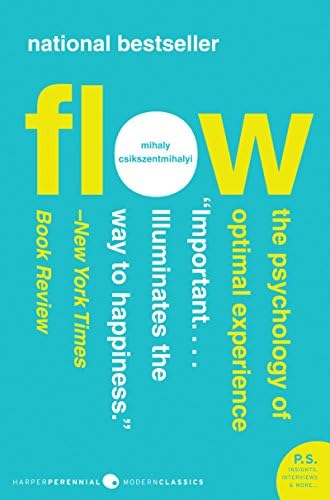
Flow states occur when people are 'truly tilting against their passion' - they 'never even think about it as work' and often don't remember the experience of doing it.
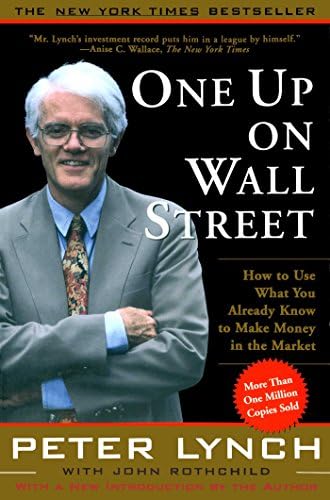
Pay attention to what occupies your spare time: 'when I was an engineer, I was going home and trading stocks, reading One Up On Wall Street - that's what I was doing in my spare time, so it was calling me.'
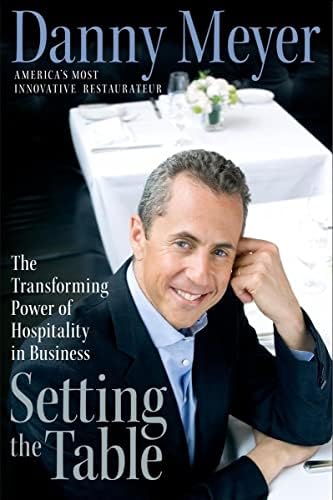
Danny Meyer exemplifies passionate continuous learning, as described in Setting the Table: 'last time I talked to him, he'd taken all his chefs on a tour of Europe, jotting notes, learning - constant learning.'
Strategic Career Pivoting: Tools and Frameworks
Designing Your Life methodology suggests creating 'three to five scenarios and battle card them' - using AI to build 20-page analyses of different career paths before making decisions.
Shark Proof by Harvey Mackay recommends keeping a 'dream job file' where you collect notes, contacts, and insights about your ideal career path before making the leap.
The 30-year forward test: 'do you see yourself doing this 30 years from now? If the answer is no, you should get busy' - start building the plan without necessarily jumping immediately.
Financial flexibility is crucial: 'life is a use it or lose it proposition' - overspending against your salary can lock you into jobs you want to leave, preventing career pivots.
The Power of Cross-Industry Innovation
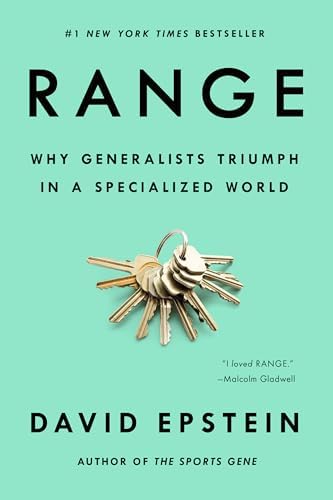
Range by David Epstein argues that 'people who switch industries or careers tend to be the biggest innovators' because they 'come into something with a different mental model than people who came up through the field.'
Far analogies create breakthrough innovations: when people 'enter through the side door' they see patterns others miss, like Jobs crediting his calligraphy class for the Mac's typography.
Mr. Beast's group achieved '40,000 hours' of learning by sharing knowledge while cracking YouTube's algorithm, referencing Outliers but multiplying the effect through collaboration.
Cross-industry learning requires discernment: 'it's hard to know at the time when you're consuming it' whether insights from distant fields will prove valuable to your work.
Overcoming Transition Paralysis with Emotional Leverage
Unleash the Giant Within by Tony Robbins provides a framework for 'overloading emotional pain and pleasure' - imagining what inaction will cost in the past, present, and future to motivate change.
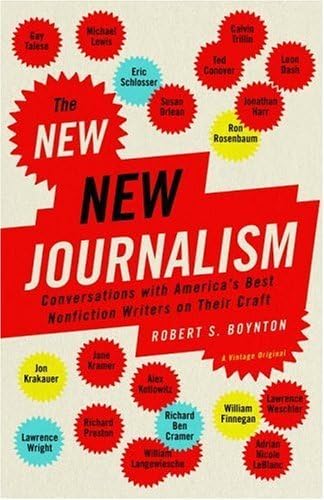
The New Journalism and The New New Journalism demonstrate how narrative storytelling creates more memorable and motivating content than pure frameworks or statistics.
The regret minimization framework works because it 'front-loads fear' - bringing future regret into present decision-making rather than relying purely on logical analysis.
Advice absorption follows existing patterns: 'guidance doesn't sculpt us into something new, it exaggerates who we were already' - the grinders over-index on perseverance while missing passion.









These notes may contain occasional inaccuracies. Learn how podbrain notes are made
More in Self-Development

Can the Middle Class Be Saved? Political Division, Economic Doom & The Leadership Problem | Andrew Bustamante Pt. 2
Jun 20, 2026
The Career Trap That Makes Women Miserable - Suzanne Venker - #1113
Jun 20, 2026
How Immigration and War Test the Strength of Values and National Identity
Jun 19, 2026
7 Strategies for Becoming a Better Father | FRIDAY FIELD NOTES
Jun 19, 2026
ELECTROMAGNETISM Is The SECRET To Health: Biofield Tuning Explained | Eileen McKusick
Jun 15, 2026


.svg)