
What Our Fathers Teach Us, For Better Or Worse | Tom Junod
This episode of the Daily Stoic podcast features two distinct but thematically linked conversations hosted by Ryan Holiday. The first is a solo reflection on Marcus Aurelius and his adopted father Antoninus Pius, drawing heavily from ref:ref-book-Meditations:...

Episode

- 01
Antoninus intervened when a Stoic philosopher shamed young Marcus for crying, saying 'Let the boy be human for once. His empire doesn't take away natural feeling.'
- 02
Marcus Aurelius credits Antoninus as his model in Meditations Book 6.30, listing traits including gentleness, modesty, decisiveness, and tolerance of criticism.
- 03
Tom Junod's memoir In the Days of My Youth, I Was Told What It Means to Be a Man explores loving a father who was charismatic, cruel, and compulsively unfaithful.
- 04
Junod made two contradictory vows: 'I am never going to be like him' and 'I want nothing more than to be like him' — the north and south that war with each other.
- 05
Hadrian chose Antoninus after watching him help his elderly father-in-law up stairs, seeing compassion that echoed the founding Roman myth of Aeneas carrying his father from Troy.
- 06
Seneca's principle — 'No one is fit to rule who is not first master of themselves' — is the lesson Marcus Aurelius most visibly absorbed from Antoninus's self-governance.
- 07
Writing In the Days of My Youth led Junod to discover a half-sister, calling her existence 'a great gift of my life' and proof he did the right thing by telling the story.
- 08
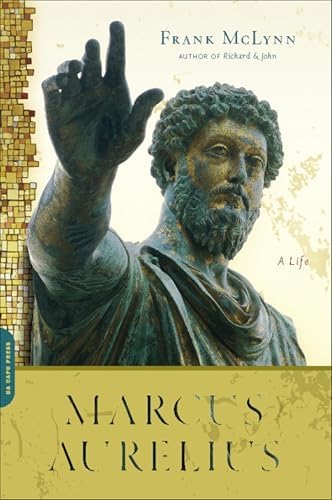
Frank McLynn's biography Marcus Aurelius A Life describes Antoninus's liberal educational philosophy: leaders should be broadly versed in humanities and politics, not just masters of one discipline.
Get the latest ideas from The Daily Stoic.
Plus the best new takeaways about stoicism from other top podcasts — read in minutes, not hours.
By continuing, you agree to podbrain's Terms and Privacy Policy.
These notes may contain occasional inaccuracies. Learn how podbrain notes are made
This episode of the Daily Stoic podcast features two distinct but thematically linked conversations hosted by Ryan Holiday. The first is a solo reflection on Marcus Aurelius and his adopted father Antoninus Pius, drawing heavily from Meditations and Frank McLynn's biography Marcus Aurelius A Life. The second is an interview with journalist Tom Junod, author of the memoir In the Days of My Youth, I Was Told What It Means to Be a Man, about his charismatic, morally compromised father.
The episode was released as a Father's Day special, exploring what it means to be shaped — for better or worse — by a father figure. Ryan traces the virtues Marcus Aurelius attributed to Antoninus across compassion, humility, decisiveness, self-control, and integrity. The conversation with Junod then inverts the theme: what happens when the father who looms largest in your life is also a liar, a cheat, and possibly worse? Both halves circle the same questions about masculinity, moral injury, honor, and the inheritance fathers leave their children.
How Hadrian Chose Antoninus — and Why It Mattered
Marcus Aurelius was not born to be emperor. Hadrian, recognizing he was too young to rule alone, adopted the Roman senator Antoninus Pius on the condition that Antoninus in turn adopt Marcus Aurelius.
Hadrian reportedly chose Antoninus after watching him help his elderly father-in-law up a flight of stairs — a gesture of compassion that resonated with the founding Roman myth of Aeneas carrying his father from Troy.
When Hadrian summoned Antoninus to his deathbed, Antoninus showed reluctance rather than excitement — a reaction Holiday suggests was the final confirmation Hadrian had made the right choice.
Marcus Aurelius served under Antoninus for over 20 years, far longer than Hadrian had likely anticipated, giving him an unusually deep and sustained education in leadership.
The Virtues Marcus Aurelius Learned from Antoninus
Compassion: When a Stoic philosopher shamed young Marcus for crying over a dead teacher, Antoninus intervened — 'Let the boy be human for once. His empire doesn't take away natural feeling.'
Philosophical without being bookish: As described in Marcus Aurelius A Life by Frank McLynn, Antoninus believed leaders should have a broad basis in the humanities and politics, not just mastery of a single discipline.
Decisiveness: Marcus Aurelius praised Antoninus's 'remarkable and unwavering adherence to his decisions once he reached them' — echoing Emerson's view that 'we cannot spend the day in deliberation.'
Humility: Antoninus restricted public acclamations, disliked parades and honors, and told his wife when they gained imperial power: 'We've now lost all of our success and wealth' — meaning it now belonged to the Roman people.
Open-mindedness: Unlike Hadrian, who bullied advisors into agreement, Antoninus would listen to critics, opponents, and anyone with a good idea — a lesson he passed directly to Marcus Aurelius.
Self-governance: Holiday cites Seneca — 'No one is fit to rule who is not first master of themselves' — as the principle most visibly embodied by Antoninus and absorbed by Marcus.
Integrity: Marcus Aurelius admired that Antoninus had so few secrets that the only ones he kept were state secrets. 'Not virtue signaling, but being virtuous,' as Holiday frames it.
Marcus's Final Tribute to Antoninus in Meditations
In Meditations Book 6.30, Marcus Aurelius names Antoninus as his explicit model for escaping the corruption of power — what he calls being 'dyed purple' or 'imperialized.'
The tribute lists: 'His energy in doing what was rational, his steadiness in any situation, his sense of reverence, his calm expression, his gentleness, his modesty, his eagerness to grasp things.'
Marcus closes the tribute with a promise: 'If you can live like that, when your time comes, your conscience will be as clear as his.'
Tom Junod's Father: Charisma, Mythology, and Self-Deception
Junod's memoir In the Days of My Youth, I Was Told What It Means to Be a Man opens with the sentence 'Everybody knew' — establishing that his father's secret life was an open secret sustained by a network of male enablers.
Junod's father was a middle-class Long Island salesman who nonetheless projected the aura of a celebrity — 'When he had you in the room or at the dinner table, you never just said to yourself, well, you're just a salesman, dude.'
His father would retell stories so vividly and so often that they became real to him — 'He told the story so many times that it had, in fact, happened to him.' Holiday compares this to a Trumpian ability to project a reality more vivid than actual reality.
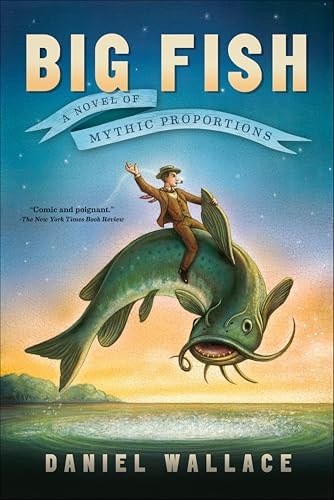
Unlike the tall-tale tradition of Big Fish, Junod notes his father's most outrageous claims — particularly about his sexual history — were likely true, making the reality darker than fiction.
Junod's father was seriously wounded in the hedgerows of Normandy, nearly given Last Rites, then rescued from combat by a lieutenant who heard him sing and made him a band performer — a Gatsby-esque transformation Holiday calls 'Don Draper-esque.'
Moral Injury, Secrets, and the Hidden Cost of Enabling
Junod argues that growing up worshipping his father while sensing the hidden truth constituted a 'moral injury' — a term he deliberately avoided in the book but considers central to its meaning.
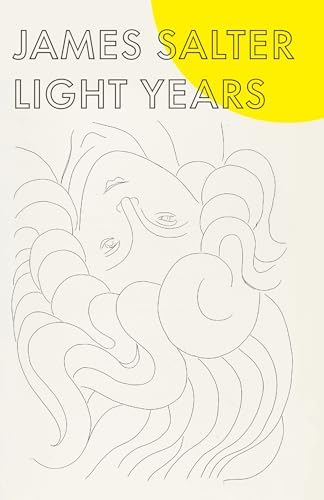
Holiday draws a parallel to Burning the Days by James Salter — a celebrated memoir whose beautiful prose masked an unexamined pattern of infidelity, with the wife barely appearing as a person.
Holiday also references Light Years and A Sport and a Pastime as part of Salter's body of work, noting that Salter 'had a literary version of what my dad had' — charisma that could sell any story, including a morally hollow one.
Junod's mother's suffering was the only visible measure of wrongdoing in the household — she would retreat to the bedroom and pass out for hours — yet she never fully articulated what was happening, leaving Junod without clarity or permission to act.
'In recovery they say you're only as sick as your secrets' — Holiday's framing of how both individuals and societies collude in not-knowing to avoid the cost of knowing.
Masculinity, Honor, and the Inheritance of Flawed Fathers
Junod identifies a core contradiction in contemporary masculinity: 'They want old-fashioned ideas of masculinity — action, strength — but they don't want the ideas that were inseparable from it: honor, dignity.'
His father taught him honor in words — stopping him from bullying a smaller kid — while systematically violating it in his marriage. Junod's conclusion: 'The words were good. If only his actions had been better.'
Junod made two contradictory vows: one articulated — 'I am never going to be like him' — and one cellular — 'I want nothing more than to be like him.' He calls these 'the north and south that war with each other.'
Holiday connects this to Marcus Aurelius, who also lost his father young, came under the influence of the dangerous Hadrian, and found healing through the example of Antoninus — noting that Hadrian is conspicuously absent from the acknowledgments that open Meditations.
Holiday's framing: 'If you get lucky enough to come into the orbit of an incredible person and you decide to listen, it can really heal a lot of wounds and get your compass dialed in.'
Writing the Book: Truth-Telling, Permission, and Discovery
Junod made a deliberate decision not to ask for permission from anyone in the book — 'That's the one thing I do not do in the book and did not do when I was writing the book.'
The book's investigation leads Junod to his father's wingman in Florida, Frankie Klein, who reveals a woman from his father's secret life only after Junod signals he already knows: 'So you know. Because I wouldn't have told you if you didn't know.'
The investigation ultimately leads Junod to discover a half-sister — 'a great gift of my life' — whom he now has an ongoing sibling relationship with, and which he considers proof that writing the book was the right thing to do.
Holiday notes that Stillness Is the Key discusses creating space for reflection and honest self-examination — the kind of inner work that Junod's book both models and advocates for.



These notes may contain occasional inaccuracies. Learn how podbrain notes are made
More in Philosophy

Hollywood, The CIA & UFOs: The History Beyond Spielberg
Jun 20, 2026
How To Love Your Country Without Lying About It | Ty Seidule
Jun 19, 2026
Recognize These Signs of Weakness | 7 Daily Habits That Will Change Your Life
Jun 15, 2026A Stoic's Guide To Looksmaxxing
Jun 14, 2026
A Stoic Masterclass for Ambitious People | Codie Sanchez
Jun 13, 2026
.svg)