
Hollywood, The CIA & UFOs: The History Beyond Spielberg
This episode features Bryce Zabel and Brent Friedman, two veteran Hollywood writer-producers whose careers intersect deeply with the UFO phenomenon. Zabel is the former chairman and CEO of the Academy of Television Arts and Sciences, creator of five primetime series, a writer on Steven Spielberg's Taken, and co-author...

Episode


- 01
A man claiming to be from the Office of Naval Intelligence crashed the Dark Skies premiere party in 1996, offering Bryce Zabel and Brent Friedman access to classified UFO information in exchange for narrative influence over their show.
- 02
JC wrote a cryptic formula on an ATM envelope and said 'put this in a safety deposit box for 10-15 years — sound, light, and frequency, secrets of the universe' before walking out.
- 03
Tobe Hooper told Brent Friedman that after Jaws, Steven Spielberg was approached by Naval Intelligence and took a deal, and that Close Encounters and E.T. were both based on real case files.
- 04
David Grusch contacted Brent Friedman in 2025 asking him to help bring John Harrington — a Reagan-era Secretary of Energy with higher clearance than the president — to testify before the House Oversight Committee.
- 05
John Harrington told an 18-year-old Brent in 1981 that aliens are real, he had seen them, and a multi-billion dollar campaign existed to cover up the truth by flooding bookstores with propaganda alongside genuine accounts.
- 06
Ross Coltheart stated on air: 'I can now state categorically that the Tic Tac is Lockheed Martin technology,' then refused to discuss it further, ending his co-hosting relationship with Zabel.
- 07
The phrase 'sound, light, and frequency' yielded zero Google results until 2012, when it appeared in a CERN white paper on the sonification of the Higgs boson — approximately 15 years after JC wrote it on the envelope.
- 08
Brent Friedman witnessed 6 strangers die in Final Destination-style circumstances throughout his life, culminating in a near-death ICU experience during COVID where three light beings appeared at the foot of his bed.
Get the latest ideas from Jesse Michels.
Plus the best new takeaways from other top podcasts — read in minutes, not hours.
By continuing, you agree to podbrain's Terms and Privacy Policy.
These notes may contain occasional inaccuracies. Learn how podbrain notes are made
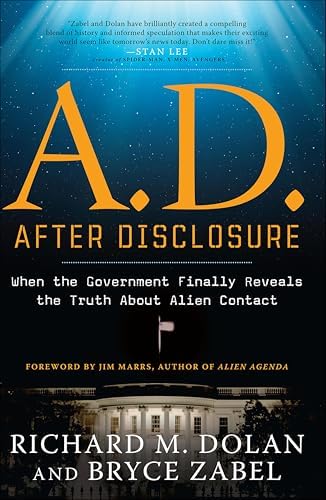
This episode features Bryce Zabel and Brent Friedman, two veteran Hollywood writer-producers whose careers intersect deeply with the UFO phenomenon. Zabel is the former chairman and CEO of the Academy of Television Arts and Sciences, creator of five primetime series, a writer on Steven Spielberg's Taken, and co-author of A.D. After Disclosure When the Government Finally Reveals the Truth About Alien Contact with researcher Richard Dolan. Friedman is a writer-producer whose credits include Dark Skies, Mortal Kombat, Star Trek Enterprise, and Star Wars: The Clone Wars. Together they host the podcast Sound, Light, and Frequency.
The conversation centers on the pair's co-creation of Dark Skies, an NBC series about an alien invasion set in the 1960s, and the extraordinary real-world events that surrounded its production and premiere — including an uninvited guest claiming to be from the Office of Naval Intelligence who offered them a classified deal, a cryptic formula whose title phrase wouldn't appear online for fifteen years, and Brent's prior disclosure from a Reagan administration official who claimed to have seen aliens firsthand.
The discussion expands into the broader relationship between Hollywood and UFO secrecy, covering Steven Spielberg's alleged Naval Intelligence deal, the legal war waged against Dark Skies by Amblin Entertainment, the first-ever video interview with David Grusch recorded at Zabel's home, and a wide-ranging analysis of Spielberg's recent film Disclosure Day. Brent also shares a lifetime of paranormal and near-death experiences that he argues form a coherent pattern pointing toward a unified theory of consciousness.
The Uninvited Guest: Naval Intelligence Crashes the Dark Skies Premiere
At the Dark Skies premiere party in September 1996, a man calling himself J.C. appeared uninvited among 200 guests — all of whom had been photographed and given Majestic-12 ID badges — and demonstrated he had seen the unaired pilot in detail, correctly describing the post-crop-circle autopsy scene.
Bryce asked J.C. to leave, but Brent encountered him separately near the bushes. J.C. told Brent: 'You guys got a lot right... but you also got a lot wrong, and that's why I'm here,' then revealed he was from the Office of Naval Intelligence and wanted to offer access to information in exchange for influence over the show's scripts.
Before leaving, J.C. asked Brent's wife for a piece of paper, wrote a formula in roughly 30 seconds on a torn ATM deposit envelope, and handed it over saying: 'Put this in a safety deposit box for about 10 to 15 years. If we don't make a deal, you'll know I was for real.' He described it as 'sound, light, and frequency — secrets of the universe.'
A year before the party, during production of the pilot, Bryce had received an ominous postcard at his home address. The front showed a cover of a 1960 book called Flying Eyes; the back was typed in all caps on a manual typewriter and read, stacked in four words: 'WE ARE WATCHING YOU.'
The Deal They Refused: Meetings, a Vial, and a Cemetery at Midnight
J.C. called the production office and arranged a follow-up meeting, arriving with a second man — described as having a military bearing, bomber jacket with insignias, and acting as 'bad cop' — who the hosts began calling 'the Captain.' They met in a glass-walled conference room with security staff posted outside.
The Captain confirmed that the Kennedy-UFO connection in the Dark Skies pilot was correct, and corrected the show's alien-organism concept: 'That's not the way it's done' — implying implants rather than the ganglion-based body-snatching device in the script.
The Captain placed a small glass vial of gold-colored flakes on the table and said: 'It's all about the moon,' implying lunar mining. He also told them to move their planned Apollo storyline up to the first season and to 'do more stuff in the water' — a reference to USOs and Navy interests.
The meeting collapsed when Bryce began asking about Writers Guild residual credits for any scripts influenced by the intelligence community, and the Captain grew visibly angry. The pair declined the deal, reasoning: 'We would cede the narrative thrust of our own show to people we didn't feel good about.'
A final contact came by phone: J.C. offered one last meeting with an admiral whose ship was docked in Long Beach Harbor. The proposed venue was a cemetery at midnight, where they were to find a specific gravestone. Bryce refused immediately: 'I've got a wife and three kids and there is no way in hell I will be meeting anybody at a cemetery at midnight.'
John Harrington: The Neighbor Who Knew More Than the President
In 1981, Brent — then 18 and heading to UCLA — drove cross-country for family friend John Harrington, who had just taken a new government role in Washington. Harrington arrived home with a briefcase handcuffed to his wrist, escorted by Secret Service, and locked it in a wall safe.
On the back porch over Jim Beam, Harrington told Brent: 'I have a higher clearance level than the president.' He said he had been briefed for months in an underground facility in West Virginia — later suspected to be near the Greenbrier, which wasn't publicly known until a Washington Post report in the 1990s — and that he 'used to cry myself to sleep every night.'
After some drinks, Harrington disclosed: 'Aliens are real. They're here, and I've seen them.' When asked why the truth was suppressed, he said: 'We live in a God-fearing country. The only thing that keeps this world spinning is the global economy. If you disrupt that, everything falls apart.' He added it was a 'multi-billion dollar campaign' to cover the truth, with propaganda books placed alongside genuine ones in every bookstore.
When Brent asked how he knew he wouldn't tell anyone, Harrington replied: 'I'm sure you will. Question is, who's going to believe you? You're an 18-year-old kid going off to college. You use my name, I'll just deny it.'
Harrington later sent a buck slip to the Dark Skies production office reading: 'Congratulations, Brian, on finally getting your story out there' — arriving just after the J.C. contact, suggesting possible coordination between Harrington and Naval Intelligence.
In 2025, David Grusch contacted Brent via Signal to say Harrington had been identified as 'a very important person who has oral history of a period where a bunch of documentation does not exist anymore,' and that Marco Rubio had already tried and failed to approach him. Grusch asked Brent to help facilitate a meeting.
Spielberg's Deal: Close Encounters, E.T., and the Naval Intelligence Pipeline
During a location scout for the Dark Skies pilot, director Tobe Hooper told Brent over dinner: 'After Jaws, [Spielberg] got approached by some guys from Naval Intelligence... and he took it.' Hooper stated that Close Encounters of the Third Kind and E.T. were both informed by real case files provided through that arrangement.
The hosts catalogued evidence of insider knowledge in Close Encounters: crates labeled TRW and Lockheed on set, J. Allen Hynek appearing in the film, François Truffaut playing a character modeled on Jacques Vallée, Richard Dreyfuss receiving what appears to be a psychic download, and a sequence of 12 suited men with travel bags that mirrors Project Serpo exchange program lore.
E.T. was traced to a real Kentucky case involving a family that hid an alien in their barn; it was communicating with an autistic child. Spielberg had been developing it as a horror film called Night Skies before pivoting to the family version.
Spielberg screened E.T. at the White House for Reagan, who reportedly said: 'There are about 5 people in this room who know that everything they just saw on that screen is absolutely real.' Reagan later told the United Nations: 'I occasionally think how quickly our differences worldwide would vanish if we were facing an alien threat from outside this world.'
In the middle of Amblin's legal war against Dark Skies, Spielberg's office separately invited Bryce to a meeting about a video game, greeted him warmly, and said he was 'a big fan of Dark Skies' — suggesting the legal campaign may have been driven by lawyers rather than Spielberg personally.
Amblin vs. Dark Skies: 19 Non-Negotiable Demands and the Threat to Burn the Negative
During production of the pilot, a Columbia TV executive called and ordered the team to remove all Men in Black imagery immediately, saying: 'Get your actors out of the black suits today or we will shut down your production and burn your negative.' The threat came from Amblin, whose Men in Black film was in production at the same Sony entity.
The team complied, renaming their agents 'cloakers' and dressing them in non-black colors. They believed the issue was resolved — until a year later, after the show was picked up to series, when the same executive returned with a list of 19 non-negotiable demands.
The demands included: no elevator (Men in Black had one), no secret headquarters in Washington D.C., no farmer character, and — most critically — no autopsy scene, because Men in Black also contained one. The team was threatened with being fired and forced to return their budget to NBC.
NBC president Don Ohlmeyer intervened, telling Amblin: 'They've already turned in the pilot to me. I'm going to air it just the way it is.' The 19 demands shrank to five or six negotiable ones, and the show survived — though 11 days of footage had to be reshot at significant cost.
Decoding Disclosure Day: Spielberg's Deepest Statement on the Phenomenon
The hosts saw Disclosure Day together at an IMAX and argued it functions on two levels: the surface disclosure — a data dump of crash footage and alien bodies — mirrors the shallow public disclosure happening now, while the film's real disclosure is embedded in its earlier exploration of parapsychology, psychic powers, and reality management.
They noted that the film's trailer originally contained the line '7 billion people have the right to know the truth,' which was changed to '8 billion' in the final film with no explanation — a discrepancy they find either deliberately planted or inexplicably careless for a production of that scale.
Emily Blunt's character, upon seeing government agents outside a hospital window, says: 'They're not human' — seeding the idea that non-human intelligence may be embedded within the intelligence community itself.
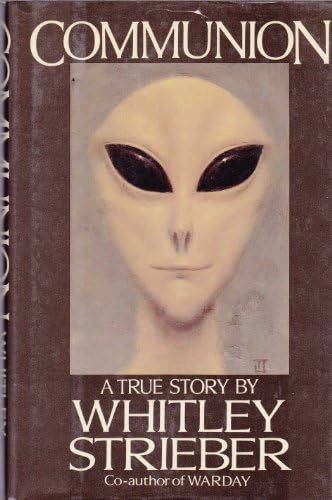
The CGI animals in the film were argued to be intentionally imperfect: 'They're not bad CGI — they're what your brain perceives aliens as when you're inside the phenomenon.' The hosts connected this to Whitley Strieber's accounts of owl synchronicities discussed in Communion A True Story.
Spielberg's video game project at EA, codenamed LMNO, featured a woman with alien empathic powers being hunted by the government — essentially the same premise as Disclosure Day, conceived roughly 20 years earlier, suggesting decades of sustained interest in telling this specific story.
Barack Obama visited the Disclosure Day set — an unusual move Spielberg disclosed on Michelle Obama's podcast — and separately said on a rapid-fire interview segment 'Aliens are real,' before walking it back the next day under apparent pressure.
Hollywood as a Slow-Drip Disclosure Engine: The CIA, Robertson Panel, and the Aviary
The hosts outlined a timeline: after Roswell in 1947, the 1953 CIA Robertson Panel concluded the public needed to be discouraged from taking UFOs seriously, and Walt Disney was subsequently approached — with Ward Kimball believing real footage would be provided for a documentary before it was pulled away.
Chase Brandon, a longtime CIA Hollywood liaison, wrote The Cryptos Conundrum, which the hosts noted opens with a Francis Bacon quote: 'Some truths are so strange that they must be told in fiction' — the same philosophy they argue underpinned Dark Skies.
The J.C. contact described their operation as 'the Aquarium' — a counterpart to the long-rumored 'Aviary,' the network of bird-codenamed intelligence figures involved in UFO information management in the 1980s, associated with figures like Rick Doty and Bill Moore.
The hosts traced a pattern of media events preceding real-world UFO encounters: the Outer Limits episode with wrap-around alien eyes aired days before the Betty and Barney Hill abduction (documented in The Interrupted Journey); the 1975 NBC film The UFO Incident aired two weeks before Travis Walton's abduction; and Fire in the Sky subsequently fictionalized Walton's account beyond recognition.
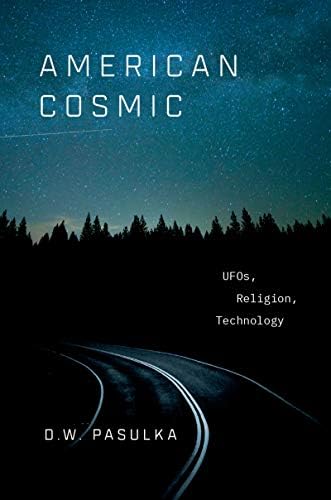
Diana Pasulka's American Cosmic UFOs, Religion, Technology was cited for its observation connecting the Betty and Barney Hill case to the prior Outer Limits episode, suggesting popular media may prime or shape the experiential reports that follow.
Bryce argued that disclosure momentum collapsed after 9/11 — 'the idea that we're going to disclose aliens doesn't seem as good a policy when you're at war with terrorism and Dick Cheney's leading it' — and that Grusch identified Cheney as the last person at the top of the legacy UFO program structure.
Brent Friedman's Lifetime of High Strangeness: Deaths, Entities, and Timelines
Brent has witnessed 6 strangers die in sudden, graphic circumstances across his lifetime — beginning at age 5 when a motorcyclist's decapitation forced his father to brake to avoid her head — with no professional context (military, medical, emergency services) to explain the pattern.
At LAX, while watching a flight attendant struck by a car, all ambient airport noise disappeared and he heard only her breathing as she flew through the air. 'All of the sounds disappear. And all I'm hearing is her breathing.' The noise returned the instant she died.
Outside the Dark Skies production office, Brent held the hand of a dying crash victim and experienced the man's life flashing before his own eyes — 'I'm seeing images of his life... hearing Spanish and things not in my consciousness' — before the man's son in the backseat said 'Papa' and intuitively knew his father was gone.
While writing a ghost story script and fixating on what a real ghost encounter would feel like, a translucent woman with 'two black circles that are undulating' for eyes appeared at the foot of his bed at noon, pinned him down, and began pulling his soul upward through her eyes — which contained 'the most beautiful constellations and cosmos you've ever seen.' An inner voice commanded 'just look away,' and she vanished.
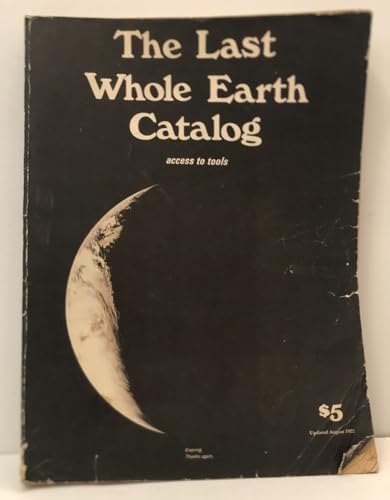
A friend later directed Brent to the Whole Earth Catalog, where he found a reference to a collection of 15th-century Scandinavian ghost stories containing a myth called 'Witch Rider' — a woman in a tattered sundress who appears at the foot of your bed, pounces, and steals your soul. The myth matched his experience in precise detail.
During a COVID ICU stay with a temperature of 105.5°F and a purple 'do not resuscitate' wristband, three light beings appeared at the foot of his bed. 'I felt like everything was going to be okay... I just made the thought: I have something I still need to do. And they receded.' He recovered within 24 hours.
While researching the J.C. formula late at night in an Airbnb, Brent experienced what he describes as a timeline shift: Slack conversations referenced game levels that didn't exist, text messages discussed a dog his family didn't own, and dates across multiple devices were inconsistent. After sleeping, 99% of his reality reset — with a few small 'artifacts' remaining.
The Formula Recovered: Sound, Light, Frequency, and the God Particle
The ATM envelope formula was stored in a safety deposit box, then moved to a box in Brent's Washington garage, where it went missing for years. It was eventually found by Brent's daughter — who searched with a headlamp and gloves — stuck to the back of a book due to residual adhesive from the envelope's flap.
For roughly 15 years after 1996, searching the exact phrase 'sound, light, and frequency' returned zero results. The first hit appeared in 2012 in a white paper on the CERN server about the sonification of the Higgs boson — the God particle — which listed the phrase in that precise order.
A 22-page analysis of the formula was commissioned. Initial research identified three main interpretive frameworks: astral dynamics, quantum physics, and transcendentalism. The hosts noted the formula contains recognizable symbols including an inverted Om, and bears a resemblance to Tesla's famous statement about energy, vibration, and frequency.
Bryce noted the formula was clearly premeditated: 'Nobody made that up in 30 seconds. He was putting something on paper he was well aware of' — suggesting J.C. arrived at the party with the intention of leaving it, regardless of whether a deal was struck.
The Tic Tac, Lockheed Martin, and the Limits of Source-Based Journalism
On what became their final episode together, Ross Coltheart stated on air — twice, in identical words — 'I can now state categorically that the Tic Tac is Lockheed Martin technology.' Bryce described visibly reacting on camera: 'You can see me literally go, oh boy.'
After the broadcast, Bryce asked Coltheart to do an immediate follow-up episode to defend the claim with journalistic rigor. Coltheart refused, and the two stopped recording together. Bryce: 'If journalistic rigor is your plan, then if you make a statement like that, you gotta defend it.'
Bryce disclosed he has moved from certainty that the Tic Tac was non-human to roughly 50/50 on whether it was man-made, citing concerns that some disclosure advocates have 'ulterior motives' and that intentional conflation of advanced human technology with genuine anomalous craft may be part of the information management strategy.
The hosts raised the possibility that Lockheed patents involving neural interfaces for aircraft control — combined with Coltheart's separate claims about 'psionic assets locking onto craft with their minds' — could be combined into a single coherent picture of psychically piloted advanced human technology.
The Nordic on Orcas Island and the Unified Theory of Consciousness
On Orcas Island, Brent encountered a tall, physically striking man with long blonde hair in European-style clothing who said 'Hello, Brent' without visibly moving his mouth, then telepathically instructed him to 'turn around and walk the other way.' The figure disappeared when Brent looked back.
His friend on the island confirmed: 'Oh, with one of those tall white people? They have a compound on Orcas Island.' The friend described a group of approximately 8 who arrive by unmarked black helicopter every few months when 'the energy is really high' to recharge, and rarely interact with locals — except for one who reportedly entered a pub, had drinks, and when asked what it was like to live there, replied: 'On Earth?'
Brent's overarching philosophy, developed across these experiences: 'We put things in silos — UFOs, the paranormal, the afterlife — and I'm saying it's all the same thing. The commonality is consciousness.' He argues that UFO craft exist at the boundary where physics and consciousness intersect, and that 'space aliens' as a snap-to-grid conclusion is premature.
The hosts connected this framework to the Mothman Prophecies synchronicity Bryce experienced — finding a stranger in a dark parking lot holding the exact book he was reading in his backseat — as evidence of what they call 'reality management' operating at a level above individual human agency.
Muddling Toward Disclosure: From Roswell to Spielberg's Last Statement
Bryce, drawing on the research behind A.D. After Disclosure When the Government Finally Reveals the Truth About Alien Contact, described the current moment as a 'slow dissolve' toward disclosure — but one that could become a 'hard cut' at any moment, such as a Phoenix Lights-scale event over a major city in the smartphone era.
Three independent intelligence community sources separately told Ross Coltheart, within a two-week period, that the Netflix series Dark was the best way to understand what is actually happening — a show the hosts describe as depicting multiple folding timelines, nuclear risk, and competing factions of reality managers.
The hosts argued that Spielberg, potentially near the end of his directing career, made a calculated bet with Disclosure Day: 'What are the chances that a man going on 80 invests in a movie called Disclosure Day without any guarantees it won't be irrelevant by the time it comes out? And it somehow all worked out.'
Ernie Cline, author of Ready Player One, proposed to the hosts that writers may function as unwitting remote viewers: 'We put a little attention on an idea, and suddenly we're jumped to the future where we're seeing an event play out — we think it's inspiration, but we're seeing into the future.' The hosts connected this to the pattern of UFO-themed fiction preceding real UFO events.



These notes may contain occasional inaccuracies. Learn how podbrain notes are made
More in Philosophy
What Our Fathers Teach Us, For Better Or Worse | Tom Junod
Jun 20, 2026
How To Love Your Country Without Lying About It | Ty Seidule
Jun 19, 2026
Recognize These Signs of Weakness | 7 Daily Habits That Will Change Your Life
Jun 15, 2026A Stoic's Guide To Looksmaxxing
Jun 14, 2026
A Stoic Masterclass for Ambitious People | Codie Sanchez
Jun 13, 2026
.svg)