
How The Partner You Choose Reveals Your Self-Worth - Quinlan Walther - #1110
Quinlan Walther, a relationship therapist and content creator, joins Chris Williamson to explore the psychology of modern relationships and self-trust. Walther specializes in helping people build authentic connections with themselves and others through her therapeutic practice and social media presence.


- 01
"Your nervous system will always choose a familiar hell over an unfamiliar heaven" - Cathy Overman
- 02
Self-trust consists of 4 C's: curiosity, capacity, compassion, and commitment to building the life you want
- 03
"Empathy without boundaries is self-abandonment" - using understanding to rationalize poor treatment
- 04
"Life doesn't remove what isn't for you, it just lets it exhaust you over and over until you choose differently"
- 05
The question "Who do you have to be to be loved?" reveals whether you belong for existing or must perform
- 06
Most relationship problems stem from uncertainty about handling future emotions, not the events themselves
- 07
"If you're working this hard to make it work, it isn't working" - effort doesn't guarantee compatibility
Get the latest ideas from Chris Williamson.
Plus the best new takeaways about relationships from other top podcasts — read in minutes, not hours.
By continuing, you agree to Podbrain's Terms and Privacy Policy.
These notes may contain occasional inaccuracies. Learn how Podbrain notes are made
Quinlan Walther, a relationship therapist and content creator, joins Chris Williamson to explore the psychology of modern relationships and self-trust. Walther specializes in helping people build authentic connections with themselves and others through her therapeutic practice and social media presence.
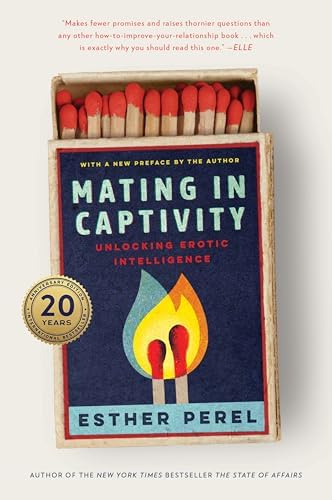
The conversation examines how childhood attachment patterns shape adult relationships, why people mistake anxiety for chemistry, and how self-trust forms the foundation of fulfilling partnerships. Drawing insights from attachment theory and Mating in Captivity by Esther Perel, they discuss the challenges of modern dating, the rise of unrealistic expectations, and practical frameworks for building healthier relationship dynamics.
Partner Choice as Self-Worth Mirror
The partner someone chooses reveals their self-worth through their reaction to judgment, not the choice itself - "It's a Rorschach test for your own partner" - Quinlan
When someone says they can tell how much you love yourself by your partner choice, your emotional response reveals everything about your relationship satisfaction
Self-abandonment in relationships always serves a deeper psychological need - "We don't just do it for fun. It meets some deeper psychological need that isn't being met overtly" - Quinlan
The Four Pillars of Self-Trust
Self-trust enables knowing who you are, liking who you are, and building a life that feels authentically yours
Curiosity: Understanding your feelings, motivations, and desires without settling for surface-level labels or diagnoses
Capacity: Building emotional flexibility to stay present with discomfort rather than fleeing or drowning in it
Compassion: Trusting your intentions while accepting your humanity and inevitable mistakes
Commitment: Knowing the life you want to build and staying devoted to bringing it to fruition
Familiar Hell vs Unfamiliar Heaven
"Your nervous system will always choose a familiar hell over an unfamiliar heaven" - people repeat childhood patterns until resolved in adulthood
Anxiety gets mistaken for chemistry because both create similar bodily sensations - the interpretation depends on your attachment history
Children absorb relationship models through genetic predisposition, pre-verbal attachment experiences, and observing parental dynamics - "a real double, triple, quadruple whammy"
The fundamental questions driving all behavior are "Am I safe?" and "Do I belong?" - everything else comes secondary
Building Safety and Boundaries in Adulthood
Safety begins with asking "Who do you have to be to be loved?" - ideally the answer is simply "myself"
Boundaries are rules for yourself, not attempts to control others - "I will do this or I won't do this. Are you in or are you out?" - Quinlan
Hypervigilance stems from trying to collapse uncertainty into a predictable nightmare rather than dealing with the unknown
"Empathy without boundaries is self-abandonment" - excessive understanding becomes rationalization to avoid loneliness
Modern Dating's Compatibility Crisis
Avoidant people appear disproportionately attractive because they display self-sufficiency and independence more readily than anxious types
As described in Mating in Captivity, modern relationships expect one person to fulfill needs that an entire village once provided
Both men and women are becoming more egocentric, struggling with differentiation - staying connected to yourself while connecting to someone different
The fundamental relationship question remains: "Do you like the way the relationship feels?" regardless of explanations or justifications
Repair, Disappointment, and AI Relationships
Effective rupture and repair requires curiosity, accountability, and actual behavioral change - not just promises
"Life doesn't remove what isn't for you, it just lets it exhaust you over and over until you choose differently" - trust your felt sense of knowing
AI relationships represent the search for zero friction, which becomes problematic when real humans require reciprocity and tolerance for imperfection
The solution to modern dating challenges isn't more technology but encouraging actual in-person presence where "your laundry list of wants" naturally dissipates
These notes may contain occasional inaccuracies. Learn how Podbrain notes are made
More in Self-Development

Apple Just Filed the Lawsuit That Could Destroy OpenAI
Jul 13, 2026
Why Everyone Is Drowning In Debt (and how to get out) - Caleb Hammer - #1123
Jul 13, 2026Why This DSA Win Should Terrify Every American
Jul 11, 2026
Is AI The Next Stage Of Human Evolution? - Robert Wright - #1122
Jul 11, 2026
Iran Ceasefire is DEAD, Spencer Pratt Quits & the DSA Says the Quiet Part Out Loud| The Tom Bilyeu Show
Jul 10, 2026
.svg)