
The Real Reason Elon Is A Trillionaire Has Nothing To Do With Greed — It Has To Do With Your Savings
In this episode, host Tom Bilyeu of Impact Theory analyzes the economic forces behind Elon Musk's rise to becoming the world's first trillionaire. Bilyeu refutes claims of systemic theft, arguing instead that Musk's wealth is a scoreboard for massive value creation. The discussion details how government deficit...



- 01
"In just the last six years Alone, the money in your pocket has lost about a third of its value." - Tom
- 02
"The government spends money it does not have so it has to print the difference," guaranteeing cash holders lose. - Tom
- 03
"The only way to not lose in an inflationary system is to get out of dollars and into assets." - Tom
- 04
"You get the upside because you risked the downside," which explains why equity holders capture wealth over wage earners. - Tom
- 05
As illustrated by the survival challenges in Alone, poverty is humanity's natural constant, while innovation is the engine of prosperity. - Tom
- 06
"Show me the incentives and I'll show you the outcome," a principle from Poor Charlie's Almanack The Wit and Wisdom of Charles T. Munger. - Tom
- 07
"Our economy is not Elon and the elites versus you. It's investors versus savers," where savers are systematically punished. - Tom
- 08
"We don't have a revenue problem... We have a spending problem," which drives the inflation that creates trillionaires. - Tom
Get the latest ideas from Tom Bilyeu.
Plus the best new takeaways from other top podcasts — read in minutes, not hours.
By continuing, you agree to podbrain's Terms and Privacy Policy.
These notes may contain occasional inaccuracies. Learn how podbrain notes are made
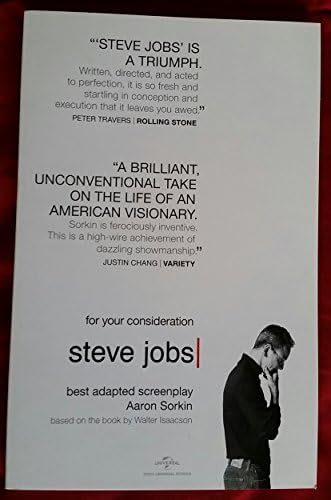
In this episode, host Tom Bilyeu of Impact Theory analyzes the economic forces behind Elon Musk's rise to becoming the world's first trillionaire. Bilyeu refutes claims of systemic theft, arguing instead that Musk's wealth is a scoreboard for massive value creation. The discussion details how government deficit spending and money printing debase currency, forcing everyday citizens into risky assets to survive inflation. Bilyeu highlights how the survival struggles depicted in Alone illustrate the historical constant of poverty, while Aaron Sorkin's Steve Jobs demonstrates the unique role of the entrepreneur as an orchestrator of talent. Drawing on Charlie Munger's wisdom in Poor Charlie's Almanack The Wit and Wisdom of Charles T. Munger, the episode explores how government incentives shape corporate behavior. Bilyeu warns against dismantling the capitalist engine, urging individuals to transition from savers to investors, using examples like a SpaceX welder who achieved millionaire status simply by holding equity and sharing in the risk.
The Inflationary Loop and the Rigged Financial Game
"The modern economy is defined by a 'death march' where the government spends $1.58 for every new dollar it collects in taxes." - Tom
To prevent moving backwards financially, tens of millions of people are forced into the stock market because holding cash guarantees a loss.
High-risk AI debt is being repackaged and sold to pension funds, mimicking the 2008 financial crisis playbook to shield elite bankers.
AI companies claim chips last five to six years, but skeptics like Michael Burry state the real lifecycle is only two to three years.
Index Manipulations and the Fast Lane to Retail Risk
More than $30 trillion is tied to major stock indexes like the S&P, NASDAQ, and Russell, which automatically forces funds to buy added stocks.
NASDAQ and Russell bypassed the traditional one-year public trading rule to create a fast lane for mega-cap companies like SpaceX.
Wall Street veteran George Noble called this index rule change a "shameless manipulation" that provides early insiders with guaranteed retail exit liquidity. - Tom
In contrast to other indexes, the S&P 500 has refused to change its rules, requiring profitability before adding any company to its list.
The True Nature of Value Creation and Wealth Scoreboards
Elon Musk does not hold $1 trillion in cash; his wealth is a scoreboard representing the theoretical value of his company shares.
Value is created out of thin air when an innovator produces something people want more than the money they charge for it.
As depicted in the movie Steve Jobs, written by Aaron Sorkin, the entrepreneur acts as an orchestrator rather than just a musician.
SpaceX's welder Juan Hernandez became a millionaire by holding stock, proving that taking equity risk yields far greater rewards than guaranteed wages.
Government Incentives and the Myth of the Grifter
Tesla and SpaceX received $38 billion in government contracts and loans, but Tesla paid its loan back early with interest to taxpayers.
Applying the core thesis of Poor Charlie's Almanack The Wit and Wisdom of Charles T. Munger, entrepreneurs simply follow the incentives voters establish.
Major AI corporations lobby for safety regulations to build a regulatory moat, making it harder for startups to enter and compete.
Protecting the Fragile Engine of Human Prosperity
In 1820, approximately 80% of the global population lived in extreme poverty, a figure that has dropped below 10% today due to innovation.
The television series Alone serves as a stark reminder of how incredibly difficult it is to survive without modern industrial innovation.
Attempts to fix inequality by burning the system down and redistributing wealth have historically proven to be predictably destructive.
To resolve the issue of runaway trillionaire wealth, politicians must balance the budget to stop the deficit spending that drives asset inflation.

These notes may contain occasional inaccuracies. Learn how podbrain notes are made
More in Self-Development

#871: The “Divine Leaf” with 8,000+ Years of Use — Exploring the Many Benefits of Coca with Dr. Andrew Weil and Wade Davis
Jun 25, 2026
Gary's Economics Can't Answer This One Question About Wealth Taxes | Tom Reacts
Jun 25, 2026
Why You Don’t Feel Loved (even when you are) - Sonja Lyubomirsky - #1115
Jun 25, 2026
A User’s Guide To Kava: The Most UNDERRATED Plant Medicine w/ Cameron George #537
Jun 24, 2026
What Society Values in Men, Where Does a Man Start, and Why Humility Makes or Breaks Us | ASK ME ANYTHING
Jun 24, 2026
.svg)