
Gary's Economics Can't Answer This One Question About Wealth Taxes | Tom Reacts
In this episode, host Tom Bilyeu of Impact Theory analyzes a video by Gary Stevenson, the former interest rate trader and author of The Trading Game A Confession. Bilyeu critiques Stevenson's emotional arguments for wealth taxes, contrasting them with rigorous economic...



- 01
Gary Stevenson, author of The Trading Game A Confession, advocates for wealth taxes using emotional appeals rather than structural economic cause-and-effect analysis.
- 02
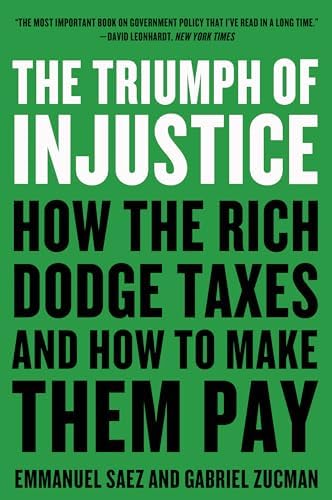
As detailed in The Triumph of Injustice How the Rich Dodge Taxes and How to Make Them Pay, ordinary workers face high tax rates while billionaires pay lower percentages.
- 03
Tom Bilyeu argues that wealth is theoretical, making wealth taxes highly destructive to economic innovation and capital allocation compared to taxing tangible income.
- 04
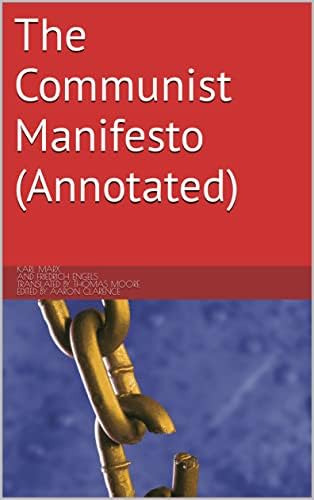
Drawing from The Communist Manifesto, Bilyeu notes Karl Marx's theories lacked the context of limited liability companies, which democratized modern business creation.
- 05
As illustrated in Atlas Shrugged, confiscatory wealth taxes cause highly productive innovators to relocate to capital-friendly jurisdictions like the UAE or Singapore.
- 06
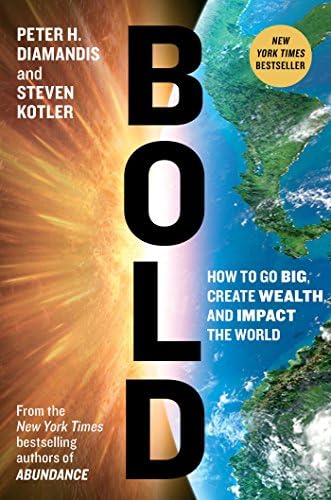
According to Bold How to Go Big, Create Wealth and Impact the World, true wealth is generated by solving massive problems for billions of people.
- 07
The modern K-shaped economy is driven by central bank money printing and deficit spending, which artificially inflates asset values and punishes savers.
Get the latest ideas from Tom Bilyeu.
Plus the best new takeaways about wealth building from other top podcasts — read in minutes, not hours.
By continuing, you agree to podbrain's Terms and Privacy Policy.
These notes may contain occasional inaccuracies. Learn how podbrain notes are made
In this episode, host Tom Bilyeu of Impact Theory analyzes a video by Gary Stevenson, the former interest rate trader and author of The Trading Game A Confession. Bilyeu critiques Stevenson's emotional arguments for wealth taxes, contrasting them with rigorous economic cause-and-effect principles.
The discussion covers the critical differences between taxing liquid income versus theoretical wealth, drawing on Gabriel Zucman's tax inequality research in The Triumph of Injustice How the Rich Dodge Taxes and How to Make Them Pay. Bilyeu explains how central bank policies and deficit spending, rather than untaxed billionaires, drive the modern K-shaped economy.
Finally, Bilyeu references historical frameworks like Karl Marx's The Communist Manifesto to explain how limited liability companies revolutionized entrepreneurship. He contrasts Stevenson's populist views with Ayn Rand's Atlas Shrugged and Peter Diamandis's Bold How to Go Big, Create Wealth and Impact the World, illustrating how global capital mobility and value creation drive prosperity.
The Fatal Flaw of Taxing Theoretical Wealth
Gary Stevenson, whose trading background is detailed in The Trading Game A Confession, argues that wealth taxes are necessary to rebalance an unfair economic system.
Tom Bilyeu critiques this view, stating, "Wealth is theoretical. It is not a real thing that you have, which is exactly why trying to tax it is so maddening" - Tom.
Stevenson cites Gabriel Zucman's research, popularized in The Triumph of Injustice How the Rich Dodge Taxes and How to Make Them Pay, showing billionaires pay lower effective tax rates than ordinary workers.
Bilyeu challenges this by explaining that taxing unrealized assets forces destructive liquidation, whereas income taxes target tangible, realized money.
How Central Banks and Deficit Spending Rig the Economy
The true driver of the K-shaped economy is not untaxed wealth, but a "wealth pump mechanism" created by central bank money printing and government deficit spending.
Inflation acts as a hidden tax that robs ordinary citizens of purchasing power while artificially pumping value into assets held by the wealthy.
Bilyeu highlights government fiscal irresponsibility, noting that for every new dollar of tax revenue brought in, the US government spends $1.58.
While Japan's stagnant economy shows the risks of low money velocity, the US uses controlled inflation to discourage saving and force capital movement.
Incentivizing Innovation Versus Capital Flight
Bilyeu references Ayn Rand's Atlas Shrugged to warn that confiscatory taxes will cause the most productive citizens to flee to capital-friendly nations.
Global jurisdictions like Singapore and the UAE actively compete for mobile talent by offering zero capital gains taxes and business-friendly environments.
To explain how modern business structures protect creators, Bilyeu notes that during the era of The Communist Manifesto, limited liability companies did not exist.
True wealth generation is about value creation; as argued in Bold How to Go Big, Create Wealth and Impact the World, the fastest way to make a billion dollars is to help a billion people.
The Reality of Billionaire Wealth and Stock Valuations
Bilyeu explains that public figures like Elon Musk are "trillionaires" on paper because of locked-up stock shares, not liquid cash sitting in bank accounts.
Musk's massive valuation is a product of both his track record and artificial asset inflation driven by historic monetary expansion since the 2000 dot-com crash.
Bilyeu addresses the "buy, borrow, die" loophole, noting that ultra-wealthy individuals rarely rely solely on debt because margin calls make high leverage extremely risky.


These notes may contain occasional inaccuracies. Learn how podbrain notes are made
More in Self-Development

#871: The “Divine Leaf” with 8,000+ Years of Use — Exploring the Many Benefits of Coca with Dr. Andrew Weil and Wade Davis
Jun 25, 2026
Why You Don’t Feel Loved (even when you are) - Sonja Lyubomirsky - #1115
Jun 25, 2026
A User’s Guide To Kava: The Most UNDERRATED Plant Medicine w/ Cameron George #537
Jun 24, 2026
What Society Values in Men, Where Does a Man Start, and Why Humility Makes or Breaks Us | ASK ME ANYTHING
Jun 24, 2026
Socialist Takeover in New York City, USAID Funded NGOs That Destabilized Governments, Tolerance Becomes Suicidal When It Isn't Returned | The Tom Bilyeu Show
Jun 24, 2026
.svg)