
Planned Episode 6/22/2026
In this live episode, host Tom Bilyeu and co-host Drew analyze a turbulent weekend of global geopolitics, focusing on the fragile U.S.-Iran negotiations, the escalating Israel-Lebanon conflict, and shifting political tides in Europe and South America. Bilyeu critiques the Trump administration's aggressive negotiating...



- 01
"Close the strait and you won't even make it back to your fucking country." - Tom paraphrasing Donald Trump's aggressive warning to Iranian negotiators.
- 02
The Dahiya Doctrine and concepts in Rise and Kill First The Secret History of Israel's Targeted Assassinations outline Israel's military strategy of disproportionate preemptive response.
- 03
"For every tear of an Israeli mother, 1,000 Lebanese mothers must weep." - Tom quoting Israeli Minister Itamar Ben-Gavir's controversial statement on total war.
- 04
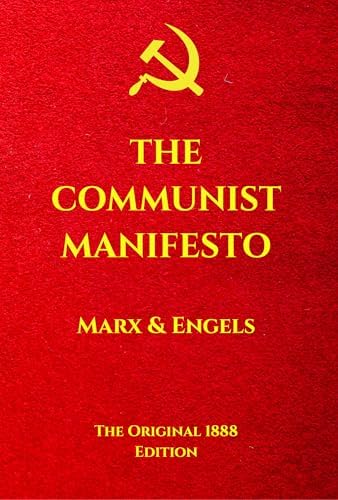
The psychological roots of The Communist Manifesto are challenged by Karl Marx's father, who criticized his son's resentment-driven worldview in historical letters.
- 05
"Politicians and central bankers killed the American Dream." - Tom arguing that government deficit spending and inflation devalue currency while inflating asset prices.
- 06
While Michael Malice's The Anarchist Handbook advocates for voluntaryism, Tom argues that some government guardrails are necessary to prevent corporate and elite manipulation.
- 07
"Price controls don't work. They fuck everything up." - Tom highlighting the Cuban president's public admission that state-controlled pricing breaks economic physics.
- 08
U.S. federal spending nearly doubled from $3.69 trillion in 2015 to $7.01 trillion in 2025, representing a massive 90% increase in government size.
Get the latest ideas from Tom Bilyeu.
Plus the best new takeaways about economics from other top podcasts — read in minutes, not hours.
By continuing, you agree to podbrain's Terms and Privacy Policy.
These notes may contain occasional inaccuracies. Learn how podbrain notes are made
In this live episode, host Tom Bilyeu and co-host Drew analyze a turbulent weekend of global geopolitics, focusing on the fragile U.S.-Iran negotiations, the escalating Israel-Lebanon conflict, and shifting political tides in Europe and South America. Bilyeu critiques the Trump administration's aggressive negotiating style and JD Vance's diplomatic clean-up efforts in Switzerland. The discussion shifts to the philosophical roots of military strategy, referencing Ronen Bergman's Rise and Kill First The Secret History of Israel's Targeted Assassinations to explain Israel's preemptive defense doctrine. Bilyeu also examines the economic failures of socialism, citing a historical letter from Karl Marx's father that challenges the psychological motivations behind The Communist Manifesto. Finally, they debate domestic economic policy, contrasting Representative Ro Khanna's wealth-tax proposals with David Friedberg's "makers vs. takers" framework. Bilyeu argues against extreme libertarianism, referencing Michael Malice's The Anarchist Handbook to explain why some state guardrails are necessary, while ultimately concluding that government overregulation and central bank inflation have systematically destroyed the American Dream.
Geopolitical Brinkmanship and the Fragile U.S.-Iran MOU
Tom critiques Trump's aggressive rhetoric toward Iranian negotiators, calling his threats "crazy even for Trump" but acknowledging that unpredictability can serve as a strategic deterrent.
"Close the strait and you won't even make it back to your fucking country." - Tom, paraphrasing Trump's warning to highlight the high-stakes nature of the negotiations.
JD Vance acts as the "good cop" in Switzerland, attempting to establish a de-confliction framework and return nuclear inspectors to Iran under the 60-day MOU extension.
Tom remains highly skeptical of the MOU's viability, noting that Iran has previously bypassed nuclear inspectors and holds leverage through regional proxies.
The Dahiya Doctrine and Israel's Strategy of Force
The discussion addresses Israel's military doctrine of disproportionate response, historically formalized in the 2006 Lebanon War as the Dahiya Doctrine.
"For every tear of an Israeli mother, 1,000 Lebanese mothers must weep. All of Lebanon must burn." - Tom, quoting Itamar Ben-Gavir to illustrate the rhetoric of total war.
As detailed in Rise and Kill First The Secret History of Israel's Targeted Assassinations, Israel's preemptive defense strategy is rooted in the ancient Talmudic command to strike first when threatened.
Tom notes that while disproportionate force prevents bullying, it risks turning a nation into a "monster" in the court of global public opinion.
The Economic Physics of Communism and Resentment
The president of Cuba publicly admitted that price controls do not work, exposing a fundamental flaw in state-planned economic systems.
Tom argues that Marxist ideology is driven by personal resentment rather than sound economic principles, a critique echoed by Karl Marx's own father before the publication of The Communist Manifesto.
"This embitterment disgusts me, and you are the last person from whom I would expect it." - Tom, quoting Heinrich Marx's letter to his son Karl.
Bilyeu asserts that economic systems must align with human nature and incentives, as attempting to force collective altruism at scale inevitably leads to authoritarian collapse.
The Makers vs. Takers Debate and Economic Policy
David Friedberg and Representative Ro Khanna clashed on social media over wealth taxes, with Friedberg framing the economy as a division between "makers and takers."
Khanna proposed a 5% one-time tax on Elon Musk to fund universal childcare, which Tom criticizes as a deceptive "one-year fix" that ignores the nature of unrealized capital gains.
"We do not have a revenue problem. We have a spending problem." - Tom, pointing out that the U.S. government spends $1.58 for every new dollar of tax revenue.
While some libertarians advocate for zero government, as explored in The Anarchist Handbook, Tom believes minimal regulatory guardrails are necessary to prevent elite financial manipulation.
The Student Loan Crisis and Government Guarantees
Tom argues that the federal government's guarantee of student loans has removed market discipline, allowing universities to bloat administrative staff and inflate tuition costs.
Because student debt cannot be discharged through bankruptcy, generations of young Americans are saddled with liabilities for degrees that do not yield economic value.
Bilyeu proposes allowing students to declare bankruptcy to force banks to assess loan risk properly, alongside a "principal-only" repayment model without interest.
"Politicians and central bankers killed the American Dream." - Tom, explaining how deficit spending forces money printing, which devalues the dollar and prices citizens out of housing.
Navigating the Future of AI and Personal Adaptability
In a rapidly changing job market disrupted by AI, Tom advises parents to focus on raising emotionally resilient and highly adaptable children.
"Courage is not the absence of fear. It's moving forward in the face of fear." - Tom, emphasizing the necessity of action over stagnation.
Bilyeu suggests that if AI achieves superintelligence, society will transition to a world of abundance where the primary challenge shifts from survival to finding meaning and purpose.


These notes may contain occasional inaccuracies. Learn how podbrain notes are made
More in Self-Development

#871: The “Divine Leaf” with 8,000+ Years of Use — Exploring the Many Benefits of Coca with Dr. Andrew Weil and Wade Davis
Jun 25, 2026Gary's Economics Can't Answer This One Question About Wealth Taxes | Tom Reacts
Jun 25, 2026
Why You Don’t Feel Loved (even when you are) - Sonja Lyubomirsky - #1115
Jun 25, 2026
A User’s Guide To Kava: The Most UNDERRATED Plant Medicine w/ Cameron George #537
Jun 24, 2026
What Society Values in Men, Where Does a Man Start, and Why Humility Makes or Breaks Us | ASK ME ANYTHING
Jun 24, 2026
.svg)