
Balaji Srinivasan — Bitcoin and Ethereum, Lee Kuan Yew, US vs China, and More
Balaji Srinivasan is an angel investor, entrepreneur, and former CTO of Coinbase and General Partner at Andreessen Horowitz. He holds multiple degrees from Stanford including a PhD in Electrical Engineering, co-founded several companies including Earn.com (acquired by Coinbase), and taught a MOOC course in 2013 that...

Episode


- 01
Balaji predicts a 30% chance of China implementing a firewall attack on Bitcoin within the next 5-10 years, potentially splitting the network
- 02
The pseudonymous economy will separate earning names from speaking names, allowing reputation transfer between identities using 'Z-karma' technology
- 03
India could become the dark horse of the 2020s by embracing cryptocurrency as 'crypto capital' while US becomes 'woke capital' and China 'communist capital'
- 04
Network states will form as 'social networks with integrated cryptocurrency and national consciousness that eventually crowdfunds territory'
- 05
Real names are actually 'state names' - global identifiers that enable conscription and property redistribution, as explained in Seeing Like a State
- 06
The internet increases variance in all outcomes, removing mediators and creating both amazing successes and spectacular failures
- 07
Lee Kuan Yew represents the prototype for 21st century leadership - 'the first startup CEO of a country' who delivered results through minimal coercion
Get the latest ideas from Tim Ferriss.
Plus the best new takeaways about bitcoin from other top podcasts — read in minutes, not hours.
By continuing, you agree to podbrain's Terms and Privacy Policy.
These notes may contain occasional inaccuracies. Learn how podbrain notes are made
Balaji Srinivasan is an angel investor, entrepreneur, and former CTO of Coinbase and General Partner at Andreessen Horowitz. He holds multiple degrees from Stanford including a PhD in Electrical Engineering, co-founded several companies including Earn.com (acquired by Coinbase), and taught a MOOC course in 2013 that reached over 250,000 students worldwide.
The conversation explores Balaji's vision for the future through multiple lenses: cryptocurrency investment strategies, media decentralization, pseudonymous economies, and network states. He discusses his upcoming 1729.com platform - named after the Ramanujan number from The Man Who Knew Infinity - which will pay users in Bitcoin for completing educational tasks and tutorials.
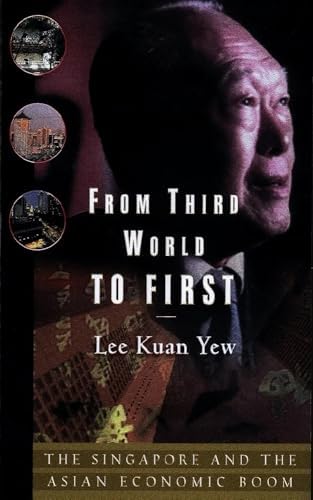
Key topics include the risks facing Bitcoin and Ethereum, strategies for defending against media attacks using lessons from The Journalist and the Murderer, the potential for India to become a cryptocurrency superpower, and how Lee Kuan Yew's Singapore model from From Third World to First provides a template for future governance.
The Ramanujan Vision: Global Talent Discovery Through 1729.com
1729.com will be 'the first newsletter that pays you' with at least $1,000 daily in Bitcoin prizes for completing tasks like writing essays, creating educational videos, and generating open-source coursework
The platform aims to create 'anywhere there's a phone, there's a job' by enabling global talent discovery, inspired by Srinivasa Ramanujan's story from The Man Who Knew Infinity about finding mathematical genius in unexpected places
Tasks will include both content creation and educational curriculum development, with review processes using crowdsourced voting and manual oversight to determine Bitcoin payouts
Media Warfare and the Pseudonymous Defense Strategy
The Journalist and the Murderer by Janet Malcolm opens with the line: 'Every journalist who is not too stupid or too full of himself to notice what is going on knows that what he does is morally indefensible' - describing journalists as confidence men who prey on people's trust
Corporate journalism operates on a 'journalist versus subject' hierarchical model where journalists can edit quotes and control distribution, unlike podcasting's peer-to-peer 'mutually assured destruction' dynamic
Self-defense requires three components: financial independence through radical expense reduction, social network supply chain analysis to identify vulnerabilities, and adoption of pseudonymous identities
The pseudonymous economy will separate 'earning names' from 'speaking names' using 'Z-karma' technology to transfer reputation between identities, similar to how Zcash transfers money anonymously
Bitcoin and Ethereum Investment Thesis: 50/50 Split Strategy
For maximizing returns, Balaji recommends 'the dumbest thing' - putting 50% in Bitcoin and 50% in Ethereum, calling it 'guaranteed to produce really exceptional returns' from a 2030 perspective
Bitcoin faces a 30% probability of Chinese firewall attack within 5-10 years, where China blocks port 333 while allowing domestic mining to continue, potentially causing chain reorganizations
Even if Bitcoin protocol fails, the Bitcoin ledger could be imported into 100 other chains like Zcash or Ethereum, preserving private key value across multiple networks
Ethereum's migration to proof-of-stake eliminates stationary miners that can be 'rounded up' but introduces different trust assumptions compared to Bitcoin's purely computational proof-of-work
Network States and the Westphalian Internet War
A network state is defined as 'a social network with an integrated cryptocurrency and a sense of national consciousness that eventually crowdfunds territory' - territory that can be distributed globally rather than contiguous
The current period parallels the 30 Years War (1618-1648) that led to the Peace of Westphalia, with competing social and currency networks fighting for ideological dominance globally
Real names are actually 'state names' or 'social security names' - global identifiers that enable state control, as documented in Seeing Like a State regarding how naming systems facilitated conscription and property redistribution
The solution involves 100% democracy versus 51% democracy - maximizing consent through multiple competing jurisdictions where people can 'vote with their feet' rather than accepting minimal majority rule
India as Crypto Capital: The Dark Horse Prediction
India could become the 'crypto capital' of a three-way split between US 'woke capital,' Chinese 'communist capital,' and decentralized 'crypto capital' - positioning itself as the neutral global platform
With 400 million people brought online through Reliance Jio's cheap 4G service, India has the infrastructure for massive remote work participation if cryptocurrency enables frictionless international payments
India ranks third globally in tech unicorns after the US and China, has competitive engineering talent, and could become a 'tech and media superpower' by creating content with a 'bright sun to the west' optimistic technology worldview
Banning cryptocurrency would be 'this huge own goal' since crypto combines India's two biggest success stories of the last 30 years: economic liberalization and the internet
Lee Kuan Yew Model: The Startup CEO of Countries
Lee Kuan Yew was 'probably the greatest leader of the 20th century' who transformed Singapore from a 'third world swamp' to a shining metropolis, as documented in his book From Third World to First
Lee represents 'a piece of the 21st century that fell into the 20th' - the first startup CEO of a country who delivered results through minimal coercion rather than winning violent conflicts
Small countries like Estonia, Dubai, Switzerland, and Miami under Mayor Francis Suarez must 'work for their supper every day' through convincing rather than coercing, making them better adapted to the internet age
The remote economy has put 'every city in competition with every other city' - Miami competes with San Francisco through Twitter-based talent recruitment and pro-Bitcoin policies
Transhumanism and the Purpose of Technology
The positive vision centers on 'infinite frontier, immutable money, eternal life' - space exploration, cryptocurrency, and life extension as the next 'liberté, égalité, fraternité' for future states
Universal healthcare represents 'moving gravy around on the plate' with a zero-sum mentality, while the goal should be self-repairing, rejuvenating bodies that don't need traditional healthcare
Aging is a coordinated biological program rather than random mechanical breakdown - evidenced by predictable changes and sharp cutoffs around 120 years rather than exponential distribution of lifetimes
The ideological split will be between 'anarcho-primitivist' forces wanting to return to nature versus transhumanist forces embracing brain-machine interfaces, limb regeneration, and CRISPR genetic modifications





These notes may contain occasional inaccuracies. Learn how podbrain notes are made
More in Self-Development

Can the Middle Class Be Saved? Political Division, Economic Doom & The Leadership Problem | Andrew Bustamante Pt. 2
Jun 20, 2026
The Career Trap That Makes Women Miserable - Suzanne Venker - #1113
Jun 20, 2026
How Immigration and War Test the Strength of Values and National Identity
Jun 19, 2026
7 Strategies for Becoming a Better Father | FRIDAY FIELD NOTES
Jun 19, 2026
ELECTROMAGNETISM Is The SECRET To Health: Biofield Tuning Explained | Eileen McKusick
Jun 15, 2026
The Hidden Cost Of Overthinking Everything - George Mack - #1111
Jun 15, 2026
More episodes with Balaji
Balaji Srinivasan - The Mathematics of Collapse: Why The West Is Going To Zero

Ben Horowitz and Balaji Srinivasan on Netscape and Network States
Cory Levy Interviews Balaji

Cory Levy and Balaji on Where Talent Should Go

The Network State with Balaji Srinivasan

.svg)