
How Immigration and War Test the Strength of Values and National Identity
This episode of the Tom Bilyeu Show Live features host Tom Bilyeu and producer Ryan, with Drew absent. Tom covers a dense slate of geopolitical and domestic topics including the collapse of the Iran-US MOU, Ukraine's escalating drone war against Russia, EU immigration reform, the Israel-Lebanon conflict, UK censorship...

Episode


- 01
Iran's strategy is to delay negotiations until US midterms, using Hezbollah-Israel tensions as leverage — the MOU collapsed within 48 hours of being signed.
- 02
Trump publicly admitted US strategic petroleum reserves would run out in 4 weeks, handing Iran critical negotiating intelligence: 'You want to see bedlam' — Trump.
- 03
Ukraine's drone campaign marks a turning point: Russia cannot stop the strikes, and EU backing has shifted the war's momentum decisively toward Ukraine.
- 04
The US losing control of the Strait of Hormuz is historically comparable to Britain's Suez Canal moment — a visible crack in superpower credibility.
- 05
The EU passed its most aggressive immigration reform in a 418-218 vote on June 17th, finally establishing deportation hubs for rejected asylum seekers.
- 06
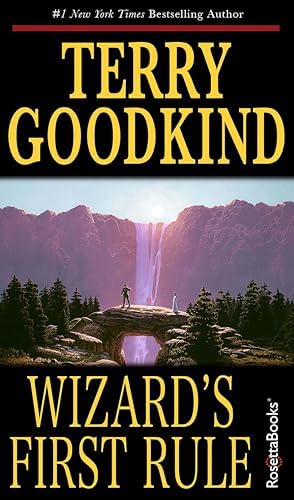
A viewer cited Sword of Truth Series Rule Seven — 'Life is the future, not the past' — as the lens for Tom's argument that Palestinians and Israelis must stop relitigating historical grievances.
- 07
NVIDIA has cornered the AI chip market so completely that only Elon Musk is seriously attempting to replicate their infrastructure at scale.
- 08
Government sovereign wealth investment in AI companies guarantees reduced competition and slower innovation — 'The product will only get better through competition' — Tom.
Get the latest ideas from Tom Bilyeu.
Plus the best new takeaways from other top podcasts — read in minutes, not hours.
By continuing, you agree to podbrain's Terms and Privacy Policy.
These notes may contain occasional inaccuracies. Learn how podbrain notes are made
This episode of the Tom Bilyeu Show Live features host Tom Bilyeu and producer Ryan, with Drew absent. Tom covers a dense slate of geopolitical and domestic topics including the collapse of the Iran-US MOU, Ukraine's escalating drone war against Russia, EU immigration reform, the Israel-Lebanon conflict, UK censorship controversies, and the dangers of government intervention in AI.
The show opens with the rapid unraveling of the Strait of Hormuz deal — signed and collapsed within 48 hours — which Tom frames as a predictable outcome given Iran's incentive to delay until US midterms. The conversation expands into a detailed comparison of asymmetric warfare in both the Iran standoff and the Russia-Ukraine conflict, where EU-backed Ukrainian drone strikes are now hitting Moscow. A viewer's Super Chat invoking the Sword of Truth Series Wizard's Seventh Rule sparks a lengthy discussion on Israel, Palestine, and whether historical grievances can ever justify present-day conflict. Tom also recommends The House of Rothschild by Niall Ferguson to understand how financial power shaped the founding of Israel. The episode closes with warnings about government co-opting AI investment and a rallying call for American entrepreneurial identity.
Iran MOU Collapses Before Talks Even Begin
The Memorandum of Understanding between the US and Iran fell apart within 48 hours — the Strait of Hormuz is closed again and JD Vance canceled his Switzerland trip.
Israel's refusal to accept being included in the deal unilaterally, combined with Hezbollah remaining in southern Lebanon, triggered fresh strikes: roughly 80 Israeli strike sites, 18 Lebanese dead, 9 Israelis killed across two separate attacks.
Trump publicly acknowledged the economic stakes: 'If you kept this going, that could have happened [economic catastrophe]... we run out of reserves in about 4 weeks. There'll be a time when you wouldn't be able to get it. And you want to see bedlam.' — Trump.
Tom argues this admission handed Iran critical leverage by confirming US desperation on a public timeline.
20% of global energy transits the Strait of Hormuz, making closure an asymmetric economic weapon Iran can deploy without winning a conventional war.
Tom's core thesis: Iran's goal is regime change in America — delay until midterms, let economic pain accumulate, and watch Trump's domestic position erode. 'They are perfectly willing to stall and drag this out.'
The MOU itself was described as 'mind-numbing, super vague — all it says is we're going to talk about some shit down the road,' designed to force the US to take responsibility for Israeli actions rather than produce a real settlement.
Ukraine Drones Hit Moscow — A War That Has Shifted
Ukraine has demonstrated the ability to strike deep inside Russia with drones, hitting oil refineries, infrastructure, and multiple sites simultaneously — footage shows Russian civilians watching from their cars, calling it 'like Call of Duty.'
One dramatic explosion at a Russian oil facility was caused by Russia's own surface-to-air missile fired at a small drone — the anti-drone missile was far larger than its target.
The shift in momentum is attributed to G7 and EU backing: Europe has committed to funding Ukraine after Russia repeatedly refused to negotiate in good faith despite public statements of wanting peace.
Tom draws a direct parallel to Iran: 'We see the weakening of a superpower unable to overcome asymmetric warfare, and now we see a little guy, when fueled by the might of the EU, able to leverage asymmetric warfare to massive effect.'
Putin's internal position is deteriorating — a general recently 'slipped and fell from a 10-story window,' and Tom invokes the Stalin-era precedent of returning POWs being sent to gulags, warning Putin may need to find a new war to redirect his military.
Zelensky's message: 'Unless Putin stops the war, Moscow will burn.'
Tom warns: 'Don't expect Putin to go quietly. He is going to need a narrative of how this was a victory.'
US Hegemony and the Suez Moment at the Strait
The Strait of Hormuz standoff represents a historic inflection point: 'This is what we're watching unfold — an awakening to the fact that the US is incapable of making good on the promise that they have made to the world.'
Tom compares it to Britain's Suez Canal crisis and Conor McGregor losing to Khabib — once the illusion of invincibility breaks, adversaries are emboldened regardless of remaining power.
The asymmetry is structural: Iran doesn't need to win a war to close the strait — a few mines scare insurance companies and the passage effectively shuts down without a single naval battle.
Trump's fundamental error, per Tom, is treating Iran as a rational economic actor: 'When the other side is perfectly happy to accept their rewards in heaven, you're going to be in a very different negotiating position.'
Israel, Palestine, and the Limits of Historical Grievance
A viewer's Super Chat cited the Sword of Truth Series Wizard's Seventh Rule — 'Life is the future, not the past' — as a frame for Tom's argument that relitigating the founding of Israel is politically and practically futile 80 years later.
Tom's position: after 50 years of statehood, the legitimacy debate is closed. He draws an analogy to Cyprus — his wife's family lost property there — arguing that even personal loss doesn't make reconquest rational policy.
On the Rothschild role in Israel's founding, Tom recommends The House of Rothschild by Niall Ferguson, describing how the original Rothschild patriarch sent five sons to Europe's major cities with explicit instructions to befriend politicians, creating the financial-political network that eventually produced the Balfour Declaration.
'The reason the letter is written to the Rothschild in England is because he's funding so much of what's going on in the UK.'
Tom distinguishes this as smart strategic play, not conspiracy: 'You're just mad that they're fucking good at it.'
Israeli National Security Minister Ben-Gvir's direct quote: 'For every tear of an Israeli mother, 1,000 Lebanese mothers must weep. All of Lebanon must burn.' — Tom calls this 'violent' and notes it does not represent all Israelis.
The 'right of return' debate is framed as existential for Israel: allowing mass Palestinian return would enable a demographic outvoting strategy that would end Israel as currently constituted — Tom argues this explains, though doesn't fully justify, apartheid-like policies as a survival mechanism.
Tom contrasts Israel and Palestine with Japan's post-WWII trajectory: 'They lost, they got occupied, and they completely imbibed the culture... they are now one of the biggest economies on planet Earth.' His advice — orient toward the future — is acknowledged as one Palestinians are unlikely to take given religious framing.
EU Immigration Reform and the Economics of Open Borders
On June 17th, the EU passed its most aggressive immigration reform bill in a 418-218 vote, establishing deportation hubs outside EU borders for rejected asylum seekers and granting member states new detention powers.
Previously, rejected asylum seekers could vanish inside the continent after denial — the new law closes that loophole.
The vote required center-right partnering with the far-right rather than the center-left, which Tom flags as a concerning but pragmatically necessary coalition.
Tom's economic argument: EU governments import cheap labor to hide economic stagnation caused by over-regulation, then use government handouts to secure immigrant votes — creating a Ponzi scheme requiring ever more immigration to sustain.
'Regulation is corruption. It is great when it's small and obesity when it's large.'
US housing example: homes have gone from 2x to 5x average salary over the past 40-50 years, partly driven by population inflows without matching housing supply.
Tom argues the racism emerging in Europe is a symptom, not a cause: 'The racism is people freaking out. Something's going wrong. They don't know how to protect themselves.' He compares it to Alzheimer's plaque — an ambulance at the scene of a deeper injury, not the injury itself.
On assimilation, Tom defines the core American values immigrants must adopt: individualism, freedom of speech, free-market economics, bottom-up rather than top-down governance, and the Second Amendment as a check on state tyranny.
AI, NVIDIA's Moat, and the Danger of Government Ownership
JD Vance and Bernie Sanders are converging on sovereign wealth investment in AI companies — Tom calls this a catastrophic mistake: 'You want to control. Why do we not want the government taking a sovereign wealth position in AI companies? Because they will then choose which ones win and lose.'
NVIDIA has cornered the AI accelerator and GPU market so completely that only Elon Musk is seriously attempting to replicate the infrastructure — their chips become obsolete roughly every 3 years, keeping data center costs structurally high.
The path to lower AI compute costs is algorithmic efficiency, not more data centers: 'If one gigantic data center can now service 100 million people and you need it to serve a billion, same chips, same data center, now serving more people — the cost goes down.'
Tom warns that AI dependency is already measurably degrading cognition: 'Studies are already coming out. If you let AI think for you, you become stupid. You get mush brain.' — framed as a parallel to government handouts creating dependency.

These notes may contain occasional inaccuracies. Learn how podbrain notes are made
More in Self-Development
Can the Middle Class Be Saved? Political Division, Economic Doom & The Leadership Problem | Andrew Bustamante Pt. 2
Jun 20, 2026
The Career Trap That Makes Women Miserable - Suzanne Venker - #1113
Jun 20, 2026
7 Strategies for Becoming a Better Father | FRIDAY FIELD NOTES
Jun 19, 2026
ELECTROMAGNETISM Is The SECRET To Health: Biofield Tuning Explained | Eileen McKusick
Jun 15, 2026
The Hidden Cost Of Overthinking Everything - George Mack - #1111
Jun 15, 2026
.svg)