
The Career Trap That Makes Women Miserable - Suzanne Venker - #1113
This episode features Suzanne Venker, Gen X author, coach, and self-described countercultural writer who has spent 25 years writing about marriage, motherhood, and feminism. She is the author of several books including...

Episode


- 01
80% of women who reach menopause without children didn't intend to be childless — only ~10% are childless by choice, per Suzanne Venker
- 02
Suzanne argues the cohabitation effect is real: divorce rate for those who cohabited before marriage is 31.4% vs. 25.9% for those who did not
- 03
71% of Americans believe it's important for a man to provide for his family, but only 32% say the same of women — a gap Venker says reflects deep biological instinct
- 04
Top 20% of female earners are mating with the bottom 40% of male earners, creating a self-reinforcing financial trap for women who want to step back from work
- 05
Venker's core thesis: modern culture prepares women for work but not for relationships and family, leaving them blindsided around age 30 when priorities shift
- 06
"Nothing in your life is going to compare to the euphoria and satisfaction and meaning of having a baby" — Suzanne, summarizing her billboard message to young women
- 07
Childhood obesity tripled in the last 50 years at the same time mothers left the home en masse — Venker links the trends directly to the absence of home cooking
- 08
Venker warns that the skills that make women successful professionally — disagreeability, advocacy, argumentation — are "a complete disaster at home" in relationships
Get the latest ideas from Chris Williamson.
Plus the best new takeaways about relationships from other top podcasts — read in minutes, not hours.
By continuing, you agree to podbrain's Terms and Privacy Policy.
These notes may contain occasional inaccuracies. Learn how podbrain notes are made
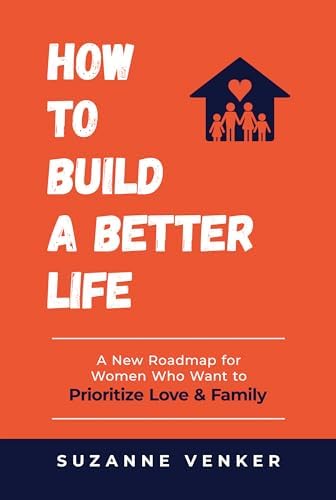
This episode features Suzanne Venker, Gen X author, coach, and self-described countercultural writer who has spent 25 years writing about marriage, motherhood, and feminism. She is the author of several books including The Alpha Female's Guide to Men and Marriage and her most recent work How to Build a Better Life. Host Chris Williamson engages her in a wide-ranging conversation about the cultural forces shaping women's life decisions.
Venker opens by explaining the apology she dedicated to a generation of women she believes were misled — raised to center career over family without being warned of the biological and relational costs. The conversation covers the three key decisions women make in their 20s around career, relationships, and finances, and how those choices either expand or eliminate options later. They also dig into cohabitation, daycare, breadwinning mothers, the attachment literature popularized by Attached and Secure, and the hidden costs of lifestyle creep on family formation.
How Feminism's Second Wave Misled a Generation of Women
Venker dedicates her book with an apology to women she says were "set up to fail" by decades of political messaging that treated men and women as interchangeable, without accounting for differences in desire or biology.
"The messaging has been for decades now, you can do anything you want to do, without any caveats, with no explanation or nuance" — Suzanne, describing how career was placed at the center of women's lives while marriage and motherhood were left out of the equation.
Venker argues that the loudest second-wave feminist voices of the 1970s were a small minority of women with dysfunctional personal backgrounds who extrapolated their own stories — bad experiences with men or marriage — into universal claims that marriage is oppressive.
Chris frames this as a "bigotry of male expectations" — the implicit message that women are only valuable insofar as they can perform roles traditionally held by men, which paradoxically denigrates what women have historically done.
He cites a hunter-gatherer study where researchers manipulated data to show women hunted as much as men, arguing the framing treated hunting as important and gathering as not — a position he calls "the most misogynistic thing" from supposedly pro-women advocates.
Feminism is no longer discussed as a distinct ideology — it has become embedded in the fabric of society so that its assumptions go unquestioned, including the idea that a woman cannot be powerful or liberated unless she is working for pay.
The Three Decisions That Lock Women Into a Difficult Future
Decision one is professional: Venker urges women to choose careers and majors that offer flexibility — part-time options, remote work, or entrepreneurship — so that when priorities shift around age 30, they have options rather than feeling trapped.
Student debt is a major accelerant of the problem: by the time a woman finishes school, lands a job, and starts repaying loans, she is around 30 — precisely when biological and relational priorities shift — and her financial obligations make stepping back feel impossible.
Decision two is relational: Venker argues women should prioritize men who have found professional footing and embrace a providing role, because financial dependence during the early years of motherhood is a biological reality that 71% of Americans instinctively recognize — versus only 32% who expect the same of women.
The top 20% of female earners are currently mating with the bottom 40% of male earners, creating a self-reinforcing loop where women work harder to compensate for a partner's lower earnings, reducing their own flexibility to step back when children arrive.
Decision three involves financial structure: couples who assume two incomes and allow lifestyle creep — two cars, bigger house, higher spending — find it nearly impossible to transition to one income when a baby arrives and priorities change.
Venker's practical alternative: if you know you want to step back, start living on one income before children arrive and bank the second income as a buffer.
Cohabitation, Sliding Into Marriage, and Dating With Purpose
Venker has long opposed cohabitation before engagement, not for religious reasons but because it causes couples to "slide" into marriage through inertia rather than making a conscious, deliberate decision — a dynamic Chris calls "falling backward into a relationship."
Divorce rate data supports the concern: people who cohabited before marriage divorce at 31.4% versus 25.9% for those who did not, with earlier research finding a 20–50% higher divorce risk depending on controls.
"The reasons why you shack up are different from the reasons why you get down on one knee and ask someone to marry you for the rest of your life. Those are two different decisions completely" — Suzanne, on why cohabitation and marriage commitment are not equivalent.
Venker's proposed alternative: make the engagement decision while living separately, then move in together during the engagement period — preserving objectivity for the commitment decision while still allowing a real-world compatibility test before the wedding.
On dating with purpose: Venker advises women to surface key values — family orientation, career trajectory, views on providing — within the first three dates, not through a formal interrogation but through natural conversation about background, parents' marriage, and work.
Venker warns against buying property or making any binding financial commitment with a partner before marriage: "Don't ever buy a house with somebody you're not married to. That's a really dumb idea."
Breadwinning Mothers, Male Incentive, and the Resentment Trap
Venker's observation from coaching: when women become primary breadwinners — especially with a stay-at-home dad — they eventually become resentful, not out of fault but because simultaneously providing financially and mothering is not sustainable without breakdown.
"Men want their wives happy, and if they believe she wants to provide, they instinctively step back" — Suzanne, arguing that when women signal they can handle financial provision, men lose their primary incentive to produce.
When a woman becomes a mother, her desire to work for pay ramps down naturally; when a man becomes a father, his desire to provide ramps up — Venker's theory is that fathers feel less physically needed in early infancy and respond by channeling energy into provision.
The most common client Venker sees: a hard-charging career woman in her early-to-mid 30s who never considered staying home, has a baby, and discovers she desperately wants to — but has built a two-income financial life that makes it feel impossible.
Venker advises women in this situation to approach their husbands with humility: "I had no idea, but this is what I want now, what can we do?" — and to demonstrate willingness to genuinely reduce lifestyle expectations, not just ask for more without cutting back.
The Alpha Female at Home: Why Workplace Skills Backfire in Marriage
In The Alpha Female's Guide to Men and Marriage, Venker argues that the skills that make women successful professionally — disagreeability, advocacy, argumentation — are "a complete disaster at home" and the exact opposite of what builds a thriving relationship.
Disagreeability is positively correlated with professional earnings because it enables women to advocate for themselves at work, but the same trait applied at home creates constant conflict with a masculine partner.
Comedian Whitney Cummings is cited as a real-world example: after a partner asked "why would any man want a challenge in their relationship?" she realized she had mistaken being combative for being attractive.
"When women think and behave like a man, conflict in a relationship is inevitable" — Suzanne, explaining that receptivity and softness are distinct skill sets from professional assertiveness, and both are needed in their appropriate contexts.
Daycare, Attachment, and the Hidden Costs Paid Later
Venker argues daycare was originally a Head Start program for low-income families with no alternative — its normalization into mainstream use happened gradually and has reached a point where dropping off a 6-week-old is discussed "like taking a shower," with no awareness that it may be harmful.
Her hierarchy for early childcare: mother first, then father, then grandparent, then nanny, then small neighborhood arrangement — institutional group daycare is "the bottom of the bottom" because it cannot replicate the one-on-one attachment that littles need.
When babies stop crying at drop-off, Venker cautions this is not evidence they are fine: "They just sort of gave up because nobody tended to their needs. That doesn't mean they're fine, it just means they're quiet."
The most compelling argument Venker gives to skeptical mothers: the first three years of life are when children develop the intangibles of love and trust that carry into their own adult relationships — failure to attach securely in those years shows up decades later in dating and marriage struggles.
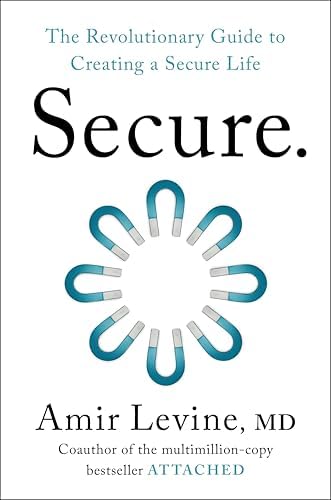
Chris identifies a painful paradox: many women are in therapy unpicking their own attachment wounds — informed by books like Attached by Amir Levine and his newer work Secure — while simultaneously recreating insecure attachment conditions for their own children through extended daycare, because the economic model they've built requires it.
Practical alternative Venker endorses: two mothers alternate childcare days, each watching both children on their days off — providing free, small-group, familiar care without institutional daycare, requiring only one other willing parent.
How to Build a Countercultural Life Around Family First
How to Build a Better Life is Venker's most recent book, written for women who want marriage, love, and family at the core of their lives — she argues that making countercultural decisions early eliminates most of the attachment, financial, and relational crises she sees in coaching.
Venker's core inversion: instead of putting career at the center and trying to fit family around it, put family first and make all career, financial, and relational decisions orbit around that — "live your life, not theirs."
The average American adult is likely to be divorced, has less than $1,000 in savings, and is obese — Chris argues this makes following the cultural default "a reliable route to a life you probably don't want."
Venker's billboard message to young women: "Nothing in your life is going to compare to the euphoria and the satisfaction and the meaning of having a baby and raising that baby and having a family" — and if she is wrong, the worst outcome is that you had options.
Social media is identified as a primary driver of inflated expectations and the belief that children are unaffordable — exposure to curated lifestyles makes people feel their own circumstances are inadequate, when in reality children can be raised well on modest means with the right priorities.
Venker links the childhood obesity epidemic — which tripled over 50 years — directly to mothers leaving the home en masse, removing the person who was cooking: "That's when it all started to go downhill, when nobody was home to cook."


These notes may contain occasional inaccuracies. Learn how podbrain notes are made
More in Self-Development

Can the Middle Class Be Saved? Political Division, Economic Doom & The Leadership Problem | Andrew Bustamante Pt. 2
Jun 20, 2026
How Immigration and War Test the Strength of Values and National Identity
Jun 19, 2026
7 Strategies for Becoming a Better Father | FRIDAY FIELD NOTES
Jun 19, 2026
ELECTROMAGNETISM Is The SECRET To Health: Biofield Tuning Explained | Eileen McKusick
Jun 15, 2026
The Hidden Cost Of Overthinking Everything - George Mack - #1111
Jun 15, 2026
.svg)