
Dr. Tommy Wood — How to Future-Proof Your Brain from Dementia
Dr. Tommy Wood is an associate professor of pediatrics and neuroscience at the University of Washington, where his research focuses on brain health including therapies for newborn brain injury, adult brain trauma prevention and treatment, and factors contributing to long-term cognitive function. He holds degrees from...

Episode


- 01
Human babies are born uniquely fat compared to other mammals to support brain development with DHA and ketones as preferred fuel sources
- 02
45-70% of dementia cases are preventable through lifestyle interventions according to the Lancet Commission on dementia prevention
- 03
Cooling newborns to 33.5°C (92.3°F) within hours of birth significantly reduces death and disability from brain injury
- 04
High-intensity exercise generating lactate appears more beneficial for hippocampal structure than moderate exercise, with effects lasting years
- 05
Open-skill activities like dancing, martial arts, and team sports provide greater cognitive benefits than closed-skill exercises like jogging
- 06
Bilingual individuals show superior response inhibition and delayed dementia onset due to constant language suppression and activation
- 07
Blood flow restriction training with bands can maintain muscle mass and strength equivalent to traditional weightlifting
- 08
Sensory loss through hearing or vision impairment increases dementia risk, but hearing aids and cataract surgery eliminate this risk
Get the latest ideas from Tim Ferriss.
Plus the best new takeaways about neuroscience from other top podcasts — read in minutes, not hours.
By continuing, you agree to podbrain's Terms and Privacy Policy.
These notes may contain occasional inaccuracies. Learn how podbrain notes are made
Dr. Tommy Wood is an associate professor of pediatrics and neuroscience at the University of Washington, where his research focuses on brain health including therapies for newborn brain injury, adult brain trauma prevention and treatment, and factors contributing to long-term cognitive function. He holds degrees from Cambridge (biochemistry), Oxford (medicine), and the University of Oslo (PhD in physiology and neuroscience). Alongside his academic work, Tommy serves as head scientist for motorsport at HINSA Performance, overseeing health programs for Formula One drivers and professional athletes.
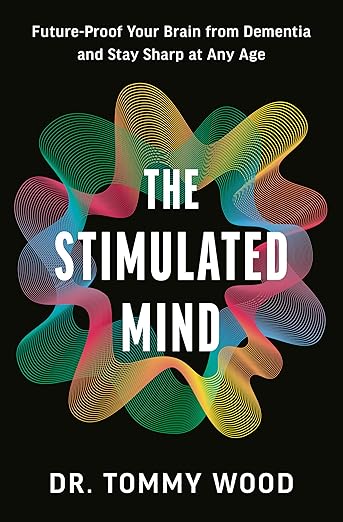
The conversation explores the science behind cognitive health and dementia prevention, examining both the established research and emerging theories. Tommy discusses his forthcoming book The Stimulated Mind, which synthesizes over 2,000 human studies into practical strategies for maintaining brain health. Key topics include the unique metabolic needs of developing brains, evidence-based interventions for brain injury recovery, and lifestyle factors that can prevent up to 70% of dementia cases.
Drawing from research spanning newborn brain development to adult cognitive decline, the discussion covers specific protocols for exercise intensity, the importance of complex motor skills, and the role of environmental factors like air quality and oral health. Tommy also shares practical insights from his own regimen, including blood flow restriction training, supplement protocols, and sleep optimization strategies that listeners can implement immediately.
Why Human Babies Are Born Fat: Brain Development Fuel
Humans are uniquely born fat compared to other mammals because fat serves as a repository for DHA (omega-3) and ketones, which are the preferred fuel sources for developing brains.
The developing brain preferentially uses ketones as synthetic precursors for building brain structure, particularly in the first weeks and months after birth.
This fat storage system supports the exceptionally hungry human brain during its critical early development period when metabolic demands are highest.
State-of-the-Art Brain Injury Treatment in Newborns
For hypoxic ischemic encephalopathy (HIE), babies are cooled to 33.5°C (92.3°F) within hours of birth, which 'significantly reduces death and disability' - Tommy.
Preterm babies cannot be treated with cooling as it can be detrimental, but caffeine supplementation shows promise for neuroprotection beyond just treating breathing issues.
The home environment that children return to has the biggest impact on long-term outcomes, often more than medical interventions during the acute phase.
Caffeine trials in preterm babies showed durable cognitive improvements lasting 2-3 years, leading to renewed interest in caffeine for other brain injuries.
Adult Brain Injury Recovery Protocol
Managing fevers is critical because hyperthermia increases the gap between brain metabolic demand and energy supply when mitochondria are damaged.
Blood sugar management involves avoiding refined carbohydrates that cause glucose spikes, which are particularly stressful during acute brain injury.
Supplement protocol includes creatine (more beneficial if already on board), omega-3 fatty acids, and exogenous ketones, which Tommy would personally take despite limited trial evidence.
Low-level aerobic exercise should begin as soon as tolerable without worsening symptoms, gradually increasing intensity to support recovery through improved cerebral blood flow and myokine release.
The Dementia Prevention Landscape: 45-70% Is Preventable
The 45% figure comes from the Lancet Commission report analyzing population attributable risk across factors like smoking, low education, hypertension, hearing loss, and physical inactivity.
UK Biobank data suggests up to 72% of dementias could be preventable, though this would require 'complete societal overhaul' addressing socioeconomic factors - Tommy.
Individual controllable factors like physical activity, smoking cessation, and alcohol moderation account for approximately 15-20% of preventable risk.
August Deter, Alzheimer's index patient, likely didn't have Alzheimer's disease as we understand it today, lacking genetic risk factors and possibly suffering from neurosyphilis or other conditions.
Exercise Intensity Matters: The Norwegian 4x4 Protocol
Higher intensity exercise appears superior for hippocampal structure and function, with the Norwegian 4x4 protocol (four sets of 4 minutes at 85-95% max heart rate) showing sustained benefits for years.
Lactate generation seems to drive brain benefits by acting as a histone deacetylase inhibitor that activates BDNF production locally in the brain.
Open-skill activities like dancing, martial arts, and team sports provide greater cognitive benefits than closed-skill exercises due to complex motor skill requirements and environmental adaptation.
Dancing shows the strongest association with dementia prevention among physical activities, likely due to combining motor learning, social interaction, and musical engagement.
Cognitive Stimulation: Languages, Music, and Creative Arts
The 'Creative Experiences and Brain Clocks' study found similar brain age benefits across tango dancing, language learning, music, art, and video gaming (specifically StarCraft and Super Mario 3D World).
Bilingual individuals show superior response inhibition because they constantly suppress one language while activating another, leading to delayed dementia onset.
Error detection triggers neuroplasticity adaptation - activities must challenge current capabilities and allow for failure to drive brain improvements, similar to training muscles to failure.
Complex, multi-sensory stimuli requiring significant expertise development appear to maintain discrete brain networks and reduce age-related entropy.
Blood Flow Restriction: Gym in a Bag Training
Tommy maintains his 6'2", 220-pound, 12% body fat physique partly through BFR training with B Strong cuffs and $40 Black Mountain resistance bands when traveling.
Standard BFR protocol involves 75-100 total reps (30-20-20-20 or 20-15-15-15-15) with 30-second rest periods, generating several millimolar of lactate in 10-15 minutes.
BFR works by restricting venous return rather than arterial flow, creating 'the pump' effect that allows muscle maintenance and growth with minimal equipment.
Tommy used only BFR cuffs and resistance bands for 4-5 months without losing muscle mass or strength, demonstrating the effectiveness for maintenance training.
Omega-3s, Methylation, and the B-Vitamin Connection
DHA concentrates at neuron synapses and mitochondria, playing critical roles in neurotransmitter release regulation and mitochondrial function through unique electron transport properties.
The Vitacog and B-proof trials showed that both adequate B-vitamin status (homocysteine below 13) and omega-3 supplementation are required together to see cognitive benefits.
DHA requires methylation-dependent processes to be incorporated into cell membranes as phospholipids, explaining why B-vitamins and omega-3s work synergistically.
Football players taking 1-2 grams of DHA daily showed less accumulation of neurofilament light (brain injury marker) across a season of sub-concussive impacts.
Sleep, Air Quality, and Oral Health: The Overlooked Fundamentals
Sleep is Tommy's only true non-negotiable: 'if I can only focus on one thing, then sleep is really critical for me' due to its association with amyloid clearance and dementia risk.
Short-term sleep deprivation affects processing speed but not accuracy - 'the quality of your work is just as good, it just might take you a little longer' - Tommy.
Air pollution near roads increases cardiovascular and cognitive risk, but HEPA filters (HealthMate, Jasper, BlueAir, Coway AirMega) can significantly improve indoor air quality and blood pressure.
Gum disease bacteria like Porphyromonas gingivalis are found in brain amyloid plaques, making xylitol gum and mouthwash low-risk interventions for oral microbiome improvement.
Supplement Strategy: Evidence-Based Essentials
Tommy's daily regimen includes 10 grams of creatine monohydrate taken in the morning because he finds it 'quite stimulating, cognitively stimulating' and it affects his sleep if taken later.
CDP-choline (500-1000mg daily) shows benefits in randomized trials for both age-related cognitive decline and traumatic brain injury recovery.
Core supplements include omega-3s (1-2g DHA), B-vitamins for methylation (B12, folate, B2, B6), vitamin D with K2, magnesium, and iron assessment particularly for perimenopausal women.
Polyphenol antioxidants show consistent benefits, while Tommy gets choline from eggs and liver rather than supplementing, emphasizing food sources when practical.


These notes may contain occasional inaccuracies. Learn how podbrain notes are made
More in Self-Development

Can the Middle Class Be Saved? Political Division, Economic Doom & The Leadership Problem | Andrew Bustamante Pt. 2
Jun 20, 2026
The Career Trap That Makes Women Miserable - Suzanne Venker - #1113
Jun 20, 2026
How Immigration and War Test the Strength of Values and National Identity
Jun 19, 2026
7 Strategies for Becoming a Better Father | FRIDAY FIELD NOTES
Jun 19, 2026
ELECTROMAGNETISM Is The SECRET To Health: Biofield Tuning Explained | Eileen McKusick
Jun 15, 2026

.svg)