
Morgan Housel: Wealth is What You Have Minus What You Want
Morgan Housel, author of The Psychology of Money and partner at Collaborative Fund, discusses the psychological aspects of wealth, spending, and financial decision-making with Shane Parrish. Housel shares insights from his bestselling books and personal financial philosophy.

Episode


- 01
"It's not necessarily how much you have, it's just the contrast to what you have before" - psychological wealth is relative to your previous state
- 02
"The speed at which a luxury becomes a necessity is two seconds" - expectations adjust instantly to new circumstances
- 03
"If you have to sum up doing well financially in one word, I think it's survival" - endurance matters more than optimization
- 04
99% of Warren Buffett's net worth was accumulated after his 65th birthday due to compound interest's exponential nature
- 05
"All wealth is what you have minus what you want" - controlling desires is often easier than increasing income
- 06
Housing affordability is the root cause of fertility crisis, drug problems, and political degradation in Western societies
- 07
"Excellence is the capacity to take pain" - financial success requires psychological endurance through volatility
- 08
Dollar cost averaging into index funds for 50 years beats 97% of investors despite being "average"
Get the latest ideas from The Knowledge Project Podcast.
Plus the best new takeaways about wealth building from other top podcasts — read in minutes, not hours.
By continuing, you agree to podbrain's Terms and Privacy Policy.
These notes may contain occasional inaccuracies. Learn how podbrain notes are made
Morgan Housel, author of The Psychology of Money and partner at Collaborative Fund, discusses the psychological aspects of wealth, spending, and financial decision-making with Shane Parrish. Housel shares insights from his bestselling books and personal financial philosophy.
The conversation explores how expectations shape our relationship with money, why housing affordability drives broader social problems, and the counterintuitive psychology of wealth. Housel explains his simple investment approach of dollar-cost averaging into index funds while maintaining 20-30% cash for independence.
Key topics include the difference between happiness and contentment, how social groups influence spending desires, the Vanderbilt family's wealth destruction, and practical advice for those living paycheck to paycheck. Housel emphasizes that financial success is more about survival and endurance than optimization.
The Psychology of Relative Wealth and Expectations
Psychological wealth depends entirely on contrast: "Would you rather have a net worth of a million dollars when you used to have two million, or would you rather have a net worth of $500,000 when you used to have $200,000? Most people would rather have $500,000."
"The speed at which a luxury becomes a necessity is two seconds" - humans instantly calibrate to new standards regardless of objective improvement.
Housel felt richest when he had $1,000 as a teenager because the gap from $20 to $1,000 felt enormous, demonstrating how reference points shape financial satisfaction.
Money as Independence Rather Than Happiness
"Money can be more like a vaccine where it can prevent a lot of misery" but doesn't necessarily create happiness - it's like oxygen that you only notice when lacking.
Every dollar saved is "a claim check of independence that will serve you, not just in the future, but today" by widening your channel of endurance for life's uncertainties.
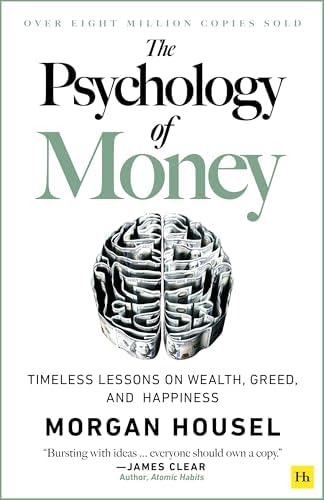
As outlined in The Psychology of Money, "if you have to sum up doing well financially in one word, I think it's survival" - the ability to endure volatility and uncertainty.
Daniel Kahneman's distinction between happiness (an emotion) and satisfaction (based on the story you tell about your life) explains why contentment matters more than momentary joy.
Housing Crisis as Root of Social Problems
"Affordable housing, I think, is the single biggest social problem" because fertility crisis, drug problems, and political degradation stem from people feeling uninvested in their communities.
Tucker Carlson's metric: "A good proxy for the health of a country is whether or not a 28-year-old can purchase a house" - currently impossible in most Western nations.
The solution is simple but politically difficult: "Virtually all of the reason that housing is so unaffordable is because we don't build enough. And the reason we don't build enough is zoning."
Tokyo demonstrates the solution - despite being a gigantic city, it maintains relatively affordable housing because "they build and build and build and build."
Simple Investment Philosophy and Compound Interest
Housel's entire investment strategy: "I dollar cost average into index funds. I hope to own them for 50 years. And that's it" - primarily Vanguard Total Stock Market Index (VTI).
"99% of Warren Buffett's net worth was accumulated after his 65th birthday" - demonstrating how compound interest delivers most gains at the end, not the beginning.
Maintains 20-30% of net worth in cash despite financial advisors calling it "ridiculous" because "I value sleeping at night" and independence over optimization.
"If I can be average for 50 years, I will beat the vast majority of people who try" - being in the top 3% through simple endurance rather than trying to reach the top 1% through complexity.
Social Influence and Authentic Spending
"Be very careful who you socialize with because it will, full stop, will set your expectations of what you want" - social groups directly impact financial desires and spending patterns.
The key insight: "Nobody's watching. They're not paying attention to me. They don't care what I'm wearing. They don't care what car I'm driving" - most signaling is wasted effort.
Rob Henderson's heuristic: "Rich people food looks better than it tastes, and poor people food tastes better than it looks" - exemplified by preferring Taco Bell over Michelin-starred restaurants.
Spending should reflect authentic preferences: "What would you do if nobody was watching?" - Housel splurges on travel comfort and his wife's gardening because these align with their genuine values.
Lessons from the Vanderbilt Fortune Collapse
The Vanderbilts "had the equivalent of hundreds of billions of dollars" but "squandered it" faster than any other Robber Baron family, while Rockefellers and Carnegies preserved wealth for generations.
As detailed in Vanderbilt The Rise and Fall of an American Dynasty, the money became their dictator: "It told them where they could live. It told them what their personality could be. It told them who they can marry."
Anderson Cooper was "one of the first people in his family to get to have the privilege to be himself and live his own life and not have to live up to the title of Vanderbilt heir."
The lesson: extreme wealth without authentic purpose can create "people who were basically puppets in their own life" rather than enabling genuine happiness.
Practical Advice for Financial Struggles
For those living paycheck to paycheck: "All wealth is what you have minus what you want" - controlling the denominator is often more achievable than increasing income.
"Independence exists on a spectrum" - even saving $1 or $10 creates more independence than having zero, rejecting the all-or-nothing mentality.
Historical context matters: today's middle-class Americans live better than 1950s families who had 700-square-foot houses with one bathroom for six people, no air conditioning, and leaking roofs.
The key question for any financial decision: "What are you likely to regret?" - this varies by person and should guide spending versus saving choices.


These notes may contain occasional inaccuracies. Learn how podbrain notes are made
More in Self-Development

Can the Middle Class Be Saved? Political Division, Economic Doom & The Leadership Problem | Andrew Bustamante Pt. 2
Jun 20, 2026
The Career Trap That Makes Women Miserable - Suzanne Venker - #1113
Jun 20, 2026
How Immigration and War Test the Strength of Values and National Identity
Jun 19, 2026
7 Strategies for Becoming a Better Father | FRIDAY FIELD NOTES
Jun 19, 2026
ELECTROMAGNETISM Is The SECRET To Health: Biofield Tuning Explained | Eileen McKusick
Jun 15, 2026
.svg)