
How to Repair and Nourish Your Gut | Dr. Giulia Enders
In this episode, host Shane Parrish interviews Dr. Giulia Enders, a German medical doctor and bestselling author of Gut The Inside Story of Our Body's Most Underrated Organ. Together, they explore the profound, often overlooked connections between...


- 01
The gut is a highly robust organ capable of healing from sensitivities once underlying damage is resolved.
- 02
As explained in Gut The Inside Story of Our Body's Most Underrated Organ, proper elimination posture requires a 30-degree squatting angle.
- 03
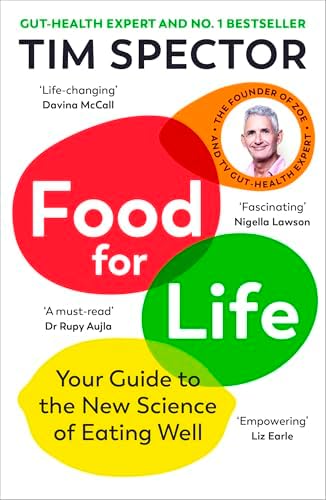
Drawing from Food for Life Your Guide to the New Science of Eating Well, eating 30 different plants weekly maximizes microbiome diversity.
- 04
Cooling cooked starches like rice, pasta, or potatoes crystallizes their starch, turning them into highly beneficial prebiotic fibers.
- 05
The World Health Organization recommends limiting daily sugar intake to 25 grams to prevent long-term systemic inflammatory diseases.
- 06
Chronic stress impairs gut blood flow, preventing the formation of protective mucus and selecting for microbes that thrive on distress.
- 07
Reflecting on Thinking in Bets Making Smarter Decisions When You Don't Have All the Facts, resulting occurs when we judge decisions solely by outcomes.
Get the latest ideas from The Knowledge Project Podcast.
Plus the best new takeaways from other top podcasts — read in minutes, not hours.
By continuing, you agree to podbrain's Terms and Privacy Policy.
These notes may contain occasional inaccuracies. Learn how podbrain notes are made
In this episode, host Shane Parrish interviews Dr. Giulia Enders, a German medical doctor and bestselling author of Gut The Inside Story of Our Body's Most Underrated Organ. Together, they explore the profound, often overlooked connections between gastrointestinal health, immune function, and overall mental well-being. Dr. Enders details practical strategies for improving digestion, including the simple biohack of cooling cooked starches to increase prebiotic content. She references the dietary diversity framework popularized in Food for Life Your Guide to the New Science of Eating Well, which advocates for eating thirty different plants weekly to feed diverse microbes.
The conversation also covers the physiological mechanics of elimination, the dangers of ultra-processed foods, and the impact of chronic stress on the gut's protective mucus lining. Additionally, Shane highlights a key decision-making concept from Thinking in Bets Making Smarter Decisions When You Don't Have All the Facts to illustrate how we evaluate choices. This highly informative episode provides actionable advice on listening to your body's feedback and maintaining internal stress hygiene.
Debunking Fragility and Reading the Gut's Signals
"I think a lot of people are afraid that it's like too fragile, too sensitive, too stupid to handle things. And the gut is a very robust organ if you treat it right and understand it." - Giulia
Many food sensitivities to gluten, dairy, or fructose are temporary symptoms of an underlying, damaged gut that can heal and tolerate these foods again once repaired.
"Your body basically sends you a text every morning when you go to the bathroom, 'Might check it out, it's free, you know, just turn around and look.'" - Giulia
The Bristol Stool Scale, as described in Gut The Inside Story of Our Body's Most Underrated Organ, offers a guide to stool consistency, where a perfect, clean elimination indicates an intact mucus lining.
The Power of Soluble Fiber and Cooked-Cooled Starches
Water-insoluble fiber creates bulk that stimulates gut motility, while water-soluble fiber acts as prebiotics to feed beneficial microbes.
Cooking starches like potatoes, rice, or pasta, cooling them down, and then reheating them crystallizes the starch, significantly increasing its prebiotic content and slowing glucose spikes.
"So just having your carbs cooked, cool them down, and then you can even reheat them, makes them more prebiotic." - Giulia
Drawing from the research in Food for Life Your Guide to the New Science of Eating Well, consuming 30 different types of fruits and vegetables a week provides the variety needed to sustain a diverse microbiome.
The Gut-Immune Connection and the Training of Tolerance
The gut serves as a massive training boot camp for the immune system, where immune cells residing in the gut wall learn tolerance to external substances like food.
"They'll be like, 'Some peanut came, but it was all right. Our cells are still doing fine.' ... They're just training this tolerance." - Giulia
When the protective mucus layer of the gut is compromised by stress or damage, immune cells can become hyper-reactive, leading to allergies or food sensitivities.
The Impact of Ultra-Processed Foods and Dopamine
The World Health Organization recommends a strict limit of 25 grams of sugar per day to avoid triggering chronic, pro-inflammatory immune responses.
"We have a lot of processed foods because we make it more appealing to our dopamine-releasing cells." - Giulia, explaining how caloric density triggers evolutionary reward pathways.
To combat the negative health impacts of ultra-processed foods, individuals should aim for an 80-20 ratio, where 80% of food comes directly from the soil or trees.
Dr. Enders advises checking ingredient lists for harmful additives like methylcellulose (MCM), polysorbate 80 (PS80), and carrageenan.
Anatomical Optimization of Elimination Postures
Modern sitting toilets force the body into a posture that keeps a puborectalis muscle loop choked around the gut, requiring excessive straining to eliminate.
Squatting at a 30-degree angle, which can be emulated using a footstool, straightens the anatomical curve of the rectum to allow for effortless elimination.
"This way can reduce the risk of hemorrhoids or diverticulosis, which we see less of in countries where people still use a squatting position..." - Giulia
Stress Hygiene and Its Physiological Toll on the Gut
Chronic stress causes blood vessels in the gut to constrict, depriving the organ of the energy and oxygen needed to build its protective mucus barrier.
"When stress happens, the vessels muscles really go small and the gut doesn't get so much energy anymore..." - Giulia
Certain opportunistic, non-beneficial microbes thrive on stress hormones, allowing them to outcompete healthy bacteria in a distressed gut environment.
Dr. Enders emphasizes that "stress hygiene" is far more critical for long-term health than excessive, obsessive use of hand sanitizers, which can deplete beneficial skin microbes.
Decision-Making Processes and the Fallacy of Resulting
During a brief segment featuring an AI avatar demonstration, Shane Parrish highlights the core decision-making concept of "resulting."
As described in Thinking in Bets Making Smarter Decisions When You Don't Have All the Facts, resulting is the cognitive error of judging the quality of a decision based solely on its outcome.
"A good decision can have a bad outcome. A bad decision can get lucky. Judge the process, not the result." - Shane


These notes may contain occasional inaccuracies. Learn how podbrain notes are made
More in Self-Development

#871: The “Divine Leaf” with 8,000+ Years of Use — Exploring the Many Benefits of Coca with Dr. Andrew Weil and Wade Davis
Jun 25, 2026
Gary's Economics Can't Answer This One Question About Wealth Taxes | Tom Reacts
Jun 25, 2026
Why You Don’t Feel Loved (even when you are) - Sonja Lyubomirsky - #1115
Jun 25, 2026
A User’s Guide To Kava: The Most UNDERRATED Plant Medicine w/ Cameron George #537
Jun 24, 2026
What Society Values in Men, Where Does a Man Start, and Why Humility Makes or Breaks Us | ASK ME ANYTHING
Jun 24, 2026
.svg)