
You Must Learn to See | The Stoic Lesson of Marcus Aurelius' Crumbling Statue
This Daily Stoic podcast episode explores the art of philosophical seeing through Marcus Aurelius's Meditations, using the story of James Baldwin's mentorship under painter Buford Delaney as recounted in Nicholas Boggs's...

Episode


- 01
Marcus Aurelius's column in Rome still stands after 19 centuries, but Saint Paul's statue replaced Marcus on top - proving his point about posthumous fame
- 02
James Baldwin learned to see beauty in gutters when painter Buford Delaney showed him building reflections in black water
- 03
Meditations teaches that 'each of us lives only now, this brief instant' - the present moment is all we truly possess
- 04
The Daily Stoic offers a Meditations Guide designed as a roadmap through Marcus Aurelius's philosophical complexities, not a shortcut
- 05
Marcus Aurelius found philosophical truths in ordinary things like rotting olives and boar's foam through cultivated perception
- 06
True legacy comes from being good now, not from seeking fame - ironically creating the very remembrance one doesn't pursue
- 07
Pope Sixtus V repurposed Marcus Aurelius's monument in the 16th century, demonstrating how history remixes all legacies
- 08
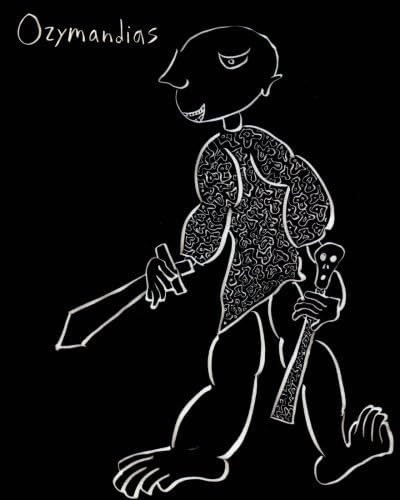
Ozymandias parallels Stoic teaching: even the greatest power becomes 'colossal wreck, boundless and bare' in time
Get the latest ideas from The Daily Stoic.
Plus the best new takeaways about stoicism from other top podcasts — read in minutes, not hours.
By continuing, you agree to podbrain's Terms and Privacy Policy.
These notes may contain occasional inaccuracies. Learn how podbrain notes are made
This Daily Stoic podcast episode explores the art of philosophical seeing through Marcus Aurelius's Meditations, using the story of James Baldwin's mentorship under painter Buford Delaney as recounted in Nicholas Boggs's Baldwin A Love Story.
The host examines how Marcus Aurelius's famous column in Rome - still standing after 19 centuries but topped with Saint Paul instead of Marcus - perfectly illustrates the Stoic emperor's own teachings about the meaninglessness of posthumous fame.
The episode announces Daily Stoic's Meditations Month in April, featuring a comprehensive guide to understanding Meditations, while drawing parallels between Stoic philosophy and Shelley's Ozymandias about the transient nature of all earthly power and reputation.
Learning to See: Baldwin's Lesson in Perception
In 1940, painter Buford Delaney stopped young James Baldwin at a gutter, asking 'what do you see?' - transforming Baldwin's perception from seeing just a puddle to seeing 'buildings moving like mercury in the gutter's black water, distorted and radiant' as described in Baldwin A Love Story.
Marcus Aurelius demonstrated this same cultivated vision in Meditations, finding philosophical beauty in 'the way an olive rots on the ground or the foam flecked on a boar's mouth.'
Philosophy teachers like Rusticus or Fronto likely taught Marcus this perceptual skill, just as Delaney's 'reality of seeing caused me to begin to see' for Baldwin.
The Marcus Aurelius Column: A Monument to Irony
The 94-foot Marcus Aurelius column in Rome depicts his 14 years of war with Marcomanni tribes and still stands after 19 centuries, seemingly contradicting his teachings about forgotten fame.
Pope Sixtus V replaced Marcus's statue with Saint Paul in the 16th century, making the emperor's greatest accomplishment 'a pedestal for somebody else.'
This transformation proves Marcus's point: 'History takes us and it remixes and reuses us. It perverts us and undermines our legacy.'
Even if the monument remained unchanged, Marcus asks in Meditations: 'What good would that do you? What use is praise except to make your lifestyle a little more comfortable?'
The Futility of Posthumous Fame
Marcus warns that 'people who remember them will die soon too, and that those after them in turn, until their memory pass from one to another like a candle flame, gutters, and goes out.'
The parallel to Shelley's Ozymandias is clear - even the most powerful become 'a colossal wreck, boundless and bare' with 'two legs, the head there laying in the sand.'
Meditations teaches that reputation and fame don't matter: 'Who you are as a person, that's the only thing that counts.'
Living in the Present Moment
Marcus Aurelius writes: 'Each of us lives only now, this brief instant. The rest has been lived already or is impossible to see.'
He emphasizes that 'the span we live is small, small as the corner of earth in which we live it, small as even the greatest renown passed from mouth to mouth by short-lived stick figures.'
The Stoic task is 'just to be a good human being and to do it without hesitation, to speak the truth as he sees it, with kindness and with humility and without hypocrisy.'
Ironically, by not caring about posthumous fame and focusing on being good now, Marcus created the very lasting legacy he claimed didn't matter.


These notes may contain occasional inaccuracies. Learn how podbrain notes are made
More in Philosophy

You Need An Ethical Will | Lt. Gen. Mark Hertling
Jun 21, 2026
Hollywood, The CIA & UFOs: The History Beyond Spielberg
Jun 20, 2026
What Our Fathers Teach Us, For Better Or Worse | Tom Junod
Jun 20, 2026
How To Love Your Country Without Lying About It | Ty Seidule
Jun 19, 2026
Recognize These Signs of Weakness | 7 Daily Habits That Will Change Your Life
Jun 15, 2026.svg)