
You Can’t Help But Leave a Piece | Ask Daily Stoic
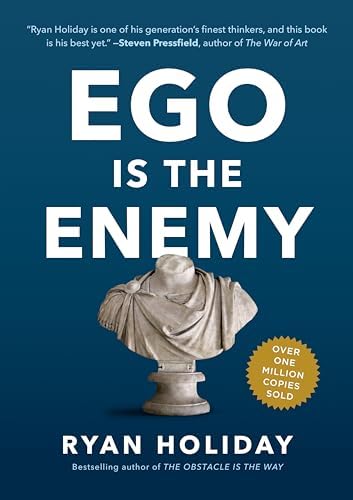
Ryan Holiday hosts this Daily Stoic Podcast episode featuring audience questions from his 2024 Melbourne Town Hall event. Holiday, author of multiple Stoic philosophy books including Ego Is the Enemy, addresses practical applications of ancient wisdom...

Episode


- 01
Every yes is a trade-off with time, our most precious resource that can never be recovered
- 02
Know thyself from the Oracle of Delphi requires understanding your biases, weaknesses, and strengths for philosophical growth
- 03
The Myth of Sisyphus parallels Stoicism: Sisyphus finds happiness through detachment from outcomes and acceptance of fate
- 04
Marcus Aurelius and Epictetus represent opposite social extremes yet reached identical philosophical understanding about life's meaning
- 05
Work-life balance requires constant recalibration as family needs change with seasons and circumstances
- 06
Ancient Stoicism served as Rome's civic religion among educated ruling classes, suggesting potential for broader social application
- 07
Meditations warns that people who love their work can wear themselves down by forgetting basic self-care
Get the latest ideas from The Daily Stoic.
Plus the best new takeaways about stoicism from other top podcasts — read in minutes, not hours.
By continuing, you agree to podbrain's Terms and Privacy Policy.
These notes may contain occasional inaccuracies. Learn how podbrain notes are made
Ryan Holiday hosts this Daily Stoic Podcast episode featuring audience questions from his 2024 Melbourne Town Hall event. Holiday, author of multiple Stoic philosophy books including Ego Is the Enemy, addresses practical applications of ancient wisdom to modern challenges.
The conversation explores core Stoic concepts through audience inquiries about self-knowledge, work-life balance, and the philosophy's potential as a social movement. Holiday draws extensively from Meditations by Marcus Aurelius and connects Stoic principles to Albert Camus's absurdist philosophy in The Myth of Sisyphus.
Throughout the discussion, Holiday emphasizes practical philosophy over academic theory, sharing insights about time management, self-awareness, and finding balance between competing life demands while maintaining Stoic principles of acceptance and wisdom.
The Oracle's Command: Know Thyself in Stoic Practice
The phrase 'know thyself' originates from the Oracle of Delphi and was adopted by Socrates as his personal motto, forming a cornerstone of philosophical practice.
Self-knowledge requires understanding 'your biases, your weaknesses, know your strengths' as Holiday explains, making self-awareness essential for philosophical growth.
Without developing self-understanding, studying philosophy becomes pointless: 'Why learn the names of all these philosophers? Why learn these quotes? Why learn these ideas if it doesn't in the end get you a little bit closer to understanding yourself?'
Sisyphus and Stoic Acceptance: Finding Meaning in Futility
The Myth of Sisyphus by Albert Camus presents the thesis that 'one must imagine Sisyphus happy' because 'the pursuit towards the heights should fill a man's heart,' paralleling Stoic detachment from outcomes.
Sisyphus embodies Stoic principles through detachment from achievement and acceptance of unfair fate, 'simply doing it' without attachment to completion or success.
Marcus Aurelius exemplifies this acceptance, as 'he doesn't want to be emperor' yet finds meaning in duty rather than personal preference, demonstrating Stoic resignation to life's circumstances.
Epictetus and Marcus Aurelius represent 'total opposite ends of the social hierarchy' - extreme adversity versus extreme abundance - yet both reached 'the same fundamental understanding of life and meaning.'
Work-Life Balance as Constant Recalibration
Meditations contains Marcus Aurelius's warning that 'people who love what they do wear themselves down doing it. They forget to wash and eat and sleep.'
Balance requires viewing competing priorities as existing 'in tension or in opposition' rather than seeking perfect equilibrium, with constant correction between extremes.
Family needs change seasonally: 'What your kids need when they're 2 is different than what they need when they're 20' requiring ongoing schedule and priority adjustments.
Holiday emphasizes process over perfection: 'Every time I feel like I figure out the perfect schedule, the perfect list of priorities, what they want from me changes.'
Stoicism's Social and Political Potential
Ancient Stoicism functioned as 'the civic religion of Rome' among 'the educated and sort of ruling classes' who used it to guide governance and social behavior.
Modern Stoicism remains largely unknown: 'Most people have never even heard of it. Most people think of it as the kind of lowercase stoic that has no emotions.'
Holiday believes broader adoption would benefit society: 'I think we'd be better if more people knew it and more people tried to apply it.'
An audience member shared that Ego Is the Enemy 'changed my life in many ways' and now their children use Marcus Aurelius as a behavioral reference point.


These notes may contain occasional inaccuracies. Learn how podbrain notes are made
More in Philosophy

Hollywood, The CIA & UFOs: The History Beyond Spielberg
Jun 20, 2026
What Our Fathers Teach Us, For Better Or Worse | Tom Junod
Jun 20, 2026
How To Love Your Country Without Lying About It | Ty Seidule
Jun 19, 2026Recognize These Signs of Weakness | 7 Daily Habits That Will Change Your Life
Jun 15, 2026A Stoic's Guide To Looksmaxxing
Jun 14, 2026
.svg)