
A Stoic Masterclass for Ambitious People | Codie Sanchez
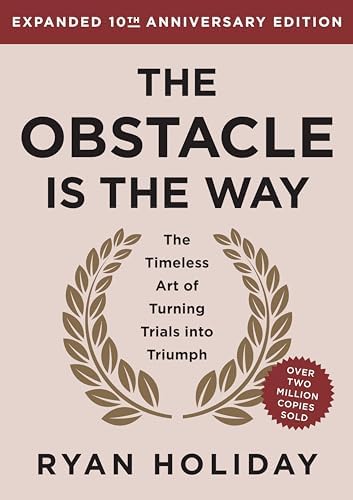
Ryan Holiday, author of The Obstacle Is the Way and Courage Is Calling, hosts entrepreneur and investor Codie Sanchez at his bookstore The Painted Porch in Bastrop, Texas. Sanchez, who previously worked at Goldman Sachs and Vanguard, wrote...

Episode


- 01
Business teaches you to keep doing hard things and rewards you for it, creating an identity shift as someone who does hard things
- 02
Most entrepreneurial fears are 'false evidence appearing real' - writing down worst-case scenarios reveals 90% are completely unreasonable
- 03
All business owners underprice themselves due to lack of confidence - charging what you're worth requires courage and awkward conversations
- 04
Business success comes down to who can handle the most monotonous, boring work for the longest period past when it's reasonable
- 05
You cannot win in business if you're the cheapest provider unless you're Sam Walton-level obsessive about operations
- 06
Most things in business are two-way doors that swing both ways - very few decisions can actually kill your company
- 07
The business will fall to your level of activity, not your level of desire - teams watch what you do and perform slightly less
- 08
Private companies outperform public companies on employee happiness by 40-60% because they're not beholden to quarterly earnings cycles
Get the latest ideas from The Daily Stoic.
Plus the best new takeaways about entrepreneurship from other top podcasts — read in minutes, not hours.
By continuing, you agree to podbrain's Terms and Privacy Policy.
These notes may contain occasional inaccuracies. Learn how podbrain notes are made
Ryan Holiday, author of The Obstacle Is the Way and Courage Is Calling, hosts entrepreneur and investor Codie Sanchez at his bookstore The Painted Porch in Bastrop, Texas. Sanchez, who previously worked at Goldman Sachs and Vanguard, wrote Main Street Millionaire and built a career around buying small Main Street businesses rather than large private equity deals.
The conversation explores how the four Stoic virtues - courage, discipline, justice, and wisdom - serve as essential business principles. They discuss the psychological barriers to entrepreneurship, from imposter syndrome to the false perception of risk that keeps people trapped in corporate jobs.
Holiday and Sanchez examine the discipline required for business ownership, including the paradox that being your own boss means becoming a stricter boss of yourself. They explore how business provides a testing ground for personal values, where abstract principles must be backed by real money and difficult decisions.
The discussion covers justice in capitalism, arguing that business owners have both the freedom and responsibility to operate ethically beyond legal requirements. They conclude with wisdom as an ongoing process, emphasizing how successful entrepreneurs must become students of their industries rather than learning everything through expensive trial and error.
The False Evidence of Entrepreneurial Fear
Most entrepreneurial fears are based on 'false evidence appearing real' - when Sanchez wrote down everything that could go wrong leaving Goldman Sachs, 90% were completely unreasonable assumptions.
The story of Marcus Aurelius from Meditations illustrates ancient imposter syndrome - he broke down in tears before becoming emperor, then dreamed of having ivory shoulders strong enough to bear the load.
Young people today suffer from 'contextual risk' - fearing they'll lose their perceived status among peers rather than facing actual financial danger.
Most business decisions are 'two-way doors' that swing both ways - you can reverse course, unlike true one-way doors like swimming with great white sharks without a cage.
The Courage to Charge What You're Worth
Almost all business owners underprice themselves due to lack of confidence, creating a massive volume game that's much harder to play than charging premium prices.
The pricing principle is 'it's not what it costs you, it's what it's worth to them' - but this requires courage to have awkward conversations and hear 'no.'
Drawing from Zero to One, if your business idea seems good to everyone and guaranteed to work, it's probably already commoditized - good businesses must seem crazy or dangerous initially.
You can't win as the low-cost provider unless you're 'Sam Walton-level psychopath' - he would fly over parking lots to check store traffic, then land and yell at employees.
Self-Discipline as the Ultimate Business Standard
"The business will fall to your level of activity, not your level of desire" - teams watch what leaders do and perform slightly less, making unreasonable leader activity necessary.
Business success comes down to "who can handle doing the most monotonous, boring things for the longest period of time, far past when is reasonable."
Seneca's principle applies: "No one is fit to rule who is not first ruler of themselves" - being your own boss means doing your job plus your boss's job of managing yourself.
Discipline includes restraint - saying no to expansion opportunities, conferences, and projects that distract from core mission, like Holiday's decision to open one bookstore, not a chain.
Justice Through Voluntary Business Responsibility
Private companies achieve 40-60% higher employee happiness than public companies because they're not beholden to quarterly earnings cycles and short-term shareholder demands.
Business ownership provides constant opportunities to vote with your decisions - Holiday removed tobacco products from his grocery store despite losing 8% of revenue, applying The Obstacle Is the Way principle.
"It's not a principle until it costs you something" - CVS's decision to stop selling cigarettes cost $1 billion annually but actually reduced nationwide cigarette consumption.
Warren Buffett's rule applies: "You can make a mistake with a dollar, but you can't make a mistake with reputation" - lying, cheating, or stealing are fireable offenses regardless of performance.
Wisdom Through Mentorship and Market Knowledge
Warren Buffett spends 90-95% of his time on data accumulation and learning, only 5-10% on action - most successful decisions come from deep knowledge, not quick moves.
The best predictor of startup success in Sanchez's venture capital portfolio is "who has lived this problem for more than 10 years" - lived experience beats theoretical disruption.
"Whatever you learn from somebody, try to be the person that they tell other people about" - being an exceptional student turns casual advisors into committed mentors.
Most millionaires are 50+, most billionaires are in their 70s, and most business founders are in their 30s-40s - "you're not broke, you're just early" in building necessary skills and experience.



These notes may contain occasional inaccuracies. Learn how podbrain notes are made
More in Philosophy

Hollywood, The CIA & UFOs: The History Beyond Spielberg
Jun 20, 2026
What Our Fathers Teach Us, For Better Or Worse | Tom Junod
Jun 20, 2026
How To Love Your Country Without Lying About It | Ty Seidule
Jun 19, 2026
Recognize These Signs of Weakness | 7 Daily Habits That Will Change Your Life
Jun 15, 2026A Stoic's Guide To Looksmaxxing
Jun 14, 2026
.svg)