
You Are On The Right Timeline | Don't Let Your Attention Slide
Ryan Holiday hosts this Daily Stoic podcast episode, drawing from his role as author of The Daily Stoic and advocate for practical Stoicism. The episode centers on a reading from the April 21st entry about attention and focus, weaving together ancient Stoic wisdom with modern research...

Episode


- 01
Marcus Aurelius in Meditations teaches that 'every event is the right one' - we must make our timeline right through our actions
- 02
Attention is the most scarce resource because it's based on our non-renewable time, as Seneca reminds us it's always ticking away
- 03
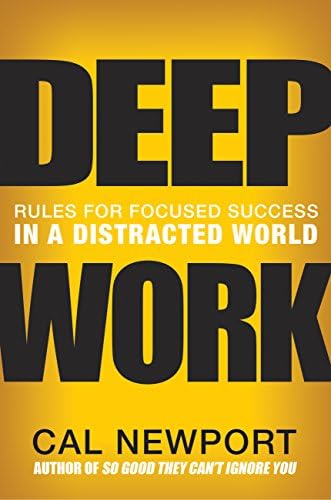
Cal Newport's Deep Work proves nobody is actually good at multitasking - we're just switching between tasks with cognitive residue
- 04
Epictetus warns that when attention slides, 'everything that follows will be necessarily worse' than focused alternatives
- 05
Einstein didn't develop relativity while multitasking at the patent office - breakthrough thinking requires sustained focus according to Rapt
- 06
Task-switching creates a lag and glitch effect that compounds over time, degrading work quality and personal connections
- 07
Digital boundaries like 'do not disturb' mode are essential tools for protecting attention from billion-dollar attention-harvesting businesses
Get the latest ideas from The Daily Stoic.
Plus the best new takeaways from other top podcasts — read in minutes, not hours.
By continuing, you agree to podbrain's Terms and Privacy Policy.
These notes may contain occasional inaccuracies. Learn how podbrain notes are made
Ryan Holiday hosts this Daily Stoic podcast episode, drawing from his role as author of The Daily Stoic and advocate for practical Stoicism. The episode centers on a reading from the April 21st entry about attention and focus, weaving together ancient Stoic wisdom with modern research on cognitive performance.
The discussion spans Marcus Aurelius's personal philosophy in Meditations, Epictetus's teachings on attention, and contemporary insights from Cal Newport's Deep Work and Digital Minimalism. Holiday also references Winifred Gallagher's Rapt and cognitive scientist David Meyer's research on multitasking myths. The episode promotes 'Meditations Month' at Daily Stoic while exploring how ancient principles apply to our modern attention economy.
Making Your Timeline Right Through Stoic Action
Meditations teaches that 'every event is the right one' - Marcus Aurelius believed we must make our circumstances right through how we act and respond to them.
Aurelius wrote that challenging events aren't 'unfortunate that happened to me, it's fortunate that it happened to me' - asking how he could turn difficulties into fuel for growth.
Meditations itself serves as both reminder and method - Aurelius using writing to reinforce that he was on the right timeline despite external chaos.
Attention as Your Most Critical Resource
Epictetus taught that 'when you let your attention slide for a bit, don't think you will get a grip on it whenever you wish' - attention requires constant vigilance.
Rapt by Winifred Gallagher quotes cognitive scientist David Meyer: 'Einstein didn't invent the theory of relativity while he was multitasking at the Swiss patent office.'
Attention has become the prime battleground for trillion-dollar businesses like Facebook that build their models on harvesting human focus.
As referenced in The Daily Stoic, attention matters because it's based on our non-renewable time - 'always tick, tick, ticking away' as Seneca warned.
The Multitasking Myth and Deep Work Principles
Cal Newport's Deep Work demolishes the multitasking myth: 'if you think you're a good multitasker, you're bullshitting yourself because you're not.'
Task-switching creates cognitive residue - even a half-second phone interruption requires longer recovery time to return to full engagement.
Digital Minimalism and Deep Work provide frameworks for protecting attention through boundaries like 'do not disturb' modes and phone placement strategies.
The compound effect of attention slides degrades everything: 'The conversation you have is not as good. The work that comes out of it is not as good.'


These notes may contain occasional inaccuracies. Learn how podbrain notes are made
More in Philosophy

You Need An Ethical Will | Lt. Gen. Mark Hertling
Jun 21, 2026
Hollywood, The CIA & UFOs: The History Beyond Spielberg
Jun 20, 2026
What Our Fathers Teach Us, For Better Or Worse | Tom Junod
Jun 20, 2026
How To Love Your Country Without Lying About It | Ty Seidule
Jun 19, 2026
Recognize These Signs of Weakness | 7 Daily Habits That Will Change Your Life
Jun 15, 2026.svg)