
The Terror of Knowing What The World Is About | Try The Other Handle
Ryan Holiday hosts this Daily Stoic Podcast episode, exploring Stoic philosophy through the lens of historical burden and practical decision-making tools. The episode draws heavily from Marcus Aurelius's Meditations and Epictetus's...

Episode


- 01
Marcus Aurelius understood that studying history reveals humanity's repeated cruelty, creating a burden of knowledge that strips away illusions
- 02
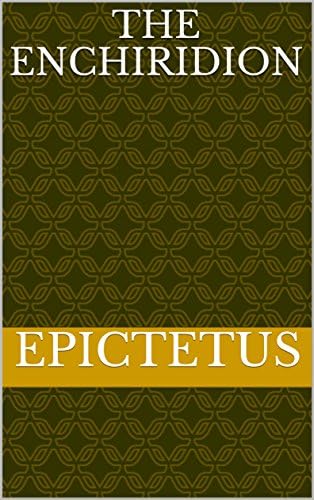
The Enchiridion teaches that every event has two handles - one that empowers you and one that diminishes your agency
- 03
Thomas Jefferson advised to 'always grab things by their smooth handle,' referencing Epictetus's concept of choosing empowering perspectives
- 04
The Stockdale Paradox demonstrates choosing the right handle: 'I would turn this into the very best thing that happened to me'
- 05
As a parent or leader, choosing the wrong handle teaches others to lie, hide, and fear rather than trust and communicate
- 06
Epictetus spent 30 years in slavery but chose to see it as a learning experience rather than the worst possible fate
- 07
George Washington's father chose the smooth handle when his son confessed to chopping down the cherry tree, prioritizing honesty over punishment
Get the latest ideas from The Daily Stoic.
Plus the best new takeaways about stoicism from other top podcasts — read in minutes, not hours.
By continuing, you agree to podbrain's Terms and Privacy Policy.
These notes may contain occasional inaccuracies. Learn how podbrain notes are made
Ryan Holiday hosts this Daily Stoic Podcast episode, exploring Stoic philosophy through the lens of historical burden and practical decision-making tools. The episode draws heavily from Marcus Aurelius's Meditations and Epictetus's The Enchiridion to examine how ancient wisdom applies to modern challenges.
The discussion centers on two key themes: first, the weight of historical knowledge and how Marcus Aurelius maintained virtue despite understanding humanity's darker patterns, and second, Epictetus's 'two handles' concept from The Enchiridion as a practical tool for reframing difficult situations. Holiday connects these ancient teachings to contemporary parenting, leadership, and personal resilience, referencing his own Daily Stoic Journal as a modern application of these timeless principles.
The Heavy Burden of Historical Knowledge
Marcus Aurelius's Meditations reflects the weariness that comes from studying history and understanding 'the terror of knowing what the world is about' - the repeated patterns of human cruelty and failure.
Marcus was working on a book called 'Deeds of the Ancient Greeks and Romans' and recognized that history was 'so often the same thing happening over and over again' - cruelty, bloodshed, and pathetic behavior.
Despite this burden of knowledge, Marcus Aurelius 'refused to give in to despair or cynicism' and 'did his damnedest to be the exception to history's rules.'
Ignorance may be soothing, but it 'is unfortunately a vice' and 'a violation of our responsibility to seek wisdom' - especially for those in public life who cannot indulge in such luxury.
Epictetus's Two Handles Philosophy
The Enchiridion presents the core concept: 'Everything has two interpretations or handles by which it can be grabbed. One that will make it harder, one that will make it easier.'
When your brother wrongs you, Epictetus teaches not to 'grab it by its wrongdoing' but instead remember 'that he is your brother, that you were raised together' - choosing the handle that empowers rather than diminishes.
From Discourses 4.1: 'No, it is events that give rise to fear, when another has power over them... How is the fortress destroyed? Not by iron or fire, but by judgments.'
Thomas Jefferson referenced this Stoic concept when he advised to 'always grab things by their smooth handle,' demonstrating the lasting influence of Epictetus's teaching.
Practical Applications of Choosing the Right Handle
In parenting, choosing the wrong handle means losing your temper and teaching children 'that they should be afraid of me or that they should hide things from me,' while the right handle creates teaching opportunities.
The George Washington cherry tree story illustrates choosing the smooth handle: his father could have been angry about the confession, but instead said 'I'd rather you chop down my trees than tell a lie.'
The Stockdale Paradox exemplifies the right handle: 'I knew that I would survive... If I did, I would turn this into the very best thing that happened to me.'
Even Epictetus, who 'spends the first 30 years of his life' in slavery, chose to see it as a learning experience rather than 'the worst thing that could have possibly happened.'
Modern Stoic Practice and Resources
The Daily Stoic Journal 366 Days of Writing and Reflection on the Art of Living provides structured exercises for applying these ancient concepts to contemporary life.
Holiday operates The Painted Porch bookstore in Bastrop, Texas, which serves as a physical space for engaging with Stoic literature and philosophy.
The key question for any situation becomes: 'What handle are you going to choose?' - one that makes relationships 'stronger, better, based on trust' or one that teaches people 'to lie' and 'hide things.'



These notes may contain occasional inaccuracies. Learn how podbrain notes are made
More in Philosophy

Hollywood, The CIA & UFOs: The History Beyond Spielberg
Jun 20, 2026
What Our Fathers Teach Us, For Better Or Worse | Tom Junod
Jun 20, 2026
How To Love Your Country Without Lying About It | Ty Seidule
Jun 19, 2026Recognize These Signs of Weakness | 7 Daily Habits That Will Change Your Life
Jun 15, 2026A Stoic's Guide To Looksmaxxing
Jun 14, 2026
.svg)