
The Day Control Was Taken From Us
Ryan Holiday hosts a conversation with Chloe Dalton, a political advisor and foreign policy specialist who worked in UK Parliament for over a decade, and features insights from author Susan Strait, a UC Riverside professor and acclaimed novelist. The episode explores how the COVID-19 pandemic forced dramatic life...

Episode


- 01
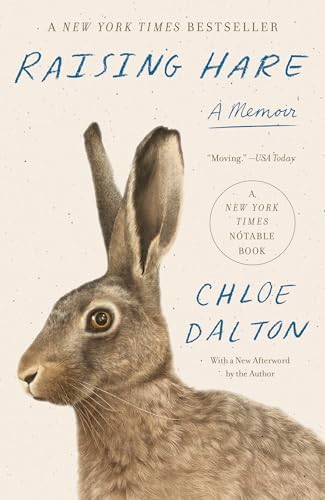
Raising Hare by Chloe Dalton won the Wainwright Prize for Nature Writing and became a New York Times bestseller, exploring how a baby hare transformed pandemic isolation into profound connection with nature
- 02
The pandemic forced everyone to slow down, creating what felt like 'getting sober for a brief period' where life simplified to its essentials and community became paramount
- 03
Wild animals live without comparison, envy, or anxiety about tomorrow - 'my donkey doesn't know there's a pandemic' - offering lessons in present-moment existence
- 04
Churchill's 'wilderness years' of painting and reading poetry weren't torture but essential preparation for the marathon ahead, similar to pandemic forced breaks
- 05
Susan Strait's new novel Sacrament captures the reality that 'a million and a half people died' during COVID, focusing on nurses who risked everything in communities like Riverside
- 06
Traveling nurses during COVID often had no one to talk to about their 12-hour shifts except neighbors who would listen to their stories of loss and heroism
- 07
The contrast between wealthy people saying 'COVID was the best thing that ever happened to me' versus communities where neighbors died in body bags reveals pandemic's unequal impact
- 08
Built from Broken emphasizes movement variety as 'one of the most critical aspects of healthy aging' that creates healthy stressors rather than eroding joint integrity
Get the latest ideas from The Daily Stoic.
Plus the best new takeaways from other top podcasts — read in minutes, not hours.
By continuing, you agree to podbrain's Terms and Privacy Policy.
These notes may contain occasional inaccuracies. Learn how podbrain notes are made
Ryan Holiday hosts a conversation with Chloe Dalton, a political advisor and foreign policy specialist who worked in UK Parliament for over a decade, and features insights from author Susan Strait, a UC Riverside professor and acclaimed novelist. The episode explores how the COVID-19 pandemic forced dramatic life changes and unexpected discoveries.
The discussion centers on Dalton's memoir Raising Hare, which chronicles how finding a baby hare during pandemic lockdown in the English countryside transformed her understanding of time, nature, and what constitutes a meaningful life. The book won the Wainwright Prize for Nature Writing and became a bestseller.
Holiday reflects on the sixth anniversary of the pandemic's start in March 2020, when construction began on his bookstore The Painted Porch. The conversation examines how forced slowdown revealed what had been operating 'day in and day out without you' - the natural cycles most people miss in busy urban lives.
Susan Strait contributes perspective on her new novel Sacrament, which focuses on nurses fighting through the first year of COVID in Riverside, California. Her other works include Mecca, A Million Nightingales, High Wire Moon, and memoir In the Country of Women.
When the Pandemic Forced Everyone to Get Sober
The early pandemic created a period where 'things got very quiet and very calm' and 'it's kind of like we all got sober for a brief period of time' before everyone eventually relapsed back to normal busyness.
Life 'simplified down to its essentials, to the circle of the things you could actually control' because it became obvious there was so little anyone could influence during lockdown.
Living consistently in one place for extended time revealed the 'natural way of living' versus the 'unnatural way' of 'sporadic in and out existence' involving cars, airplanes, and hotel rooms.
The pandemic forced people to notice seasonal cycles: 'you're gone for a week and all the leaves fall off the trees, or you're gone for a week and everything turns green again' - but staying put meant witnessing gradual daily changes.
How a Baby Hare Changed Everything
Chloe Dalton's Raising Hare began when she found a baby hare during a pandemic walk, writing: 'A baby hare had no place in any of these scenarios we had discussed or that I had envisioned for myself.'
Watching the hare created 'this strange sort of alignment of self and mind and heart and place' where 'everything would slow down' and attention would focus completely on understanding a creature with no common language.
The experience taught that 'living attached to a particular patch of land in a specific ecological niche is where we all sort of began' and there's 'dignity and meaning that can be found in a life that is rooted in one place.'
Wild animals demonstrate present-moment existence without human anxieties - 'my donkey doesn't know there's a pandemic' and 'they're just existing in the present moment' without comparison or envy.
The Wisdom of Forced Wilderness Years
Churchill's 'wilderness years' of painting, laying bricks, and reading poetry seemed like torture but were actually 'resting for what is going to be a marathon to come' - similar to pandemic breaks many experienced.
Forced changes often succeed where voluntary ones fail: 'if it's our choice and you study how you want to improve your life, you never really get around to it. But something comes along and makes you realize that your habits are not as set in stone as you thought.'
The pandemic created space for unexpected creativity - Dalton discovered 'there was a sort of voice bubbling away inside me that I hadn't really been conscious of' leading to writing Raising Hare.
Holiday laid out most of Courage Is Calling during the early pandemic at his empty bookstore, building 'a new writing routine, a new pace of life, a new perspective and a new way of thinking about things.'
The Nurses Who Kept Us Alive
Susan Strait's novel Sacrament focuses on nurses during COVID's first year because 'a million and a half people died' and their stories deserve remembering beyond wealthy people saying 'COVID was the best thing that ever happened to me.'
Traveling nurses like Carrie from Texas and Pam from Indiana lived in Strait's neighborhood, walking to 12-hour shifts at Riverside Community Hospital just three blocks away, with 'no one else' to talk to about what they witnessed.
The human cost was immediate and personal - Strait watched 'neighbor Jim Calderone across the street' die of COVID and 'Kristen, his wife, sob as they took his body out in a body bag.'
Hospital parking lots filled with 'hundreds of people' holding signs for loved ones who couldn't be visited, with families FaceTiming through windows because 'you couldn't touch them. You couldn't see them.'
Building Strength from Setbacks
Built from Broken by Scott Hogan teaches that 'movement variety is one of the most critical aspects of healthy aging' by creating 'healthy stressors that reinforce your joint integrity rather than eroding it.'
The book helps readers 'heal painful joints and rebuild your body stronger' through practical recommendations and understanding that setbacks can become comebacks with proper approach.


These notes may contain occasional inaccuracies. Learn how podbrain notes are made
More in Philosophy
You Need An Ethical Will | Lt. Gen. Mark Hertling
Jun 21, 2026
Hollywood, The CIA & UFOs: The History Beyond Spielberg
Jun 20, 2026
What Our Fathers Teach Us, For Better Or Worse | Tom Junod
Jun 20, 2026
How To Love Your Country Without Lying About It | Ty Seidule
Jun 19, 2026
Recognize These Signs of Weakness | 7 Daily Habits That Will Change Your Life
Jun 15, 2026.svg)