
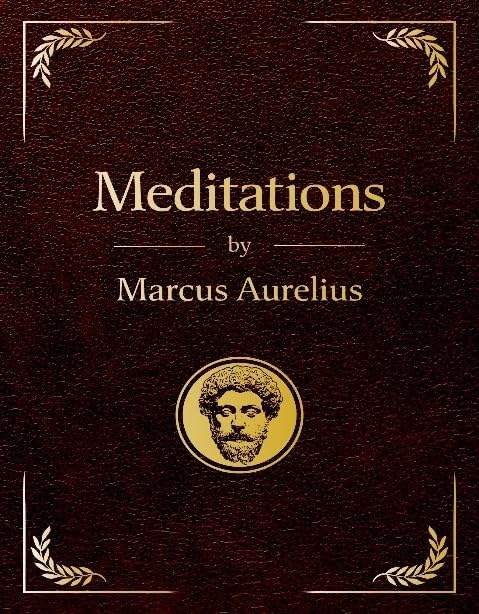
Marcus Aurelius's Rules for Living a Better Life
This episode features host Ryan Holiday exploring nine Stoic rules for life derived from Marcus Aurelius, the Roman Emperor who ruled from 161-180 AD during plagues, wars, and political upheaval.

Episode


- 01
Marcus Aurelius sold imperial possessions during the Antonine Plague to fund relief efforts, demonstrating leadership through personal sacrifice
- 02
"You could be good today. Instead, you choose tomorrow" - Marcus on overcoming procrastination through immediate action
- 03
"I escaped anxiety... no, actually, I discarded it because it was within me" - anxiety is internal, not circumstantial
- 04
"Tolerant with others, strict with yourself" - self-discipline applies only to yourself, not controlling others
- 05
"Ask yourself with everything you do and say, is this essential?" - eliminate non-essential activities for better focus
- 06
"A fire turns everything into fuel and brightness" - the concept of amor fati, turning obstacles into opportunities
- 07
"You could leave life right now... let that determine what you do and say and think" - memento mori as life guidance
Get the latest ideas from The Daily Stoic.
Plus the best new takeaways about stoicism from other top podcasts — read in minutes, not hours.
By continuing, you agree to podbrain's Terms and Privacy Policy.
These notes may contain occasional inaccuracies. Learn how podbrain notes are made
This episode features host Ryan Holiday exploring nine Stoic rules for life derived from Marcus Aurelius, the Roman Emperor who ruled from 161-180 AD during plagues, wars, and political upheaval.
Holiday draws extensively from Meditations, Marcus Aurelius's personal journal, to extract practical wisdom about leadership, self-discipline, and virtue that can be applied to modern life.
The discussion covers Marcus's leadership during the Antonine Plague, his morning routines, approaches to anxiety and obstacles, and the three core Stoic principles of amor fati, service to others, and memento mori.
Leadership Through Personal Sacrifice During Crisis
During the Antonine Plague, Marcus Aurelius sold imperial possessions for two months on the palace lawn to fund relief efforts, demonstrating that true leadership means putting people before personal comfort.
"I'm not going to put myself first. I don't need these fancy things, not when people are struggling" - Marcus's message during the economic devastation of the plague.
This mirrors modern examples like CEOs taking pay cuts during recessions or athletes renegotiating contracts to help their teams.
The Obstacle as Opportunity Philosophy
"The impediment to action advances action. What stands in the way becomes the way" - when blocked in one capacity, other capacities remain open for practicing virtue.
Being stopped doesn't prevent practicing patience, forgiveness, or changing direction - you always retain the ability to choose and adapt.
Meditations teaches that obstacles are opportunities to practice philosophy in real situations, turning difficulties into growth experiences.
Overcoming Procrastination Through Immediate Action
"You could be good today. Instead, you choose tomorrow" - Marcus Aurelius on the tendency to delay important actions despite having the necessary information.
The problem isn't lack of knowledge but lack of execution - everyone knows how to be healthy or productive, but few take the actual steps.
The Stoic discipline of action emphasizes that progress comes step by step, and no one can stop you from taking the first step.
Understanding Anxiety as Internal, Not External
"I escaped anxiety... no, actually, I discarded it because it was within me" - Marcus's realization from Meditations that anxiety is self-generated, not circumstantial.
Holiday discovered during the pandemic that removing external stressors didn't eliminate anxiety, revealing its internal nature.
This insight requires immense self-awareness to recognize that discomfort and anxiety originate from internal responses, not external circumstances.
Marcus Aurelius's Morning Routine for Success
Marcus forced himself to wake up early despite not wanting to, asking "What were you made to sit here under the covers and keep warm? Were you meant to go do the work of a human being?"
Meditations exists because Marcus began each day journaling his private thoughts, which made him better and set him up for success.
"Concentrate like a Roman... do this as if it's the last thing you're doing in your life" - his approach to tackling the most important daily task.
Self-Discipline Versus Controlling Others
"Tolerant with others, strict with yourself" - the purpose of self-improvement is mastering yourself, not becoming condescending or controlling toward others.
It's called self-discipline for a reason - you signed up for your own improvement, not to manage other people's mistakes or methods.
The goal is becoming a better master of yourself while leaving others to their own choices and learning processes.
Using Difficult People as Practice Opportunities
Meditations opens with Marcus's frustration about obnoxious people, yet he viewed them as opportunities to practice Stoic virtues in real situations.
People present obstacles, but like all obstacles, they become the way to practice being just in the face of injustice and courageous when others are cowardly.
"Don't resent people. Use them to become better" - wrestling with others' difficulties makes you stronger and more virtuous.
The Essential Question for Productivity
"Ask yourself with everything you do and say, is this essential? Because most of what we do and say is not essential."
Most activities exist because people asked us to do them or we've always done them, not because they're actually necessary or meaningful.
Asking "is this essential?" eliminates unnecessary work and provides the double benefit of doing fewer things better.
Three Core Stoic Principles for Life
Amor fati: "It didn't happen to you, it happened for you" - accept, embrace, and make something meaningful from whatever fate brings.
"The fruit of this life is good character and acts for the common good" - focus on contributing to community and humanity, not personal gain.
Memento mori: "You could leave life right now... let that determine what you do and say and think" - life's brevity should guide all decisions and actions.
These notes may contain occasional inaccuracies. Learn how podbrain notes are made
More in Philosophy
You Need An Ethical Will | Lt. Gen. Mark Hertling
Jun 21, 2026
Hollywood, The CIA & UFOs: The History Beyond Spielberg
Jun 20, 2026
What Our Fathers Teach Us, For Better Or Worse | Tom Junod
Jun 20, 2026
How To Love Your Country Without Lying About It | Ty Seidule
Jun 19, 2026
Recognize These Signs of Weakness | 7 Daily Habits That Will Change Your Life
Jun 15, 2026.svg)