
Kyle Carpenter on Courage, Survival, and What Comes After
Ryan Holiday interviews Medal of Honor recipient Kyle Carpenter, a Marine who threw himself on a grenade in Afghanistan in 2010 to save his fellow Marine's life. Carpenter lost his right eye, most of his teeth, and suffered extensive injuries requiring 40-50 surgeries over three years of recovery.

Episode


- 01
Kyle Carpenter threw himself on a grenade in Afghanistan, absorbing the blast to save his fellow Marine's life in a split-second decision
- 02
The Medal of Honor investigation required 2+ years and 300 pages of evidence - recipients can't be eyewitnesses due to head trauma
- 03
Carpenter's ears still ring constantly 15 years later from the blast, demonstrating the lasting physical consequences of that moment
- 04
Recovery involved 40-50 surgeries over three years, with nerve transplants taking 2-4 months just to reconnect
- 05
Tom Hudner crashed his own plane in Korea to rescue downed pilot Jesse Brown, defying direct orders against rescue attempts
- 06
Physical courage in combat stems from Marine Corps tradition and stories of previous heroes, not just tactical training
- 07
The real test of courage often comes after the heroic moment - enduring years of recovery and rebuilding life
- 08
Perspective becomes everything: comparing what you have versus what you've lost determines whether struggle becomes growth or despair
Get the latest ideas from The Daily Stoic.
Plus the best new takeaways about addiction from other top podcasts — read in minutes, not hours.
By continuing, you agree to podbrain's Terms and Privacy Policy.
These notes may contain occasional inaccuracies. Learn how podbrain notes are made
Ryan Holiday interviews Medal of Honor recipient Kyle Carpenter, a Marine who threw himself on a grenade in Afghanistan in 2010 to save his fellow Marine's life. Carpenter lost his right eye, most of his teeth, and suffered extensive injuries requiring 40-50 surgeries over three years of recovery.
The conversation explores the nature of physical courage, drawing parallels to Tom Hudner's Medal of Honor action in Korea where he crashed his own plane to attempt rescuing downed pilot Jesse Brown. Holiday had recently spent time with Hudner's son and is writing about the story in his upcoming book.
They discuss how courage extends beyond the split-second heroic moment to encompass the years of recovery, rehabilitation, and rebuilding that follow. Carpenter shares insights from his memoir You Are Worth It about finding perspective through struggle and the importance of mindset in overcoming adversity.
The Split-Second Decision and Marine Corps Tradition
Carpenter describes his grenade incident as a culmination of Marine Corps training, family values, and exposure to stories of previous heroes rather than specific tactical drills for jumping on grenades.
"We do training with grenades, and I think it's just a byproduct of being in uniform and training with grenades that you think about things like that" - Kyle, explaining how Marines mentally prepare for extreme situations.
Boot camp intentionally teaches Marine Corps history during exhausting training moments, exposing recruits to "unfathomable acts of courage" from previous generations who charged beaches knowing survival odds were minimal.
The tradition creates a sense of lineage where Marines feel they're heirs to courage displayed by those who came before, making extraordinary actions feel like upholding a legacy rather than individual heroism.
The Blast and Immediate Aftermath
Carpenter remembers no cognitive thoughts before the blast, only physical sensations of being on his knees and falling forward before feeling like he "got hit in the face really hard."
After the explosion, he experienced extreme confusion with vision like "a TV with no connection, just white and gray static" and constant ear ringing that continues 15 years later.
Initially thinking he'd stepped on an IED during a patrol, Carpenter realized he was "profusely bleeding out" when what he thought was Marines pouring warm water on him was actually blood loss.
"I thought about my family, how devastated my mom was going to be when that government car pulled into the driveway" - Kyle, describing his final thoughts before losing consciousness, believing he was dying at age 21.
Waking Up and the Long Recovery
Carpenter woke up five weeks later in a hospital room with Christmas stockings, having missed his entire unconscious period and initially unable to feel his mouth or jaw.
The Medal of Honor investigation took over two years and nearly 300 pages because "if you are injured in whatever incident they are investigating, you can't be an eyewitness" due to potential head trauma affecting memory accuracy.
Recovery involved 40-50 surgeries over three years, including nerve transplants that required 2-4 months of persistent work before connections would regenerate, testing patience and faith.
"The world keeps spinning" became a tough lesson as friends continued college life while fellow Marines remained deployed, leaving Carpenter isolated in an uncertain medical journey.
Perspective and the Real Test of Courage
Holiday notes that true courage extends beyond the heroic moment: "We almost overemphasize which is the most impressive part of the experience... what's the real ordeal?"
Carpenter observed fellow patients with minor injuries who "never left the hospital" because "their mindset and not their injuries were holding them back," demonstrating how attitude determines outcomes.
Drawing from You Are Worth It, Carpenter explains that "silver linings only become apparent because I was forced to search through the darkness, and perspectives only became clear after years of deep thought and personal growth."
The key insight became comparing what you have versus what you don't have: "that comparison can do wonders for you and take you amazing places, or that comparison can become the thief of joy."
Choosing the Right Handle on Adversity
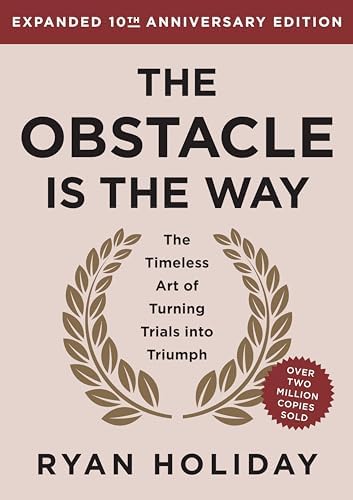
Holiday references The Obstacle Is the Way, noting that while the concept of opportunity in adversity is true, "that can feel very flippant to someone who just found out they have cancer or somebody who just got blown up by a grenade."
Using Epictetus as an example, Holiday explains that every situation has "two handles" - you can grab the handle of gratitude for being alive or despair about your circumstances.
The key is choosing a perspective that's "both hopeful, but also got a kind of a grit and determination to it" rather than false optimism or complete despair.
"There is tremendous power, and I would say that's even an understatement, to embracing the struggle" - Holiday, emphasizing that accepting reality while maintaining determination creates the foundation for growth.

These notes may contain occasional inaccuracies. Learn how podbrain notes are made
More in Philosophy

Hollywood, The CIA & UFOs: The History Beyond Spielberg
Jun 20, 2026
What Our Fathers Teach Us, For Better Or Worse | Tom Junod
Jun 20, 2026
How To Love Your Country Without Lying About It | Ty Seidule
Jun 19, 2026
Recognize These Signs of Weakness | 7 Daily Habits That Will Change Your Life
Jun 15, 2026A Stoic's Guide To Looksmaxxing
Jun 14, 2026
.svg)