
Jordan Klepper's Reading List (From Ryan Holiday)
This conversation features Ryan Holiday, author and Daily Stoic podcast host, discussing literature and ideas with a guest in what appears to be Holiday's personal library. The discussion ranges from political biography to maritime disasters, philosophy, and parenting books.

Episode


- 01
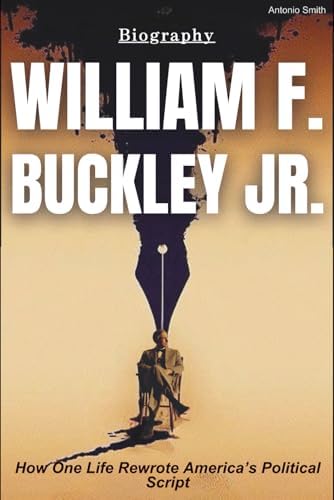
A thousand-page William F. Buckley biography reveals how conservative intellectuals create 'intellectual cover for primal, emotional, prejudiced ideas'
- 02
The Plague by Camus explains 'dark energy' in humanity that moves from issue to issue across eras - 'we think we beat it, but we didn't'
- 03
The conservative movement systematically identifies and funds talented communicators, creating an ecosystem from Wall Street Journal down to Gateway Pundit
- 04
Zeppelins were 'the dumbest idea humans ever had' - hydrogen balloons with engines and smoking rooms that repeatedly crashed
- 05
The World of Yesterday shows how Stefan Zweig maintained intellectual humility during inhuman times of the early 20th century
- 06
Kafka's Letter to His Father demonstrates how overbearing powerful parents can shape children in opposite directions
- 07
Maritime disasters like the Lusitania sinking brought America into World War I, showing how single events reshape history
Get the latest ideas from The Daily Stoic.
Plus the best new takeaways from other top podcasts — read in minutes, not hours.
By continuing, you agree to podbrain's Terms and Privacy Policy.
These notes may contain occasional inaccuracies. Learn how podbrain notes are made
This conversation features Ryan Holiday, author and Daily Stoic podcast host, discussing literature and ideas with a guest in what appears to be Holiday's personal library. The discussion ranges from political biography to maritime disasters, philosophy, and parenting books.
The conversation centers around several key themes: how intellectual movements create cover for underlying prejudices (explored through the William F. Buckley Jr. Biography), the cyclical nature of human darkness (examined through Camus's The Plague), and maintaining humanity during difficult times (via Stefan Zweig's works). Holiday shares book recommendations spanning shipwreck narratives, absurdist philosophy, and historical biography.
Throughout the discussion, Holiday demonstrates his method of connecting historical patterns to contemporary issues, using books like The Myth of Sisyphus and The World of Yesterday to understand current political and social dynamics.
The Conservative Intellectual Ecosystem and Buckley's Legacy
The thousand-page William F. Buckley Jr. Biography reveals how conservative intellectuals systematically create 'intellectual cover for primal, emotional, prejudiced ideas' - Buckley's father had his sons burn crosses on lawns and was 'profoundly anti-Semitic, profoundly racist, just a reactionary bigot'
The conservative movement operates as a funded ecosystem that identifies and cultivates talent: 'this person has a way with audiences and they're fellow travelers with what we're saying. How do we bring them into the ecosystem?'
This system spans from elite publications down to grassroots: 'the Wall Street Journal is this part of the hierarchy, and then all the way down to like Charlie Kirk... and then the Gateway Pundit down here'
The process mirrors historical patterns - Buckley started by writing about 'liberal overreach on college campuses that his dad pays for' before becoming 'a speechwriter and advisor to McCarthy'
Camus and the Dark Energy of Human Nature
The Plague serves as a metaphor for recurring human darkness: 'there's this dark energy in humanity and it goes from issue to issue, era to era' - The Plague represents forces that never truly disappear
Camus originally wrote The Plague 'about Nazism as a metaphor' but the deeper message is that 'The Plague just goes on to the next thing. We think we beat it, but we didn't'
The Myth of Sisyphus provides an 'absurdist point of view' that 'feels great' for understanding current times, complementing Kafka's work on navigating senseless circumstances
Maritime Disasters and Human Folly
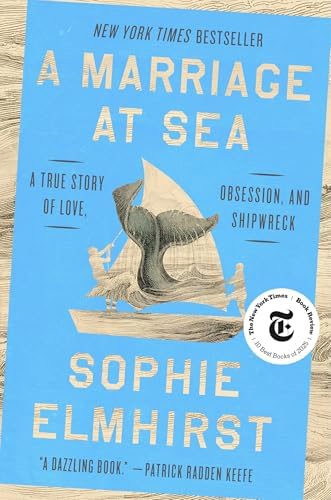
The Marriage at Sea tells the true story of a couple whose sailboat is destroyed by a whale, forcing them to spend 'three months in a raft' in the Pacific, including attempts to 'catch a giant sea turtle and tie a rope to it' for transportation
In the Heart of the Sea is described as 'one of the all-time greats' in maritime disaster literature, while Dead Wake covers the Lusitania sinking that 'basically brings us into World War I'
His Majesty's Airship documents Zeppelins as 'the dumbest idea that humans have ever had' - hydrogen balloons with engines and smoking rooms that 'kept crashing' because they were 'balloons filled with highly flammable gas powered by an engine'
The Empire State Building's mooring mast for Zeppelins exemplified the folly: 'you tie up a balloon to this pointy needle... what happens when it gets windy?' - no amount of ropes could secure the massive aircraft
Maintaining Humanity Through Literature and Philosophy
Stefan Zweig's The World of Yesterday captures the experience of Europe's 'most famous novelist' who was 'chased out of Germany' and 'ends up in Brazil' where he rediscovered Montaigne's relevance
Zweig's Montaigne Biography reveals how the French philosopher wrote 'in the middle of the religious wars of the 16th century' - 'he's turning inward because the world is tearing itself apart'
The core challenge Montaigne faced remains relevant: 'the hardest thing to do is to remain human in inhuman times' through 'intellectual humility in a time when they're burning people alive for being heretics'
Kafka's Letter to His Father demonstrates how 'overbearing, powerful people' shape their children - some follow the same path while others 'go in the other direction' and create art from their pain
The Creative Process and Literary Inspiration
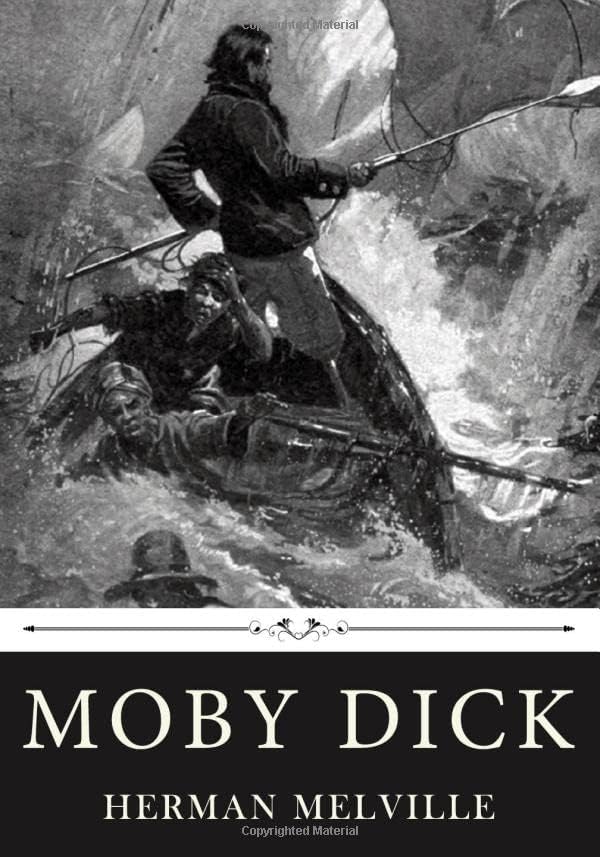
Holiday arranged to write at Herman Melville's desk while working on a pilot script, describing the experience: 'I didn't dare look at my phone for a second in that room. I felt so guilty not being productive. I was productive for two straight days'
Moby Dick remains Holiday's favorite among maritime literature, part of his broader obsession with shipwreck narratives and human survival stories
Michael Schur's The Ethics Book represents the intersection of comedy and philosophy - described as 'really good' and 'funny,' creating anticipation about 'a funny guy writing a smart book'








These notes may contain occasional inaccuracies. Learn how podbrain notes are made
More in Philosophy

You Need An Ethical Will | Lt. Gen. Mark Hertling
Jun 21, 2026
Hollywood, The CIA & UFOs: The History Beyond Spielberg
Jun 20, 2026
What Our Fathers Teach Us, For Better Or Worse | Tom Junod
Jun 20, 2026
How To Love Your Country Without Lying About It | Ty Seidule
Jun 19, 2026
Recognize These Signs of Weakness | 7 Daily Habits That Will Change Your Life
Jun 15, 2026.svg)