
It’s Not Supposed To Go Down Easy | This 10 Minute Habit Will Change Your Life
Ryan Holiday hosts this Daily Stoic podcast episode, sharing insights from a demanding travel day that took him from Panama City, Florida to Atlanta to San Francisco and back. Despite the grueling schedule, he maintained his walking practice throughout multiple airports, covering approximately five miles while...

Episode


- 01
Nietzsche's formula for greatness was 'amor fati' - loving what happened, not just bearing what is necessary
- 02
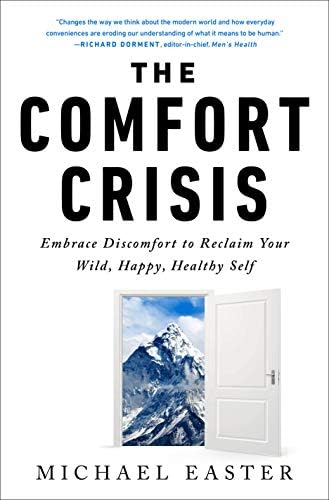
Michael Easter's The Comfort Crisis advocates airport walking as an underrated travel exercise hack, covering 6-7 miles during layovers
- 03
Kierkegaard walked himself 'into a state of well-being' daily, believing no thought was too burdensome to walk away from
- 04
Studies show walkers perform better in creative divergent thinking and walking can treat major depression
- 05
William Wordsworth walked 180,000 miles in his lifetime - roughly 6.5 miles daily from age five
- 06
Meditations reveals Marcus Aurelius found relief from imperial pressures through walking and nature observation
- 07
Darwin, Kahneman, and Martin Luther King all incorporated multiple daily walks into their creative and intellectual routines
- 08
Location matters less than movement - some of the best walks happen in airport terminals and parking lots
Get the latest ideas from The Daily Stoic.
Plus the best new takeaways from other top podcasts — read in minutes, not hours.
By continuing, you agree to podbrain's Terms and Privacy Policy.
These notes may contain occasional inaccuracies. Learn how podbrain notes are made
Ryan Holiday hosts this Daily Stoic podcast episode, sharing insights from a demanding travel day that took him from Panama City, Florida to Atlanta to San Francisco and back. Despite the grueling schedule, he maintained his walking practice throughout multiple airports, covering approximately five miles while traveling.
The episode explores the philosophical and practical benefits of daily walking, drawing from Stoic philosophy and modern research. Holiday discusses how walking serves as both physical exercise and meditative practice, referencing insights from The Comfort Crisis by Michael Easter and historical examples from philosophers like Kierkegaard and Marcus Aurelius.
The conversation weaves together ancient wisdom and contemporary science, examining how walking enhances creativity, mental health, and overall well-being. Holiday emphasizes that walking is accessible to everyone, regardless of location, and argues it may be the single most beneficial daily practice for physical, emotional, and spiritual health.
Airport Walking as Travel Exercise Philosophy
Holiday's conversation with Michael Easter from The Comfort Crisis revealed airport walking as an underrated exercise hack: 'I can sit here and do nothing or I could get a three-mile walk in over the next 45 minutes' - Michael Easter
Easter reported covering 6-7 miles during long layovers, choosing movement over passive waiting in lounges or uncomfortable chairs
The practice provides dual benefits: 'walking also gives me ideas and you observe, you see a lot of interesting things' while preparing the body for hours of airplane sitting
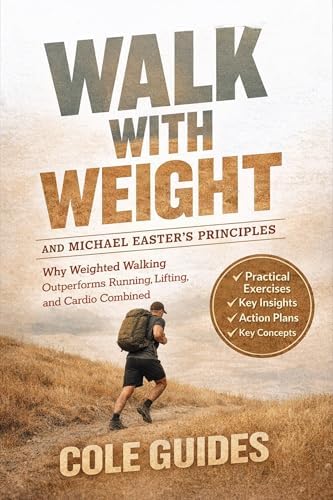
Easter's new book Walk with Weight focuses on rucking, which Holiday describes as ideologically aligned with his walking philosophy
The Stoic Foundation of Walking Practice
Seneca advocated for 'wandering walks' so 'the mind might be nourished and refreshed by the open air and deep breathing'
Meditations shows Marcus Aurelius found relief from imperial pressures through walking, with poetic observations about 'wheat bending low under its own weight' and fascination with olive groves
The Roman emperor used nature walks to gain perspective: 'The world is crazy, but it's also always been crazy. And there has always also been calm and beauty and comfort in nature'
Ancient Stoics understood walking as both physical movement and philosophical practice, providing 'perspective and peace' while humbling and inspiring practitioners
Kierkegaard's Walking Philosophy and Mental Health
Kierkegaard told his depressed sister-in-law: 'above all else, you must not lose the desire to walk' and believed 'every day I walk myself into a state of well-being'
His famous declaration: 'I know no thought so burdensome that you cannot walk away from it' established walking as mental health treatment
19th century Copenhagen residents could 'set your watch' to Kierkegaard's walking habit - writing mornings, walking afternoons on newly invented sidewalks
When frustrated by interruptions, Kierkegaard's solution was simple: 'there was only one thing left for me to do...I had to go walking again'
Scientific Evidence and Creative Benefits
Research confirms 'walkers tend to perform better in what's called creative divergent thinking' and some studies show walking as treatment for major depression
Nietzsche declared 'it was only ideas had by walking that have any worth' while Zen Buddhists developed walking meditation practices
William Wordsworth walked 180,000 miles lifetime - approximately 6.5 miles daily from age five - using walks to compose and refine poetry through repetitive memorization
The Latin expression 'it is solved by walking' captures the problem-solving power of movement, whether through scenery inspiration or motion-triggered thoughts
Movement Variety and Physical Recovery
Built From Broken by Scott Hogan emphasizes movement variety as 'one of the most critical aspects of healthy aging that just not enough people talk about'
The book teaches how 'varying what you do creates healthy stressors that reinforce your joint integrity rather than eroding it'
Hogan's corrective exercise approach helps 'heal painful joints and rebuild your body stronger' through practical movement recommendations
The philosophy extends beyond formal exercise: 'it's the body being in motion, not the context of where it's in motion that's doing most of the value'
Historical Figures and Daily Walking Routines
Darwin incorporated 'several walks' into his daily writing routine, while Daniel Kahneman did 'some of his best thinking on leisurely walks with his collaborator Amos Tversky'
Martin Luther King 'would walk multiple times a day' as a seminary student, joining the ranks of history's great walker-thinkers
These figures understood walking as essential to intellectual and creative work, not just physical exercise
The pattern spans disciplines: 'poets and priests and philosophers and artists and entrepreneurs, ordinary people alike take walks'
Practical Walking Implementation
Location independence is key: 'some of the best walks of my life have been in airport terminals and around parking lots'
The practice requires presence: 'put your phone away, put pressing business on pause, let your stress melt away'
Walking meditation involves awareness of movement: 'look down at your feet, wonder what they're doing, notice how effortlessly you're moving'
The universal principle: 'it was what I brought to it, not where it took me. It was about the state of mind it brought me to, not what state I was in'


These notes may contain occasional inaccuracies. Learn how podbrain notes are made
More in Philosophy
You Need An Ethical Will | Lt. Gen. Mark Hertling
Jun 21, 2026
Hollywood, The CIA & UFOs: The History Beyond Spielberg
Jun 20, 2026
What Our Fathers Teach Us, For Better Or Worse | Tom Junod
Jun 20, 2026
How To Love Your Country Without Lying About It | Ty Seidule
Jun 19, 2026
Recognize These Signs of Weakness | 7 Daily Habits That Will Change Your Life
Jun 15, 2026.svg)