
It’s Not Only Always Been Like This, It’s Always Been Worse | Trust But Verify
Ryan Holiday hosts this Daily Stoic podcast episode focused on bringing stoic virtues into daily practice through examining our immediate reactions and assumptions.

Episode


- 01
"First off, don't let the force of an impression carry you away. Say to it, hold up a bit, let me see who you are" - Epictetus
- 02
Modern problems aren't uniquely terrible - ancient civilizations faced earthquakes, tyrants, slavery, and systemic injustices that were often worse than today
- 03
Blink demonstrates how rapid cognition can be both a strength for quick decisions and a weakness for confirming prejudices
- 04
Therapeutic technique: preface assumptions with "what I make up about that is" to distinguish opinion from verifiable fact
- 05
The obstacle becomes the way when you pause to reframe inconveniences as opportunities for different outcomes
- 06
"Trust but verify" applies to gut instincts - initial reactions may be correct but warrant investigation before acting
Get the latest ideas from The Daily Stoic.
Plus the best new takeaways from other top podcasts — read in minutes, not hours.
By continuing, you agree to podbrain's Terms and Privacy Policy.
These notes may contain occasional inaccuracies. Learn how podbrain notes are made
Ryan Holiday hosts this Daily Stoic podcast episode focused on bringing stoic virtues into daily practice through examining our immediate reactions and assumptions.
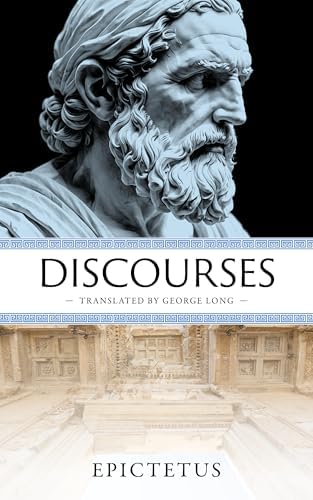
The episode centers on a quote from Epictetus's Discourses about testing impressions before being carried away by them, connecting this ancient wisdom to modern cognitive science from Blink by Malcolm Gladwell.
Holiday explores how the same mental quickness that enables good decision-making can also reinforce biases, and shares practical techniques from therapy for distinguishing assumptions from facts.
Historical Perspective on Modern Problems
Ancient civilizations faced worse challenges than today - earthquakes, tyrants, slavery, child labor in mines, and science experiments on minorities were common in Zeno and Marcus Aurelius's time.
"Even the people you disagree with and dislike politically are not selling their enemies into slavery, sending children to work in mines or doing science experiments on minorities" - Holiday
We live in unprecedented abundance of medicine, knowledge, and opportunity that ancient Stoics "could not have imagined in their wildest dreams."
The Double-Edged Nature of Quick Thinking
Blink by Malcolm Gladwell shows how we constantly make split-second decisions based on years of experience, but this same skill confirms prejudices and stereotypes.
Epictetus's Discourses (2.1.8) advises: "Don't let the force of an impression carry you away. Say to it, hold up a bit, let me see who you are, where you are from."
Stoics aren't emotionless - they're less immediately reactive because they stop, think, and question their initial impressions.
Practical Techniques for Testing Assumptions
Therapeutic technique: preface statements with "what I make up about that is" to distinguish opinion from verifiable fact.
Key questions to ask: "Is it really so bad? What do I really know about this person? Why do I have such strong feelings here?"
Real-time example: when Holiday's son interrupted the recording, he reframed the "inconvenience" as a second chance for bedtime, demonstrating the obstacle as opportunity principle.
Trust But Verify Your Gut Instincts
The Russian proverb "trust but verify" applies to gut reactions - sometimes initial instincts are correct, but verification is essential.
"Do you deserve to trust that gut? Have you done the work that warrants that?" - Holiday questions whether our instincts have earned reliability.
Email example: distinguishing between actual rude tone versus projecting your internal voice onto neutral text requires conscious examination.

These notes may contain occasional inaccuracies. Learn how podbrain notes are made
More in Philosophy
You Need An Ethical Will | Lt. Gen. Mark Hertling
Jun 21, 2026
Hollywood, The CIA & UFOs: The History Beyond Spielberg
Jun 20, 2026
What Our Fathers Teach Us, For Better Or Worse | Tom Junod
Jun 20, 2026
How To Love Your Country Without Lying About It | Ty Seidule
Jun 19, 2026
Recognize These Signs of Weakness | 7 Daily Habits That Will Change Your Life
Jun 15, 2026.svg)