
If You’re Lost, You’re Asking the Wrong Question | Jim Collins (PT.1)
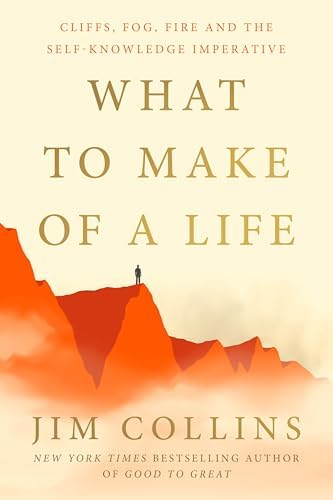
Ryan Holiday interviews Jim Collins, the bestselling business author behind Good to Great and How the Mighty Fall, about his latest work What to Make of a Life. The conversation begins with...

Episode


- 01
The Stockdale Paradox from Good to Great combines unwavering faith in eventual success with disciplined confrontation of brutal current realities
- 02
Admiral Stockdale told Collins: 'I never wavered in my faith that I would not only get out eventually, but turn it into a defining event of my life'
- 03
What to Make of a Life took Collins 12 years of research studying pairs of notable figures who faced similar 'cliff events' that forced life reconstruction
- 04
The 'curse of competence doom loop' traps people in careers they're good at but not passionate about, preventing them from finding their true frame
- 05
Barbara Tuchman's The Guns of August influenced Kennedy's handling of the Cuban Missile Crisis, though she never intended to shape foreign policy
- 06
Being 'in frame' requires three elements: encodings coming through, flipping the arrow of money, and igniting the fire within
- 07
Legacy-focused thinking is dangerous because it distracts from present responsibilities and work that truly matters
- 08
Toni Morrison said 'If all the publishers disappeared overnight, I'd still write my books' - the work itself must be intrinsically rewarding
Get the latest ideas from The Daily Stoic.
Plus the best new takeaways from other top podcasts — read in minutes, not hours.
By continuing, you agree to podbrain's Terms and Privacy Policy.
These notes may contain occasional inaccuracies. Learn how podbrain notes are made
Ryan Holiday interviews Jim Collins, the bestselling business author behind Good to Great and How the Mighty Fall, about his latest work What to Make of a Life. The conversation begins with Collins' famous encounter with Admiral James Stockdale at Stanford, which led to the Stockdale Paradox concept in Good to Great.
Collins spent 12 years researching his new book, studying pairs of notable figures who faced similar 'cliff events' that forced major life reconstructions. The discussion explores how people like Jimmy Carter, Gerald Ford, Barbara Tuchman, and Toni Morrison navigated these pivotal moments, often finding their greatest contributions came after apparent setbacks.
The conversation weaves through themes of legacy, competence traps, and what it means to be 'in frame' - when your natural encodings align with meaningful work. Collins draws from his research on figures ranging from John Glenn to Barbara McClintock, examining how they constructed purposeful lives beyond conventional measures of success.
The Stockdale Paradox: Faith Meets Brutal Reality
Collins first encountered Admiral Stockdale through a Stanford student's paper, leading to an afternoon walk that fundamentally changed his worldview about confronting adversity.
Stockdale explained his survival strategy: 'I never wavered in my faith that I would not only get out eventually, but I would turn it into a defining event of my life that in retrospect I would not trade' - Jim Collins
The paradox emerged when Stockdale revealed that optimists died first: 'It was those who said we're going to be out by Christmas. And Christmas would come and it would go... And they died of a broken heart' - Stockdale
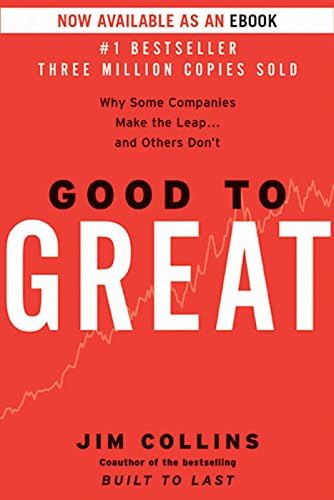
Good to Great featured the Stockdale Paradox on page 83, combining unwavering faith in the end result with disciplined confrontation of brutal current facts.
Stockdale's preparation came through decades of seemingly missed opportunities, including studying Stoic philosophy under Philip Rhinelander at Stanford, where he discovered Epictetus.
Presidential Cliffs: Carter and Ford's Post-White House Reinvention
Both Jimmy Carter and Gerald Ford faced the ultimate rejection - being 'fired by the American people' after losing reelection bids.
Carter at 56 found himself financially ruined, remodeling his attic in Plains, Georgia, with no clear plan for his remaining decades of life.
The Carter Center became Carter's vehicle for continuing presidential-level diplomacy and conflict resolution, transforming his post-presidency into perhaps his most impactful period.
The former political adversaries became close friends, with Ford calling Carter late in life to propose they each agree to deliver the other's eulogy as a final service to the nation.
Carter's early act of decency came at the Naval Academy when he supported Wes Brown, the first black graduate, during intense racist hazing designed to drive him out.
The Curse of Competence and Finding Your Frame
Being 'in frame' requires three elements: major encodings coming through the window, flipping the arrow of money so it serves your purpose rather than driving it, and igniting the fire within.
The 'curse of competence doom loop' traps people in careers they're reasonably good at but not passionate about, making escape increasingly difficult as compensation rises.
John Glenn spent nearly 10% of his life at Royal Crown Cola as an executive, but it occupies only 0.2% of his memoir - revealing how out of frame he was during that period.
Collins emphasizes that 'the die is never fully cast until the entire life is written' - people can cycle in and out of frame multiple times throughout their lives.
Legacy Versus Present Purpose: The Stoic Perspective
Collins' research revealed that great figures rarely focused on legacy, instead concentrating on expressing their encodings and accepting present responsibilities.
Meditations by Marcus Aurelius ironically demonstrates this - a 2,000-year bestseller written by someone who repeatedly argued that posthumous fame is worthless.
Marcus Aurelius wrote: 'People who long for posthumous fame forget that they won't be around to enjoy it' and noted how quickly even emperors are forgotten.
The Stoic approach focuses on loving the daily process of work itself rather than romantic notions of outcomes or recognition.
Unintended Influence: When Passion Creates Impact
Barbara Tuchman wrote The Guns of August purely from historical fascination, never imagining it would influence President Kennedy during the Cuban Missile Crisis.
Kennedy applied Tuchman's lessons about World War I's inevitability to ensure the Cuban Missile Crisis didn't become 'the missiles of October,' leaving enough slack for peaceful resolution.
John M. Barry's The Great Influenza about the Spanish flu pandemic led George W. Bush to create a White House pandemic preparedness division.
Toni Morrison captured the essence of intrinsic motivation: 'If all the publishers disappeared overnight, I'd still write my books' - the work itself must be reward enough.
Collins observed that most subjects had no idea what impact their work would have - they focused on the intrinsic satisfaction of the daily process rather than potential outcomes.


These notes may contain occasional inaccuracies. Learn how podbrain notes are made
More in Philosophy

Hollywood, The CIA & UFOs: The History Beyond Spielberg
Jun 20, 2026
What Our Fathers Teach Us, For Better Or Worse | Tom Junod
Jun 20, 2026
How To Love Your Country Without Lying About It | Ty Seidule
Jun 19, 2026
Recognize These Signs of Weakness | 7 Daily Habits That Will Change Your Life
Jun 15, 2026A Stoic's Guide To Looksmaxxing
Jun 14, 2026
.svg)