
Everything Is Connected. We Just Forgot.
Ryan Holiday hosts this Earth Day episode of the Daily Stoic podcast, reflecting on his transition from city life in Los Angeles and New York to rural Texas, and how this move revealed his disconnection from the natural world.

Episode


- 01
Only 12 places in the lower 48 states offer 15 minutes of silence without human sounds, showing our profound disconnection from natural quiet
- 02
96% of all living biomass on Earth consists of humans, livestock, and pets - only 4% are wild animals
- 03
Humans have increased the world's loudness fourfold, creating chronic stress responses since loud noises historically signaled danger
- 04
Ego Is the Enemy explores 'sympathia' - the Stoic concept of cosmic connectedness that dissolves ego through exposure to immensity
- 05
John Muir's 1879 Alaska experience exemplified sympathia: feeling 'warmed and quickened into sympathy with everything, taken back into the heart of nature'
- 06
Living in accordance with nature isn't just philosophical but practical - disconnection from natural systems has measurable health consequences
- 07
Raising Hare demonstrates how wild animals can awaken awareness of seasonal rhythms and our place in larger natural cycles
- 08
The Stoic principle 'what's bad for the hive is bad for the bee' from Meditations applies directly to environmental sustainability
Get the latest ideas from The Daily Stoic.
Plus the best new takeaways about stoicism from other top podcasts — read in minutes, not hours.
By continuing, you agree to podbrain's Terms and Privacy Policy.
These notes may contain occasional inaccuracies. Learn how podbrain notes are made
Ryan Holiday hosts this Earth Day episode of the Daily Stoic podcast, reflecting on his transition from city life in Los Angeles and New York to rural Texas, and how this move revealed his disconnection from the natural world.
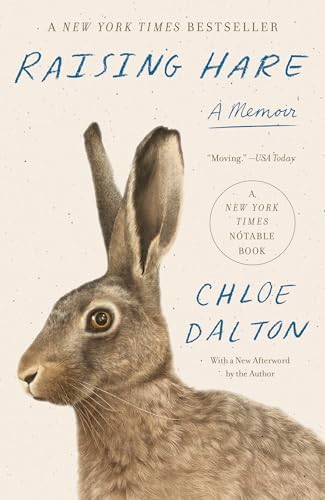
The episode explores the Stoic concept of living in accordance with nature, featuring insights from Ego Is the Enemy about cosmic perspective and ego dissolution. Holiday interviews Chloe Dalton, author of Raising Hare, about her experience caring for a wild leverette during COVID lockdown.
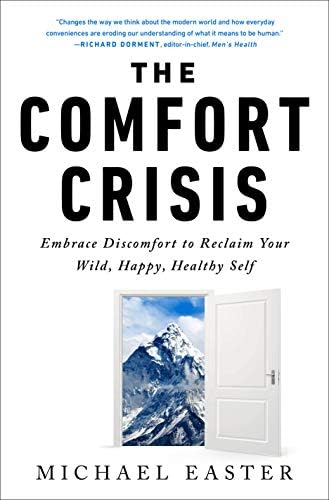
The conversation examines how modern urban environments create unnatural noise levels and disconnection from seasonal rhythms, drawing on research from The Comfort Crisis by Michael Easter about silence and natural environments.
Holiday connects Stoic philosophy with environmental awareness, arguing that disconnection from nature leads to both personal dysfunction and unsustainable behavior that violates the principle from Meditations that individual and collective wellbeing are inseparable.
The Stoic Concept of Sympathia and Cosmic Connection
Ego Is the Enemy explores sympathia through John Muir's 1879 Alaska experience, where he felt 'warmed and quickened into sympathy with everything, taken back into the heart of nature, from which we all came.'
The Stoics understood sympathia as connectedness with the cosmos, what philosopher Pierre House called 'the oceanic feeling' - belonging to something larger and realizing human things are infinitesimal in the immensity.
Neil deGrasse Tyson captures this duality: 'When I looked up in the universe, I know I'm small, but I'm also big. I'm big because I'm connected to the universe, and the universe is connected to me.'
Great leaders throughout history have gone into wilderness and returned with inspiration because 'in doing so they found perspective' - understanding the larger picture impossible in everyday bustle.
Chloe Dalton's Wild Hare and Natural Rhythms
Raising Hare chronicles Dalton's experience finding a newborn leverette in February 2021 during lockdown, raising it while allowing it to remain wild and eventually roam freely.
'The passage of the seasons brings renewal... you wait and the spring will come and all the dead things that have broken off and rotted will restore life' - Chloe on discovering natural cycles.
Dalton refused to name the hare or domesticate it: 'It would have felt like I would have trivialized this kind of glorious wild animal that I didn't fully understand and I felt so privileged to be able to see.'
The experience revealed how she had 'shaped myself into something that would be successful in a certain context' in male-dominated politics, suppressing parts of her nature.
Modern Noise Pollution and the Silence Crisis
The Comfort Crisis reveals humans have increased world loudness fourfold, with only 12 places in the lower 48 states offering 15 minutes without human sounds.
'Loud noises were often scary... a storm, a tiger, a rock slide. So we evolved to get stressed out over loud noises. Now we live in this low-grade loudness' - Michael Easter.
Chronic noise exposure correlates with depression, anxiety, and heart disease because 'heart disease is so tightly linked to stress levels.'
In Arctic silence, Easter could hear a raven's wingbeats: 'It is so silent that those sorts of noises get amplified almost,' demonstrating our lost sensitivity to natural sounds.
Stoic Environmental Ethics and Future Generations
Kai Whiting's research connects Stoicism and sustainability: future generations 'certainly need justice... the ability to provide for their needs. And that takes, on our part, self-control because the opposite is greed.'
Meditations principle 'what's bad for the hive is bad for the bee' applies to environmental systems - exhausting systems that sustain us is 'irrational, unvirtuous, and dangerous.'
Living in accordance with nature means 'living in alignment with how the world actually works, not how we wish it worked, or not our fantasy of how it works.'
The modern world's 'busyness and noise' prevents us from seeing consequences of our disconnection - 'it's only when we step off, when things slow down, that we start to see what we didn't see before.'


These notes may contain occasional inaccuracies. Learn how podbrain notes are made
More in Philosophy
You Need An Ethical Will | Lt. Gen. Mark Hertling
Jun 21, 2026
Hollywood, The CIA & UFOs: The History Beyond Spielberg
Jun 20, 2026
What Our Fathers Teach Us, For Better Or Worse | Tom Junod
Jun 20, 2026
How To Love Your Country Without Lying About It | Ty Seidule
Jun 19, 2026
Recognize These Signs of Weakness | 7 Daily Habits That Will Change Your Life
Jun 15, 2026.svg)