
Don’t Let It Do This To You | Stoicism Meets Major League Baseball
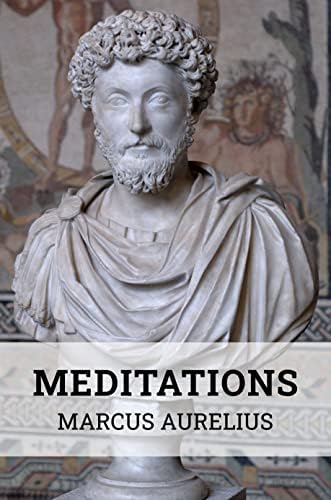
This Daily Stoic podcast episode features Ryan Holiday discussing how ancient Stoic philosophy applies to modern challenges, particularly in baseball and personal development. Holiday draws extensively from Marcus Aurelius's ref:ref-book-Meditations:...

Episode


- 01
John Fante's Ask the Dust exemplifies how writers must avoid bitterness to maintain creative strength through career setbacks
- 02
Marcus Aurelius in Meditations teaches that obstacles become fuel: 'what's thrown on top of the fire is absorbed and consumed by it'
- 03
Frank Robinson fined himself $200 for not running out a hit, demonstrating self-accountability regardless of external consequences
- 04
The dichotomy of control focuses energy on what you can influence: your response, effort, and preparation rather than outcomes
- 05
Negative visualization prepares leaders for worst-case scenarios - 'nothing should ever happen to a wise person that is a surprise'
- 06
David and Goliath illustrates strategic humility: matching strength against weakness rather than ego-driven strength against strength
- 07
Marcus Aurelius remained a student even as emperor, showing that continuous learning requires intellectual humility over certainty
Get the latest ideas from The Daily Stoic.
Plus the best new takeaways about stoicism from other top podcasts — read in minutes, not hours.
By continuing, you agree to podbrain's Terms and Privacy Policy.
These notes may contain occasional inaccuracies. Learn how podbrain notes are made
This Daily Stoic podcast episode features Ryan Holiday discussing how ancient Stoic philosophy applies to modern challenges, particularly in baseball and personal development. Holiday draws extensively from Marcus Aurelius's Meditations and references John Fante's literary journey with Ask the Dust to illustrate timeless principles of resilience.
The discussion covers four key Stoic virtues - courage, discipline, justice, and wisdom - through practical examples including baseball players' mental approaches, historical figures' responses to adversity, and the balance between confidence and humility. Holiday emphasizes how these ancient teachings provide frameworks for handling failure, maintaining accountability, and continuous learning in any field.
Strength Through Adversity: The John Fante Example
John Fante, author of Ask the Dust, faced numerous career setbacks but avoided the destructive trap of bitterness that could 'destroy him, can shrivel him up' - Holiday
Fante's son James observed that his father 'had the strength of character not to let it break him' despite acknowledging that 'there are plenty of painters who died in Auschwitz' - injustice exists but character determines response
Historical Stoics like Seneca and Epictetus faced exile, property confiscation, and execution, yet their philosophical legacy demonstrates how to 'stay good despite the bad things happening to us'
The Dichotomy of Control in Baseball and Life
Players control their preparation and response but not weather, coaches' decisions, media coverage, or teammates' performance - focusing energy on the controllable elements
The fundamental resource allocation problem: 'all the time and energy we spend on stuff that's not up to us, this time and energy we are not spending on the stuff that is up to us'
Marcus Aurelius in Meditations describes how 'our inward power, when it obeys nature, reacts to events by accommodating itself to what it faces, to what is possible'
Obstacles as Fuel: The Stoic Transformation Method
Meditations teaches that obstacles become opportunities: 'as a fire overwhelms what would have quenched a lamp, what's thrown on top of the fire is absorbed and consumed by it and makes it burn still higher'
The Stoic judgment looks at any event and declares 'you are just what I was looking for' - reframing setbacks as 'a present for the exercise of virtue'
Injuries, difficult people, and fatigue become training opportunities - 'reps dealing with difficulty and adversity' that build strength like weight room exposure to heavy loads
Negative Visualization and Leadership Preparation
Stoics practice pre-mortems rather than post-mortems because 'what is unexpected, what we don't want to think about, lands the heaviest on us'
Seneca's leadership principle: 'The only thing that a leader is not allowed to ever say is, Wow, I didn't think that would happen'
Frank Robinson's $200 self-fine for not running out a hit demonstrates that 'nothing should ever happen to a wise person that is a surprise' - preparation includes self-accountability
Self-Accountability Beyond External Consequences
Frank Robinson fined himself $200 after not running out what he assumed was a home run, telling his coach 'I should have run it out' despite the team winning in a blowout
True accountability means 'It doesn't matter that you can get away with it. It doesn't matter that no one's putting a gun to your head' - standards come from personal values
Epictetus taught that when criticized, 'you should say to yourself, I got off easy, because if they really knew me, they'd say something worse' - self-awareness exceeds external judgment
The Golden Mean: Confidence Between Ego and Self-Doubt
David and Goliath illustrates strategic confidence: David had 'the humility to know where he's weak' but 'the confidence to know that he has an advantage' with his sling
David matched 'strength against a weakness rather than a weakness against a strength' - avoiding ego-driven direct confrontation where opponents are strongest
Ego prevents learning because 'you can't learn what you think you already know' - intellectual certainty blocks growth and feedback reception
Lifelong Learning and Intellectual Humility
Marcus Aurelius, despite being emperor, was seen 'leaving his palace' to study with Sextus the philosopher 'to learn that which I do not yet know'
Socratic wisdom stems from knowing 'that he doesn't know' - the Socratic method relies on 'curiosity and openness' rather than assumed knowledge
Physics principle applied to learning: 'as our island of knowledge grows, so does the shoreline of ignorance' - more knowledge reveals more unknowns

These notes may contain occasional inaccuracies. Learn how podbrain notes are made
More in Philosophy
You Need An Ethical Will | Lt. Gen. Mark Hertling
Jun 21, 2026
Hollywood, The CIA & UFOs: The History Beyond Spielberg
Jun 20, 2026
What Our Fathers Teach Us, For Better Or Worse | Tom Junod
Jun 20, 2026
How To Love Your Country Without Lying About It | Ty Seidule
Jun 19, 2026
Recognize These Signs of Weakness | 7 Daily Habits That Will Change Your Life
Jun 15, 2026.svg)