
Arthur Brooks’ Ultimate Philosophy Masterclass (PT. 2)
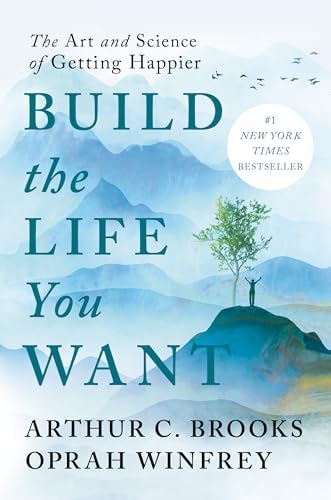
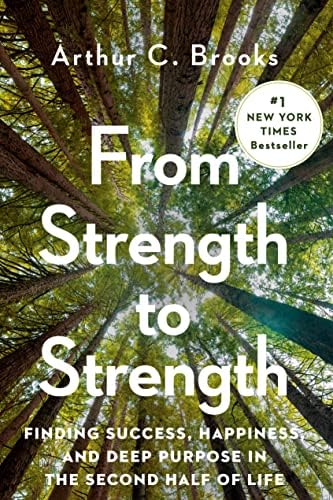
Arthur Brooks, Harvard professor and social scientist specializing in human happiness, joins Ryan Holiday for a philosophical masterclass spanning 2,500 years of wisdom traditions. Brooks is the author of Build the Life You Want (with Oprah),...

Episode


- 01
Arthur Brooks argues happiness has three pillars: Epicurean enjoyment (pleasure plus people plus memory), satisfaction (what you have divided by what you want), and meaning derived from suffering
- 02
Viktor Frankl's Man's Search for Meaning demonstrates that meaning is the most crucial pillar of happiness, quoting Nietzsche: 'A man can bear any what as long as he has a why'
- 03
Christianity's core formula reverses animal impulse: instead of 'love things, use people, worship yourself,' it teaches 'use things, love people, worship God' - Brooks
- 04
Epicurus was misunderstood - his philosophy wasn't hedonistic pleasure-seeking but about enjoyment through community, memory, and moral living in his garden commune
- 05
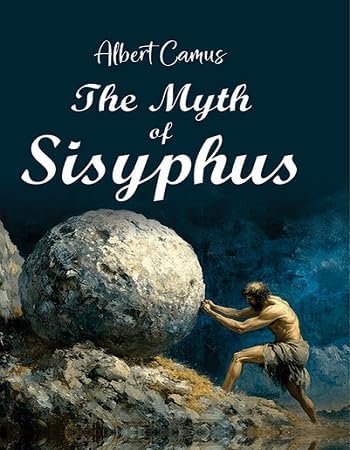
The Myth of Sisyphus by Camus concludes 'one must suppose that Sisyphus was a happy man because he had something to do' - purpose matters more than outcome
- 06
Tolstoy at 51 nearly committed suicide despite literary success, finding meaning only when living among peasants who had love for God, family, and authentic work
- 07
Buddhism's four noble truths center on life as dissatisfaction (dukkha), caused by attachment, cured by detachment through the Eightfold Path - Brooks explains
- 08
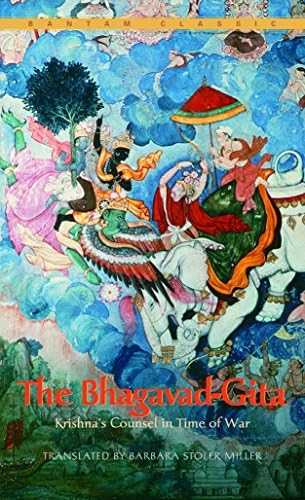
The Bhagavad Gita teaches that we are 'spiritual beings living a physical existence' - fusing metaphysical and physical into ordinary life like Krishna's earthly adventures
Get the latest ideas from The Daily Stoic.
Plus the best new takeaways about philosophy from other top podcasts — read in minutes, not hours.
By continuing, you agree to podbrain's Terms and Privacy Policy.
These notes may contain occasional inaccuracies. Learn how podbrain notes are made
Arthur Brooks, Harvard professor and social scientist specializing in human happiness, joins Ryan Holiday for a philosophical masterclass spanning 2,500 years of wisdom traditions. Brooks is the author of Build the Life You Want (with Oprah), From Strength to Strength, and Love Your Enemies, and hosts the podcast Office Hours while contributing to CBS and The Free Press.
The conversation explores how different philosophical schools approach the fundamental challenge of transforming suffering into meaning. They examine the three pillars of happiness through various lenses: Epicurean enjoyment, satisfaction theory, and meaning-making from adversity.
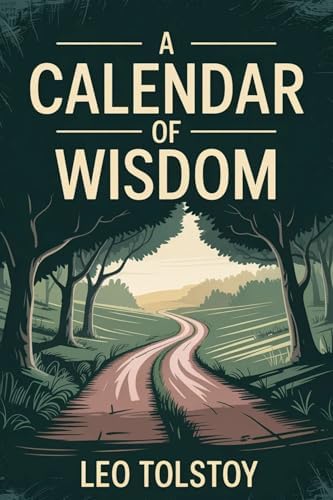
Brooks and Holiday traverse ancient Greek philosophy, Buddhist and Hindu traditions, Christian theology, Russian existentialism, and modern thinkers like Camus and Frankl. They discuss how Self-Reliance by Emerson represents American individualism, while The Myth of Sisyphus reframes futility as purpose, and how Tolstoy's spiritual crisis led to his A Calendar of Wisdom.
The discussion reveals how seemingly disparate traditions converge on core insights about human flourishing, from the Buddha's teachings on attachment to Viktor Frankl's emphasis on meaning in Man's Search for Meaning, ultimately arguing that resilient happiness requires embracing rather than avoiding life's inevitable suffering.
The Misunderstood Philosophy of Epicurean Enjoyment
Epicurus is completely misunderstood today - his philosophy wasn't about hedonistic pleasure but about 'enjoyment,' which Brooks defines as 'pleasure plus people plus memory.'
True Epicurean living required strict moral rules and community - 'the Berkeley generation of 68 couldn't have lived with Epicurus' because they wouldn't tolerate his disciplined approach - Brooks
Epicurus taught wanting less rather than having more: satisfaction equals what you have divided by what you want, making the denominator more important for happiness.
The philosophy emphasizes mindfulness over time travel - most entrepreneurs spend 80% of their mental cycles living in the future, missing their actual lives.
Buddhist Detachment and the Four Noble Truths
Buddhism emerged around 500 BC when Prince Siddhartha left his sheltered palace life, discovered suffering, and developed the Four Noble Truths under the Bodhi tree.
The first noble truth isn't that 'life is suffering' but that 'life is dissatisfaction' (dukkha) - we're aspirational creatures designed to be in the hunt, making us successful but unhappy.
Buddhism differs fundamentally from Hinduism by being non-theistic, while Hinduism is 'profoundly monotheistic' with Brahman as the Godhead manifesting as Brahma, Vishnu, and Shiva.
The Bhagavad Gita presents Lord Krishna as an avatar living both heavenly and earthly existence, teaching that we are 'spiritual beings living a physical existence.'
Christianity's Revolutionary Formula for Human Flourishing
Christianity reverses animal impulse from 'love things, use people, worship yourself' to 'use things, love people, worship God' - a complete inversion of natural tendencies.
Jesus's teaching 'Love Your Enemies and pray for those who persecute you' (Matthew 5:44) was 'the most transgressive teaching of all time,' enabling negotiation and persuasion over coercion - Brooks
Aquinas in 1265 defined love as 'to will the good of the other as other, notwithstanding your feelings' - making love an action and decision, not just emotion.
The Enlightenment concept of win-win outcomes through negotiation stems directly from the Christian idea that you can love your enemy even when they're wrong.
Emersonian Self-Reliance Versus Randian Objectivism
Brooks calls Self-Reliance 'like a tall glass of cool water on a summer day' - representing the best of American individualism fused with moral obligation.
Emerson differs from Ayn Rand because 'he's generous to a fault' - funding the transcendental movement, helping slaves on the Underground Railroad, and being a good friend.
Brooks experiences internal conflict as a Catholic drawn to Emersonian individualism: '75% right on board with the Pope, but there's that 25% of Emerson calling to me.'
Holiday contrasts Rand's Galt's Gulch in Atlas Shrugged with Plato's cave allegory - both involve retreating from society, but Plato demands returning to help others while Rand says 'fuck everybody else.'
Camus and the Absurdist Path to Meaning
The Myth of Sisyphus concludes that 'one must suppose that Sisyphus was a happy man because he had something to do' - purpose matters more than achievement.
Camus lived his philosophy through action - joining the French Resistance in WWII and speaking out on moral issues, unlike Sartre who lived 'this hermetically sealed existence.'
The Fall serves as a moral allegory about a man haunted by his indifference to someone drowning - representing intellectuals who remained detached during World War II.
Both The Fall and The Plague are 'striking books for this moment' because they address moral responsibility in the face of suffering and crisis.
Russian Existentialism and the Search for Meaning
Tolstoy at 51 nearly committed suicide despite being nominated for the Nobel Prize in Literature four times, unable to find meaning in writing or science.
Living among illiterate peasants, Tolstoy discovered that 'meaning is love' - love for God, family, authentic friendship, and sanctifying work through service to others.
A Calendar of Wisdom by Tolstoy contains 'a lot of Catholic teaching' and serves as excellent bedtime reading for spiritual reflection.
Russian existentialists like Tolstoy and Dostoevsky are experiencing a revival, with publishers receiving 'manuscript after manuscript' about their Christian existentialist ideas.
Viktor Frankl and the Primacy of Meaning
Man's Search for Meaning opens with Nietzsche's insight that 'a man can bear any what as long as he has a why' - making meaning the most crucial pillar of happiness.
Frankl's Holocaust experience confirmed that 'there is none of these things without suffering' - you must transform suffering into meaning, and 'if you don't suffer, there is no meaning.'
Modern therapy culture wrongly treats sadness and anxiety as pathology - Brooks tells Harvard students 'if they're not sad and anxious, they need therapy.'
The goal is to start each day saying 'I'm grateful for the suffering that will befall me this day, bring it on' - transforming adversity into growth and meaning.




These notes may contain occasional inaccuracies. Learn how podbrain notes are made
More in Philosophy
You Need An Ethical Will | Lt. Gen. Mark Hertling
Jun 21, 2026
Hollywood, The CIA & UFOs: The History Beyond Spielberg
Jun 20, 2026
What Our Fathers Teach Us, For Better Or Worse | Tom Junod
Jun 20, 2026
How To Love Your Country Without Lying About It | Ty Seidule
Jun 19, 2026
Recognize These Signs of Weakness | 7 Daily Habits That Will Change Your Life
Jun 15, 2026.svg)