
Arthur Brooks’ Ultimate Philosophy Masterclass (PT. 1)
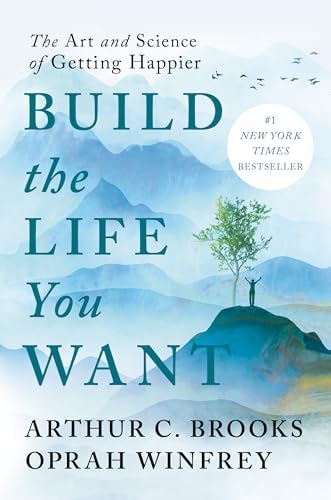
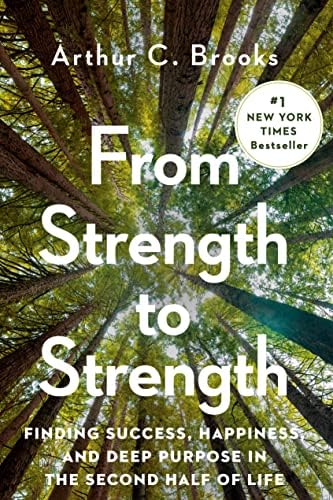
Arthur Brooks, Harvard professor and Atlantic columnist, joins Ryan Holiday for a deep dive into ancient philosophy's practical wisdom. Brooks, author of Build the Life You Want with Oprah and the upcoming...

Episode


- 01
Arthur Brooks argues that happiness isn't an emotion but consists of enjoyment, satisfaction, and meaning - all requiring significant suffering
- 02
Socrates teaches humility through 'the only thing I know is that I don't know anything' - moving from defensive me-self to open I-self
- 03
Plato's cave allegory shows our obligation to share enlightenment: escape the shadows, then return to help others understand truth
- 04
The Cynics like Diogenes are 'punk rockers of philosophy' - their extremism reveals insights about materialism's absurdity
- 05
Aristotle revolutionized philosophy by asserting that change IS reality, not a distraction from it - progress becomes life's essence
- 06
Nietzsche's value lies in questioning fundamental assumptions about whether meaning precedes existence or must be created
- 07
Ancient philosophers were recyclers building on oral traditions - good work requires mostly recycling established wisdom like sourdough starter
- 08
Human beings can choose between animal impulse and moral aspiration thanks to our complex prefrontal cortex
Get the latest ideas from The Daily Stoic.
Plus the best new takeaways about philosophy from other top podcasts — read in minutes, not hours.
By continuing, you agree to podbrain's Terms and Privacy Policy.
These notes may contain occasional inaccuracies. Learn how podbrain notes are made
Arthur Brooks, Harvard professor and Atlantic columnist, joins Ryan Holiday for a deep dive into ancient philosophy's practical wisdom. Brooks, author of Build the Life You Want with Oprah and the upcoming The Meaning of Your Life Finding Purpose in an Age of Emptiness, brings his expertise in behavioral science and philosophy to examine what the ancients can teach modern seekers.
The conversation explores how different philosophical schools - from Socrates and Plato to the Cynics and Aristotle - offer complementary rather than competing insights. Brooks advocates for drawing wisdom from multiple traditions rather than staying confined to one school, much like Seneca quoted Epicurus despite being a Stoic.
They discuss the convergent evolution of philosophical ideas, examining how similar insights emerged across cultures and centuries. The discussion covers Socratic humility, Platonic truth-seeking, Cynical materialism critique, and Aristotelian virtue development, connecting ancient wisdom to contemporary challenges around meaning, happiness, and human flourishing.
The Convergent Evolution of Philosophical Wisdom
Brooks argues that philosophical schools developed similar insights through 'convergent evolution' - different thinkers addressing universal human needs rather than descending from common sources.
Academic specialization often leads brilliant people 'walking 180 degrees off truth' because they lack cross-disciplinary perspective - 'you can be just like as great as you could possibly be to try to be right, but going in the wrong direction' - Brooks.
Ancient philosophers were familiar with competing schools, like Seneca quoting Epicurus more than Stoics, demonstrating intellectual humility and openness to truth from any source.
Socratic Humility and the Shift from Me-Self to I-Self
Socrates lived through Athens' most turbulent period - wars, the 30 tyrants, political upheaval - not the peaceful classical antiquity we imagine, making his philosophical insights more remarkable.
'The only thing I know is that I don't know anything' represents moving from defensive me-self to open I-self - focusing outward on learning rather than protecting one's rightness - Brooks.
Socrates dealt with practical difficulties including a notoriously difficult marriage, yet saw even personal struggles as philosophical practice opportunities.
Plato's Cave and the Obligation to Share Enlightenment
Plato introduces transcendent truth that underlies constant change - we see only shadows on cave walls but must triangulate across images to understand reality.
The philosopher's obligation is returning to the cave to help others understand what the shadows represent - 'once you actually have greater enlightenment is to share that particular enlightenment' - Brooks.
This Platonic principle appears across traditions: the Dalai Lama tells Westerners not to become Buddhist for personal benefit but to meditate 'so the whole world will feel better.'
Plato and the Tyrant by James Romm shows how Plato's political involvement with Dionysius became a cautionary tale about intellectuals being manipulated by power-seeking tyrants.
Cynical Wisdom: The Punk Rockers of Philosophy
Modern cynicism misunderstands the ancient Cynics - they weren't negative but transgressive critics of materialism, like 'punk rockers of the philosopher world' - Holiday.
Diogenes' famous encounter with Alexander the Great exemplifies Cynical philosophy: when offered anything by the world's most powerful man, he simply said 'You can stop blocking the sun.'
The cup-smashing story reveals Cynical extremism's value: Diogenes realized even his minimal possessions could be reduced further when seeing a boy drink with his hands.
Cynics provide necessary perspective through extremism - 'if everyone lived as Diogenes lived, the world would be a horrible place' but their critique of materialism offers valuable insights - Holiday.
Aristotelian Dynamism: Change as Reality's Essence
Aristotle revolutionized philosophy by asserting 'change isn't a distraction from reality. It is reality' - making dynamism rather than static essence the core of existence.
Virtue becomes something you practice and improve at rather than possess - 'you can't be happy, but you can be as happy you're' representing an Aristotelian rather than Platonic approach - Brooks.
Eudaimonia means 'a good life well lived' consisting of enjoyment, satisfaction, and meaning - not the emotion we call happiness but a way of being that includes necessary suffering.
Humans can choose between 'animal impulse and moral aspiration' thanks to our complex prefrontal cortex - 'when you're making that choice, the suffering is sweet' - Brooks.
Nietzsche's Radical Questioning and Philosophical Recycling
Nietzsche's value lies in questioning fundamental assumptions about whether essence precedes existence or existence precedes essence - breaking apart 2,500 years of accumulated philosophy and Christian teaching.
Good philosophical work requires 'recycling' like sourdough bread - '20% of a talk has got to be some old stuff' because '100% new always sucks' - Brooks.
Utopianisms fail because they're not 'sourdough' - completely new approaches to human nature prove 'always wrong and actually destructive and dangerous' without historical testing.
Ancient philosophers built on vast oral traditions we've lost - 'for our kids to say knowledge is limited to what's on the internet' parallels our assumption that only written knowledge matters.


These notes may contain occasional inaccuracies. Learn how podbrain notes are made
More in Philosophy

You Need An Ethical Will | Lt. Gen. Mark Hertling
Jun 21, 2026
Hollywood, The CIA & UFOs: The History Beyond Spielberg
Jun 20, 2026
What Our Fathers Teach Us, For Better Or Worse | Tom Junod
Jun 20, 2026
How To Love Your Country Without Lying About It | Ty Seidule
Jun 19, 2026
Recognize These Signs of Weakness | 7 Daily Habits That Will Change Your Life
Jun 15, 2026.svg)