
A Stoic Test I Didn’t Expect
Ryan Holiday recounts a whirlwind weekend that culminated in driving the NASCAR pace car at Circuit of the Americas in Austin, Texas. After a grueling schedule of talks to the Chicago Cubs, Arizona Diamondbacks, and Daily Stoic fans across Las Vegas and Phoenix, Holiday faced his most nerve-wracking challenge yet.

Episode


- 01
Holiday drove the NASCAR pace car at Circuit of the Americas, maintaining 40 mph for three laps in front of 35,000 fans
- 02
Brad Keselowski raced with a broken femur just 10 weeks after injury, calling it 'by far the worst pain of his life'
- 03
The dichotomy of control exercise asks: 'Is this up to me or not?' - focusing energy only on what you can control
- 04
Holiday gave four different talks in 24 hours to Cubs, Diamondbacks, and Daily Stoic fans across multiple cities
- 05
Negative visualization helps prepare for worst-case scenarios: 'better to do a pre-mortem than a post-mortem'
- 06
When intimidated, ask: 'Have other people done this?' - as Meditations says, 'if it's humanly possible, you can do it also'
- 07
Keselowski's philosophy: 'You just turn it off and try to get in the zone and turn all that stuff off'
- 08
The hardest racing skill is maintaining mental discipline when variables are uncontrollable - heat, car handling, other drivers
Get the latest ideas from The Daily Stoic.
Plus the best new takeaways about stoicism from other top podcasts — read in minutes, not hours.
By continuing, you agree to podbrain's Terms and Privacy Policy.
These notes may contain occasional inaccuracies. Learn how podbrain notes are made
Ryan Holiday recounts a whirlwind weekend that culminated in driving the NASCAR pace car at Circuit of the Americas in Austin, Texas. After a grueling schedule of talks to the Chicago Cubs, Arizona Diamondbacks, and Daily Stoic fans across Las Vegas and Phoenix, Holiday faced his most nerve-wracking challenge yet.
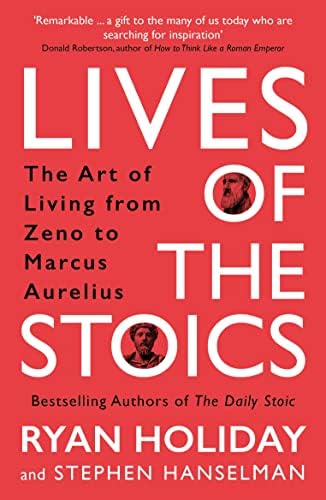
The episode features conversations with NASCAR driver Brad Keselowski, who exemplified Stoic principles by racing just 10 weeks after breaking his femur. Holiday draws from Lives of the Stoics, The Way of Baseball, and Meditations to explore how ancient philosophy applies to high-pressure performance situations.
From parking struggles in the paddock to maintaining 40 mph for three laps in front of 35,000 spectators, Holiday demonstrates how Stoic concepts like the dichotomy of control and negative visualization help manage fear and self-doubt in intimidating circumstances.
The Dichotomy of Control in Professional Sports
Holiday taught both the Cubs and Diamondbacks the core Stoic exercise: 'Is this up to me? Is it not up to me? When we focus our energy on what's not up to us, we're wasting our energy.'
The practical application for athletes: 'I don't control the weather, I control how I play in the weather. I don't control the umpires, I control how I respond to the umpires.'
Seahawks GM John Snyder evaluates players based on past adversity: 'He wants a guy that maybe struggled a little bit in high school, maybe got a little bit of trouble in college' - looking for resilience patterns.
Negative Visualization as Performance Preparation
Holiday introduced the Diamondbacks to negative visualization: 'The Stoics would say it's better to do a pre-mortem than a post-mortem. A post-mortem is great for the doctor, not so great for the patient who died.'
Seneca's leadership principle: 'The only thing that a leader is not allowed to ever say is, wow, I didn't think that would happen. Your job as the leader is to think that could happen.'
The goal isn't anxiety but preparation: 'Most of the time, these negative circumstances won't happen. It's better to be pleasantly surprised that they don't happen than unpleasantly surprised if they do happen.'
Brad Keselowski's Stoic Response to Injury
Keselowski broke his femur 10 weeks before the race, describing it as 'by far the worst pain of his life' - so severe he 'thought of Civil War soldiers who had their legs cut off.'
His mental approach during the race: 'When you get scared, you hold your breath. You lose your energy and borderline pass out. You literally turn the fear off like a light switch.'
The New York Times noted Keselowski as a student of The Obstacle Is the Way: 'Obstacles are an opportunity for self-growth rather than a roadblock to success.'
His post-race philosophy embodied Stoic expectations: 'I expect it. I expect to lay it all out on the line. If I'm going to ask everybody else to give it their all, I've got to give it my all too.'
Overcoming Intimidation Through Perspective
Holiday's parking struggle at the track foreshadowed his self-doubt: 'I was like, oh wait, so am I bad at driving when I have an audience? That's not going to be great with 35,000 people watching.'
Drawing from Galveston, Holiday used perspective to calm nerves: 'The dumbest people in the world have managed to get jobs' - applying this to pace car driving and other intimidating tasks.
Meditations provided the key insight: 'If it's humanly possible, know that you can do it also' - Marcus Aurelius's reminder that others have accomplished similar challenges.
The absurd introduction moment: 'And now one of the world's best-selling living philosophers, Ryan Holiday' to a NASCAR crowd - echoing the fish-out-of-water story from Lives of the Stoics about Greek philosophers in Rome.
Mental Discipline Under Pressure
The Way of Baseball reinforced Yogi Berra's wisdom: 'You can't think and hit at the same time' - the importance of getting out of your head during performance.
Patrick Dempsey's racing advice applied: 'I'm really comfortable being private in a public world. I know I got a lot of eyes on me, but I need to be present.'
The pace car challenge required maintaining exactly 40 mph for three laps while NASCAR cars tested behind: 'You sort of subconsciously want to get out of the way, but you have to maintain your equilibrium.'
Holiday's realization about life skills: 'You have to get really good at tuning out other people rushing you, distracting you, making you feel self-conscious because that's really going to screw you up.'
The Physical-Mental Connection in Elite Performance
Keselowski explained the racing paradox: 'If you have the right mentality and these variables are under control, I am convinced that your average 12-year-old could do my job.'
The challenge is managing uncontrollable variables: 'You're almost always fighting something with a car, fighting a really hot day, fighting going 200 miles an hour in a pack of cars.'
Built From Broken emphasizes movement variety for joint health: 'One of the most critical aspects of healthy aging that just not enough people talk about, let alone implement.'
The book's core principle: 'By varying what you do, you can create healthy stressors that reinforce your joint integrity rather than eroding it.'

These notes may contain occasional inaccuracies. Learn how podbrain notes are made
More in Philosophy
You Need An Ethical Will | Lt. Gen. Mark Hertling
Jun 21, 2026
Hollywood, The CIA & UFOs: The History Beyond Spielberg
Jun 20, 2026
What Our Fathers Teach Us, For Better Or Worse | Tom Junod
Jun 20, 2026
How To Love Your Country Without Lying About It | Ty Seidule
Jun 19, 2026
Recognize These Signs of Weakness | 7 Daily Habits That Will Change Your Life
Jun 15, 2026.svg)