
40 Hidden Lessons From Marcus Aurelius' Meditations
Ryan Holiday explores hidden lessons in Marcus Aurelius's Meditations, revealing insights that emerge only through decades of study. Holiday, author and founder of Daily Stoic, draws from his 20+ years reading the text and visits to...

Episode


- 01
Marcus Aurelius never explicitly calls himself a Stoic in Meditations - he embodies philosophy rather than labeling it
- 02
Meditations was written during the Antonine Plague that killed millions, making 'memento mori' a lived reality rather than abstract philosophy
- 03
Marcus buried half his children yet maintained hope, writing 'convince yourself that everything is a gift from the gods'
- 04
The emperor spent enormous time away from Rome - Budapest is 800 miles from Rome, shaping his perspective on being 'a citizen of the world'
- 05
Gregory Hayes translation captures Marcus's poetic brilliance better than stilted Victorian versions that miss the personal, earnest tone
- 06
Marcus demonstrates that asking for help isn't weakness: 'we are like soldiers storming a wall... if you need help, so what?'
- 07
True wealth means 'whenever he saw someone in need, he always had money to help them' - Marcus
- 08
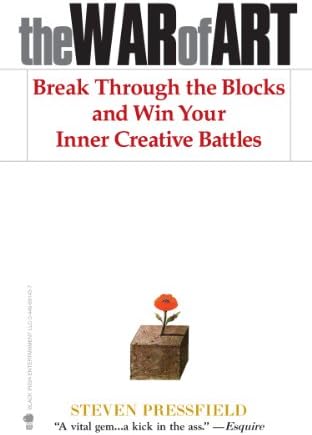
The book contains two voices - one doubting and suffering, another teaching, reflecting refref-book-the-war-of-artrefref-book-the-war-of-artThe War of Art's higher vs lower self concept
Get the latest ideas from The Daily Stoic.
Plus the best new takeaways about stoicism from other top podcasts — read in minutes, not hours.
By continuing, you agree to podbrain's Terms and Privacy Policy.
These notes may contain occasional inaccuracies. Learn how podbrain notes are made
Ryan Holiday explores hidden lessons in Marcus Aurelius's Meditations, revealing insights that emerge only through decades of study. Holiday, author and founder of Daily Stoic, draws from his 20+ years reading the text and visits to Roman sites where Marcus lived and wrote.
The discussion covers Marcus Aurelius as Roman Emperor (161-180 AD) who wrote his private philosophical journal while managing plague, war, and personal tragedy. Holiday examines the Gregory Hayes translation and contextualizes the work within the Antonine Plague that devastated the Roman Empire.
Key themes include Marcus's approach to leadership during crisis, his relationship with Stoic philosophy, the universality of his struggles despite his god-king status, and practical applications for modern readers facing their own challenges and setbacks.
Marcus Never Called Himself a Stoic
Gregory Hayes notes that Marcus Aurelius never explicitly identifies as a Stoic in Meditations - 'we don't have any definitive proof that Marcus Aurelius was a Stoic philosopher'
As Epictetus taught, 'we don't talk about our philosophy, we embody it' - Marcus's life, not his labels, makes him a Stoic philosopher
Marcus wasn't dogmatic about Stoic orthodoxy, reading from all philosophical schools like Seneca, who would 'quote a bad author, even if the line is good'
If asked what he was, Marcus would likely say 'I am studying philosophy' rather than claiming to be a Stoic, showing humility over honors
Writing During the Antonine Plague
Meditations was written during a devastating plague lasting 15 years that killed millions - Marcus may have died from it himself
When Marcus writes 'you could leave life right now, let that determine what you do and say and think,' he's responding to a virus making death immediate and capricious
'Convince yourself that everything is a gift from the gods, that things are good and always will be' - written while plague devastated Rome's economy and civil society
The pandemic context transforms abstract philosophical exercises into urgent, practical wisdom for surviving catastrophic circumstances
The Emperor's Geographic Perspective
Marcus spent enormous time away from Rome - Budapest is 800 miles from Rome, making 'life is warfare and a journey far from home' literal, not metaphorical
Walking the streets of Aquincum (Roman camp outside Budapest) revealed Marcus as 'a guy who walked from this building to this building' - fundamentally human despite god-king status
The vast scope of the Roman Empire shaped his writing about being 'a citizen of the world' and taking 'the bird's eye view' - he personally experienced more of the known world than average Romans
Geographic isolation took its toll, contributing to loneliness and exhaustion that permeates the text alongside philosophical insights
Two Voices in the Text
Spanish classicist David Hernandez de la Fuente identifies 'two voices in Marcus Aurelius' head - one that doubted and suffered, while the other was the teacher, offering comfort and certainty'
This mirrors The War of Art concept of higher self versus lower self - Meditations captures Marcus battling between who he is and who he wants to be
Marcus writes 'you want to fight to be the person that philosophy tried to make you' - the book documents this internal struggle in real time
Meditations serves as 'the minutes of that fight' between the struggling human and the philosophical ideal
Immense Personal Tragedy and Resilience
Marcus buried half his children, lost his father young, lived through famine, floods, plague, and endless wars - 'it's honestly impossible to comprehend the immensity of the tragedy'
'But why should we be angry at the world as if the world would notice?' - from a man who experienced unfathomable loss, reminding himself the universe is indifferent
Despite everything, 'he kept going, tried to be good, tried to be happy, showed up for work, helped people' - making him 'a hopeful figure' rather than depressing
His daily choice to get out of bed was 'an act of immense perseverance and courage' and 'a profound statement against hopelessness'
Practical Business Ethics and Decision-Making
When Belarus (where his books were printed) supported Russia's invasion of Ukraine, Holiday applied Marcus's principle: 'just that you do the right thing, the rest doesn't matter'
Switching manufacturers doubled costs, 'obliterated the margins,' but 'it's either the right thing to do or it's not' - no conditional ethics based on convenience
Marcus's principle of not doing 'anything that requires walls or curtains' guides transparent business practices - if customers saw behind the curtain, would they approve?
Like Marcus selling palace furnishings to pay Rome's debts during plague, ethical leadership sometimes requires costly sacrifices
Redefining Wealth and Fortune
For Marcus, being rich meant 'whenever he saw someone that was in need of help, he always had the money to help them'
'I was luckier still that no one had to return that favor to me' - true fortune is being a blessing to others without being a burden
This definition transcends material wealth - if you can help others and don't need help yourself, 'you should count yourself as lucky and as fortunate as the Emperor of Rome'
Marcus's gratitude focused not on palace luxuries but on his capacity for generosity and self-sufficiency

These notes may contain occasional inaccuracies. Learn how podbrain notes are made
More in Philosophy
You Need An Ethical Will | Lt. Gen. Mark Hertling
Jun 21, 2026
Hollywood, The CIA & UFOs: The History Beyond Spielberg
Jun 20, 2026
What Our Fathers Teach Us, For Better Or Worse | Tom Junod
Jun 20, 2026
How To Love Your Country Without Lying About It | Ty Seidule
Jun 19, 2026
Recognize These Signs of Weakness | 7 Daily Habits That Will Change Your Life
Jun 15, 2026.svg)