
Dan Brown
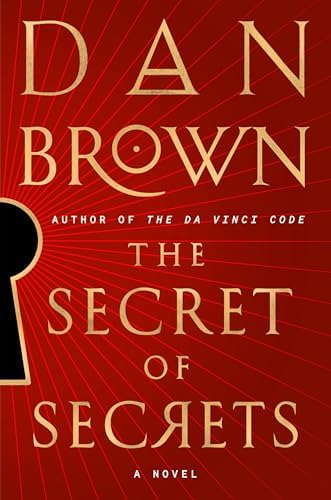
Dan Brown, bestselling author of The Da Vinci Code and creator of Robert Langdon, discusses his latest novel The Secret of Secrets, an eight-year exploration of human consciousness set in Prague. Brown reveals his evolution from skeptic to...

Episode

- 01
The Secret of Secrets took eight years to write, exploring non-local consciousness theory through Prague's mystical setting
- 02
Brown believes consciousness exists outside the brain, citing anomalies like sudden savant syndrome and laboratory-proven ESP
- 03
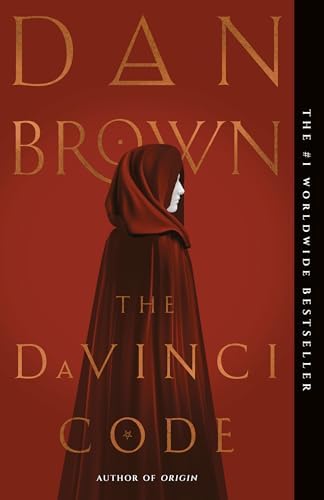
The Da Vinci Code was banned worldwide and put Brown on trial in Vatican City for 'crimes against Jesus'
- 04
Brown writes every day at 4 AM without checking news, finishing chapters by writing the opening paragraph of the next
- 05
All Brown's novels compress timeframes - The Secret of Secrets occurs in 24 hours despite publisher pressure for a week
- 06
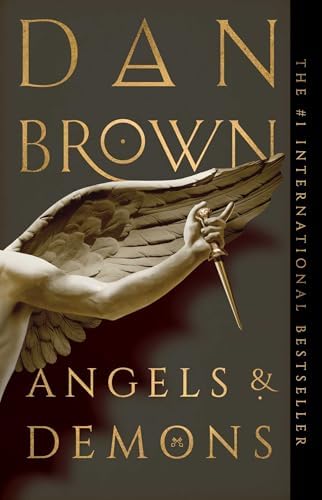
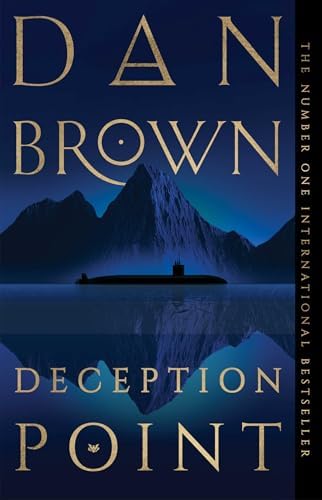
Brown's first three novels (Digital Fortress, Angels and Demons, Deception Point) were commercial failures before The Da Vinci Code
- 07
The Vatican's opposition to The Da Vinci Code became inadvertent publicity, with churches posting 'Don't read it' signs
- 08
Brown practices TM meditation afternoons, not mornings, because creativity requires mental activity while meditation clears the mind
Get the latest ideas from Tetragrammaton with Rick Rubin.
Plus the best new takeaways from other top podcasts — read in minutes, not hours.
By continuing, you agree to podbrain's Terms and Privacy Policy.
These notes may contain occasional inaccuracies. Learn how podbrain notes are made
Dan Brown, bestselling author of The Da Vinci Code and creator of Robert Langdon, discusses his latest novel The Secret of Secrets, an eight-year exploration of human consciousness set in Prague. Brown reveals his evolution from skeptic to believer in non-local consciousness theory, driven by research into paranormal phenomena and near-death experiences.
The conversation covers Brown's writing process, from his 4 AM daily routine to his method of writing endings first, drawing parallels between novel structure and musical composition. Brown details the controversy surrounding The Da Vinci Code, including Vatican trials and worldwide bans, while explaining how his early commercial failures with Digital Fortress, Angels and Demons, and Deception Point shaped his persistence.
Brown explores themes of consciousness, artificial intelligence, and the intersection of science and spirituality, referencing influential works like Holy Blood, Holy Grail that inspired his research. He discusses his creative projects including Wild Symphony, his children's musical work, and his belief that consciousness extends beyond local brain activity.
Eight Years Writing About Human Consciousness
The Secret of Secrets required eight years of daily writing, seven days a week, often eight hours per day to explore consciousness theory - 'by far the most ambitious thing I've ever tried.'
Brown believes we're at a Copernican moment with consciousness: 'This model of local consciousness is eroding. There are so many anomalies that we simply can't explain them anymore.'
The book explores non-local consciousness through Prague's mystical setting, chosen because 'Prague is the mystical capital of the world' since Emperor Rudolph II invited mystics and alchemists there.
Brown's research included sudden savant syndrome cases like 'a kid in Arizona gets hit in the head with a baseball, wakes up speaking Chinese' - phenomena unexplainable by local consciousness theory.
The Da Vinci Code Phenomenon and Vatican Opposition
The Da Vinci Code was banned and burned worldwide, with the Vatican putting Brown 'on trial in Vatican City in absentia and found me guilty of crimes against Jesus or something.'
Churches posted signs saying 'The Da Vinci Code is all lies. Don't read it' - inadvertent publicity that Brown's publisher called the Vatican's free marketing campaign.
The book's success stemmed from timing and publisher support after three commercial failures - Random House executives 'never agree on anything. And they all agreed, this is going to be a popular book.'
Holy Blood, Holy Grail authors sued Brown for plagiarism despite their book returning to bestseller lists, but lost in British High Court under 'loser pays' system.
Writing Process and Daily Discipline
Brown writes daily at 4 AM without checking news or email, harnessing the creative state from 'your second REM cycle, I mean, you've been dreaming and your brain is in that mode where it's creating something.'
Each writing session ends by writing the opening paragraph of the next chapter: 'it's like setting the table for breakfast. You arrive and the table's set.'
Brown practices TM meditation in afternoons, not mornings, because 'it clears the mind' while creativity requires mental activity - 'the opposite of what you want to do when you're being creative.'
After writing sessions, Brown plays piano for 30-40 minutes as a reset: 'making music, even just improvising, brings my brain back gently to the real world.'
Novel Structure and Character Development
Brown writes endings first, comparing novel structure to musical composition: 'You can't write a piece of music without understanding structure... A good melodic line asks the question, gives an answer. A good paragraph asks the question, gives an answer.'
All novels occur in compressed timeframes - The Secret of Secrets happens in 24 hours despite publisher pressure: 'I need it to happen over the course of a week. And Jason and I looked at each other and said, not going to happen.'
Brown always writes the villain first because 'the villain defines the hero... The villain really is the only thing that makes your hero heroic.'
Characters receive specific brand names to convey information efficiently: 'the fact that Catherine wears a or carries a Siena bag rather than a Louis Vuitton bag... She doesn't waste money, but she has a sense of style.'
Early Career Struggles and Breakthrough
Brown's first three novels were commercial failures - Digital Fortress, Angels and Demons, and Deception Point 'sold no copies' before The Da Vinci Code changed everything.
After music career failure in LA, Brown thought 'book publishing is so much easier than music' until his first book flopped: 'about 10 people bought the book. I think five of them were my mother.'
Brown nearly quit writing after three failures: 'if this doesn't work, then I really am, I'm going to do something else... if nobody likes this, then they don't share my taste.'
His previous publisher rejected The Da Vinci Code outline asking for $100,000 advance: 'who do you think you are? You've sold no copies. The answer is no.'
Research Methods and Creative Projects
Brown's research process involves extensive reading followed by expert interviews: 'people who've studied a certain field are very, very eager to talk about it. It's exciting to them.'
Location research requires multiple visits - Brown went to Prague 'maybe four or five times' with Czech editor assistance to efficiently access key locations and contacts.
Wild Symphony represents Brown's return to music - a children's symphony with 22 movements inspired by animals, accompanied by a picture book.
Brown manifested The Secret of Secrets title for 20 years, creating a fake book jacket and New York Times bestseller list placement that later became reality.







These notes may contain occasional inaccuracies. Learn how podbrain notes are made
More in Philosophy

You Need An Ethical Will | Lt. Gen. Mark Hertling
Jun 21, 2026
Hollywood, The CIA & UFOs: The History Beyond Spielberg
Jun 20, 2026
What Our Fathers Teach Us, For Better Or Worse | Tom Junod
Jun 20, 2026
How To Love Your Country Without Lying About It | Ty Seidule
Jun 19, 2026
Recognize These Signs of Weakness | 7 Daily Habits That Will Change Your Life
Jun 15, 2026.svg)