
Chris Best
Chris Best, co-founder and CEO of Substack, discusses the platform's evolution from a 2017 essay complaint about internet media economics to a $650 million company powering independent publishing. Best, a programmer turned media entrepreneur, co-founded Substack with writer Hamish McKenzie after their argument about...

Episode

- 01
Substack's core idea emerged from a 2017 argument about media economics: 'writers and people who make culture are the heroes' - Chris Best
- 02
The platform takes only 10% commission, meaning 'you make nine times more money than we do' - Best on creator-first economics
- 03
Early conversion rates often hit 5-10% from free to paid subscribers, 'much higher than people had expected' - Best
- 04
Elon Musk banned all mention of Substack on Twitter for a week, making the word unsearchable like 'Voldemort'
- 05
Barry Weiss's Substack became The Free Press and recently sold for $150 million, exemplifying platform success stories
- 06
Best's advice to creators: 'just start' and 'default to creating more frequently' - successful writers often publish five times per week
- 07
The platform now drives discovery through its app feed, with creators no longer dependent on hostile social media algorithms
Get the latest ideas from Tetragrammaton with Rick Rubin.
Plus the best new takeaways from other top podcasts — read in minutes, not hours.
By continuing, you agree to podbrain's Terms and Privacy Policy.
These notes may contain occasional inaccuracies. Learn how podbrain notes are made
Chris Best, co-founder and CEO of Substack, discusses the platform's evolution from a 2017 essay complaint about internet media economics to a $650 million company powering independent publishing. Best, a programmer turned media entrepreneur, co-founded Substack with writer Hamish McKenzie after their argument about solutions to media's broken business models.
The conversation covers Substack's core philosophy of writer independence, its 10% revenue-sharing model, and major platform milestones including high-profile journalist migrations from legacy media. Best details controversies around free speech policies, the platform's relationship with Twitter/X, and expansion into podcasting, video, and social features.
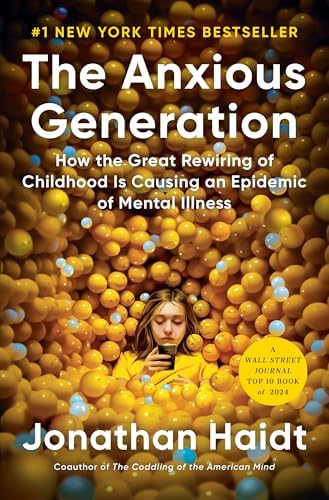
Key themes include the tension between algorithmic discovery and direct creator-audience relationships, the platform's role in media decentralization, and how The Lord of the Rings metaphor captured writer transformations. Best also discusses Jonathan Haidt's serialization of The Anxious Generation as an example of Substack's influence on mainstream discourse.
From Complaint to Company: Substack's Origin Story
Best started writing what he thought would be 'an essay or blog post detailing my frustrations with the media economy on the internet' in 2017, complaining about how the internet 'smashed business models that used to sustain culture.'
Friend Hamish McKenzie's feedback transformed the complaint: 'these are all good points you make, but it's 2017, and you are not quite as original as you think you are' - suggesting Best add a 'so what do you do about it?' section.
The core idea crystallized: 'the writers and the people who make the culture are the heroes' who 'need independence' and 'need to be able to make money doing the work they believe in.'
Ben Thompson's Stratechery newsletter provided the proof of concept - 'writing from his bedroom in Taiwan, making millions of dollars a year' with a paid email that people valued.
The 10% Model: Aligning Platform and Creator Incentives
Substack's business model creates fundamental alignment: 'the only way we make money is by taking a percentage' and 'we literally can't make money without the people on the platform succeeding.'
The revenue split heavily favors creators: 'you make nine times more money than we do. That's just how it works' - Best on the 90/10 split.
Early conversion rates exceeded expectations: 'we often saw kind of like five to 10% of people converting' from free to paid subscribers, 'much higher than people had expected.'
Best observed that 'people probably slightly overrate the ads business that they could have, and then they dramatically underrate the subscription business they could have.'
Media Exodus: High-Profile Journalist Migrations
Around 2020, 'the narrowing of allowable perspectives reached a fever pitch and jettisoned a lot of the original thinkers' from traditional media outlets.
Best would tell potential migrants: 'just fuel up your getaway car' by creating accounts in advance, often getting calls 'three days later' when they were suddenly fired.
Matt Iglesias's transformation exemplified the change: 'when he came to Substack, it was like Theoden after Wormtongue left in The Lord of the Rings. He de-aged 10 years and regained his vigor.'
Barry Weiss founded what became The Free Press after leaving the New York Times, which 'recently sold for $150 million and has become this great cultural force.'
The Twitter Wars: Platform Competition and Retaliation
Initially, Substack and Twitter were 'very symbiotic' with Twitter serving as the discovery engine for long-form Substack content through link sharing.
Elon Musk 'floated the idea of Twitter buying Substack' and Best 'coming to run Twitter' before the relationship soured over Substack's Notes launch.
Musk's retaliation was severe: 'he banned all mention of Substack on Twitter' for a week where 'if you just said the word Substack, nobody would see your thing.'
Twitter implemented technical sabotage: 'you would click on a link and it would go there, but it would delay for five seconds' - an intentional friction to reduce traffic.
Free Speech Philosophy: Standing Firm Against Pressure
Substack faced multiple controversies over content policies, including 'discourse around the trans movement' and 'COVID skepticism' where critics demanded more censorship.
Best's philosophy: 'you have to let people ask questions. You have to let people challenge the wisdom, even if they're wrong, even if they seem crazy.'
The platform's approach: 'Either you're in control or the mob is in control. And as soon as you let the mob start to be a little bit in control, it devolves and nothing satisfies it.'
Best's advice for handling criticism: 'stick by your principles. If you're going to get smashed, get smashed for doing something you believe in because that's worth it.'
Platform Evolution: From Email to Social Discovery
The app with discovery feed launched after years of development, solving the problem that 'if you wanted to grow, you had to go to Twitter, or Facebook' rather than growing on Substack itself.
The algorithmic difference: 'ultimately the only way that we win is by helping you discover something you deeply value to the point where you choose to pay for it.'
Jonathan Haidt exemplified successful serialization, starting 'a book on Substack' about social media that 'eventually became like a best-selling book' - referencing The Anxious Generation.
Best's creator advice emphasizes volume: 'just start' and 'default to creating more frequently' - noting that 'a lot of the most successful sub-stackers do five a week or more.'


These notes may contain occasional inaccuracies. Learn how podbrain notes are made
More in Philosophy

You Need An Ethical Will | Lt. Gen. Mark Hertling
Jun 21, 2026
Hollywood, The CIA & UFOs: The History Beyond Spielberg
Jun 20, 2026
What Our Fathers Teach Us, For Better Or Worse | Tom Junod
Jun 20, 2026
How To Love Your Country Without Lying About It | Ty Seidule
Jun 19, 2026
Recognize These Signs of Weakness | 7 Daily Habits That Will Change Your Life
Jun 15, 2026.svg)