
Anne Lamott & Neal Allen
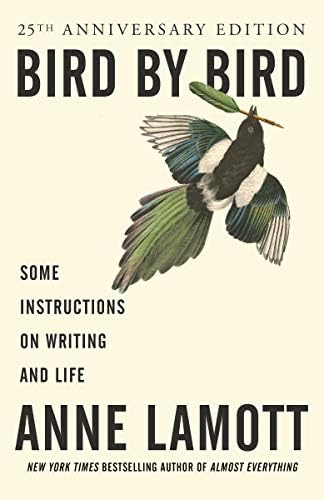
Neil Gaiman and Anne Lamott discuss their collaborative book Good Writing, which combines Neil's 36 practical writing rules collected over decades with Anne's spiritual approach to the craft. Neil, a former newspaper reporter turned novelist, developed these...

Episode

- 01
Good Writing contains 36 rules Neil collected over 30-40 years, starting with 'use vivid verbs' from his newspaper editor
- 02
Anne Lamott's Bird by Bird focuses on becoming a writer; their new book provides technical help for improving sentences after first drafts
- 03
The 'Church of 80% Sincerity' principle: achieving 80% of any writing rule is miraculous - perfectionism kills spiritual and creative work
- 04
Writing is fundamentally collaborative - editors don't improve writers, they fill in blind spots that authors can't see themselves
- 05
All great writers 'show then tell' - they present concrete scenes then riff on meaning, not just 'show don't tell'
- 06
Strong verbs create intimacy with the world through precise noticing rather than abstract judgment
- 07
Remove boring stuff by spending less time defending what you've written and more time revealing truth
- 08
Write what you haven't quite gotten over yet - both authors describe writing as therapeutic exploration of unresolved material
Get the latest ideas from Tetragrammaton with Rick Rubin.
Plus the best new takeaways about writing from other top podcasts — read in minutes, not hours.
By continuing, you agree to podbrain's Terms and Privacy Policy.
These notes may contain occasional inaccuracies. Learn how podbrain notes are made
Neil Gaiman and Anne Lamott discuss their collaborative book Good Writing, which combines Neil's 36 practical writing rules collected over decades with Anne's spiritual approach to the craft. Neil, a former newspaper reporter turned novelist, developed these rules starting with 'use vivid verbs' from his first editor. Anne Lamott, author of the classic writing guide Bird by Bird, brings her Sunday school teacher approach focused on encouragement and the healing power of writing.
The conversation reveals how their book differs from Anne's previous work: while Bird by Bird teaches how to become a writer, Good Writing provides technical guidance for improving sentences once you have a first draft. Their collaboration reflects their real-life partnership as each other's first readers, constantly critiquing and editing under the same roof.
They explore how writing rules apply beyond literature to all forms of communication, emphasizing that Good Writing is simply Good Writing, whether for business emails or novels. The discussion weaves through specific rules like avoiding weak verbs, trusting readers to fill gaps, and the importance of finishing projects despite perfectionist tendencies.
The Genesis of 36 Writing Rules and Collaborative Process
Neil's rule collection began with a newspaper editor's advice: 'use vivid verbs, not weak verbs' - instead of 'walked,' use 'tripped along' to create specific character impressions.
After accumulating over 30 rules across 30-40 years, Neil realized existing lists from writers like Hemingway and Elmore Leonard only contained 8-10 rules, leaving room for a comprehensive guide.
Anne's contribution transformed Neil's 18,000-word technical manual into a dialogue: 'I know something about writing too, young man' - she added spiritual perspectives to balance his practical approach.
Their collaboration reflects their daily writing partnership where they serve as each other's first readers, constantly editing and critiquing work under the same roof.
Core Writing Principles: Verbs, Voice, and Precision
Strong verbs create cinematic precision: 'Phil lurched across the lawn' versus 'Phil walked' - the specific verb reveals character state and creates intimacy with the world.
Avoid 'to be' and 'to have' as static identity verbs - Sanskrit uses 'Bu' meaning 'becoming' rather than static 'being,' reflecting life's constant change.
Trust your voice by finding your inner Beatle: Paul (melodist with brightness), John (rhythmic harmonist), George (distant truth seeker) - build on your natural strengths rather than copying others.
Write conversationally using Anglo-Saxon words over Latinate ones: 'job' versus 'profession,' 'end' versus 'terminate' - shorter words connect with body and heart, not just mind.
The Art of Editing: Cutting, Layering, and Collaboration
Remove crutch words like 'very,' 'actually,' and 'really' - they add emotional emphasis in speech but create distance from truth in writing.
Layer sentences to serve multiple purposes beyond meaning: character, diction, rhythm, harmony, color, and seamlessness - like Sergeant Pepper's attention to every quarter note.
The most important rule: 'remove the boring stuff' - spend less time defending what you've written and more time revealing truth.
Editors save writers from themselves: 'They don't improve me, they fill in blind spots' - Neil marks up Anne's work, often noting 'it starts getting really good three paragraphs down.'
Writing as Spiritual Practice and Therapeutic Tool
Anne's approach: 'Write what you'd like to come upon' - this provides soul information about what matters most and what needs healing in your current life.
Both authors write 'what you haven't quite gotten over yet' - Anne's Somehow Thoughts on Love emerged from documenting everything that helps during dark times.
Writing offers intimacy with ideas and characters: 'When I'm writing, I'm intimate with the ideas I'm writing about' - it's a portal to self-realization and awakening.
The 'Church of 80% Sincerity' principle: 80% of anything is miraculous - perfectionism destroys spiritual work and creative expression.
Practical Techniques: Dialogue, Description, and Reader Trust
Use 'said' for dialogue attribution - anything else like 'chuckled' sounds like 'efforts of a person whose first language was not English.'
Trust your reader to fill gaps - you only need to be 'complete enough' because readers often know characters better than writers do.
Engage all five senses, not just sight: 'Go back and add the sensory information you left out' - smells, sounds, and textures transform silent movies into full experiences.
Great writers 'show then tell,' not just 'show don't tell' - present concrete scenes, then riff on meaning like Sonny Rollins improvising on a calypso tune.
The Philosophy of Completion and Creative Courage
'Finish the damn thing' - your job is completing the project, not controlling final quality or consequences, which aren't your business during creation.
Write the hard stuff: 'Don't shy away from the big mysteries of life' - Anne begs for truth about how we survive difficult times and stay buoyant.
Nothing is ineffable - if you're an explorer, approach the indescribable like Maimonides and Spinoza approached the divine through Talmud and Kabbalah.
Break rules when you can get away with it: 'You can do anything you can get away with' - Al Kooper lied about playing organ on Highway 61, creating the song's signature sound.




These notes may contain occasional inaccuracies. Learn how podbrain notes are made
More in Philosophy
You Need An Ethical Will | Lt. Gen. Mark Hertling
Jun 21, 2026
Hollywood, The CIA & UFOs: The History Beyond Spielberg
Jun 20, 2026
What Our Fathers Teach Us, For Better Or Worse | Tom Junod
Jun 20, 2026
How To Love Your Country Without Lying About It | Ty Seidule
Jun 19, 2026
Recognize These Signs of Weakness | 7 Daily Habits That Will Change Your Life
Jun 15, 2026.svg)