
Vitalik on Starting New Countries and Improving Yourself | The Network State Podcast with Balaji
The inaugural Network State podcast features Vitalik Buterin, founder of Ethereum, discussing the blockchain's evolution, technical roadmap, and broader implications for decentralized systems. Host Balaji Srinivasan guides the conversation through Ethereum's history, recent merge to...

Episode


- 01
"Ethereum's merge to Proof of Stake was surprisingly smooth despite every test run having at least one thing break" - Vitalik, crediting the quality of client development teams
- 02
EIP-1559 and the merge combined reduced transaction inclusion wait times from minutes to often under 7 seconds through fixed pricing and regular 12-second blocks
- 03
September 2016's month-long cyber war saw attackers exploit multiple quadratic execution bugs, forcing emergency hard forks and nearly fatal state bloat
- 04
"3,000 people is enough for civilization basics - supermarket, hospital, airport, even great sushi" - Vitalik on Svalbard's open borders experiment at 78°N
- 05
Roll-ups removing training wheels in 2023 will mark ethereum's maturity milestone, with 80%+ multisig thresholds as halfway houses to full trustlessness
- 06
"We want transparency for the powerful and privacy for the weak" - Vitalik advocating zero-knowledge proofs that exclude large-scale hackers while preserving anonymity for regular users
- 07
70% of ethereum block builders now refuse certain transactions due to OFAC compliance, but censored transactions still get included after ~3 blocks on average
- 08
Learning languages as an adult requires structured courses (Pimsleur, flashcards) to reach medium comprehension before immersion becomes effective
Get the latest ideas from Network State Podcast.
Plus the best new takeaways about education from other top podcasts — read in minutes, not hours.
By continuing, you agree to podbrain's Terms and Privacy Policy.
These notes may contain occasional inaccuracies. Learn how podbrain notes are made
The inaugural Network State podcast features Vitalik Buterin, founder of Ethereum, discussing the blockchain's evolution, technical roadmap, and broader implications for decentralized systems. Host Balaji Srinivasan guides the conversation through Ethereum's history, recent merge to Proof of Stake, and future scaling plans.
Vitalik shares his perspective on starting new countries and cities, emphasizing the importance of social networks over jurisdictional properties. He draws on personal experiences living in small towns like Svalbard to illustrate how surprisingly small populations can sustain civilization.
The discussion covers technical challenges including the September 2016 cyber attacks that nearly broke Ethereum, the roll-up centric roadmap, and approaches to privacy that balance individual rights with preventing large-scale criminal activity.
Vitalik concludes with advice on self-improvement, particularly language learning through structured courses followed by immersion, and technical learning through building implementations rather than just reading theory.
Ethereum's Origin Story and Early Development
Vitalik conceived Ethereum in late 2013 after a five-month Bitcoin trip visiting communities from New Hampshire libertarians to Spanish anarchists to Israeli cryptographers working on colored coins and Mastercoin
"Mastercoin was a Swiss army knife protocol with one transaction type for each application - register domain, open binary contract, make a bet" - Vitalik describing the pre-Ethereum landscape
The breakthrough came from asking what an n-party contract looks like, leading to the insight that contracts should be accounts - virtual agents you could send coins to and interact with directly
The Ethereum white paper was written in November 2013, with the project quickly growing from proposed modifications to existing systems into an independent blockchain
The Frontier-Homestead-Metropolis-Serenity Roadmap
Vinay Gupta's 2015 blog post outlined four stages: Frontier (beta launch with explicit warnings), Homestead (more stable), Metropolis (planned Mist browser and app store), and Serenity (Proof of Stake)
Metropolis split into three forks - Byzantium, Constantinople, and Istanbul (2018-2020), with Istanbul adding support for pairings that enabled zero-knowledge proof protocols
The planned Mist ethereum browser never materialized; instead browser wallets like MetaMask emerged as the dominant pattern for decentralized application access
EIP-1559 in 2020 was the first major protocol change, moving from inefficient first-price auctions to fixed pricing with temporary block size slack for demand spikes
The DAO Hack and Governance Crisis of 2016
The DAO contained 11.5 million ETH (14% of supply at the time, under 10% today) when an attacker exploited a vulnerability in June 2016, draining funds over a 30-day window
"I have sympathy for Bernanke because there was systemic risk to the whole system" - Balaji comparing the intervention decision to central banking during financial crises
The hard fork to recover DAO funds created Ethereum Classic, leading to the first crypto civil war with Barry Silbert pushing ETC, which peaked at 0.4 ETH before dropping below 0.1
A year later, EIP-999 attempted to unstick Parity wallet coins but the community rejected it, explicitly refusing to let the DAO become a precedent for future interventions
September 2016: Month-Long Cyber War
At 5:15 AM Shanghai time on Devcon 2 opening day, Vitalik received a military-style wake-up call about a quadratic execution bug causing N-squared processing time
"By 6:30 AM we isolated the bug, by 7 AM created patches, by 8:30 AM published them, and at 9:25 AM - 25 minutes after intended conference start - everything was stable" - Vitalik
The attacker discovered second, third, and fourth attacks over the following month, with users frequently switching between Geth and Parity clients as each was targeted
The final attack exploited a protocol-level bug with self-destruct opcodes that bloated state size, requiring emergency hard forks to increase gas costs and later clean up junk state objects
"In November I sent thousands of transactions to clear junk from the chain, and one triggered a bug causing the first and only consensus failure that split the chain in half" - Vitalik
The Merge: Proof of Stake Transition
"Every single test run had at least one tiny thing break, but when the real merge happened everything went extremely smoothly" - Vitalik on the surprising success
The merge made block times more regular with consistent 12-second rhythm instead of Poisson distribution, reducing average wait time by 2x even with same average block time
Combined with EIP-1559, transactions now reliably get included in 1-2 blocks, with 50% chance of inclusion in under 7 seconds compared to minutes in 2019
"It's like changing the engine of a jet while the jet was still flying" - description of the difficulty of switching consensus mechanisms on a live $200B+ network
Roll-Up Centric Roadmap and Layer 2 Scaling
Around 2020, Ethereum pivoted to a roll-up centric roadmap where Layer 1 would optimize for supporting Layer 2 scaling solutions rather than trying to scale directly
"The Supreme Court analogy - it's what things ultimately rest on, but you don't have the Supreme Court hearing every single case" - Vitalik on Layer 2 settlement
Roll-ups support full EVMs with indirect verification, unlike Lightning Network which only supports transactions and limited contracting
EIP-4844 (proto-danksharding) scheduled for early 2023 will increase data availability for roll-ups, though it doesn't technically shard data yet - named after researchers Proto and Dankrad
"Training wheels" on current roll-ups include backdoors for developers to intervene on bugs; 2023 will see removal or limitation to 75-80% multisig thresholds with distributed members
One team plans a system that only activates human intervention when someone submits a proof that the code disagrees with itself - proof of inconsistency rather than incorrectness
OFAC Compliance and Censorship Resistance
MEV (maximal extractable value) led to proposer-builder separation where block proposers auction block construction to third parties, but this concentrated power in ~70% OFAC-compliant builders
"Nothing has been censored in Ethereum - even targeted transactions get included after about 3 blocks on average" - Vitalik noting the system still works despite builder compliance
Block censorship follows a "one honest actor" trust model - even with 99% censoring builders, transactions just wait 100 blocks instead of one, which is still acceptable
MEV-boost now includes settings to only outsource block production when revenue exceeds 0.05 ETH threshold; if everyone used this, 40% of blocks would be uncensored while validators keep 96% of MEV revenue
Partial block auctions would let validators set conditions like "include these 23 transactions" while still capturing 99% of MEV revenue from the first 5-10 transactions
Privacy Through Zero-Knowledge Proofs
"We want transparency for the powerful and privacy for the weak - surveillance but from below" - Vitalik citing cypherpunk philosophy
Tornado Cash still works at protocol level despite legal actions, but receiving coins from it causes trouble with exchanges and the crypto-fiat bridge ecosystem
Proposed solution: zero-knowledge proofs that prove you have a valid coin AND prove you're not one of 23 addresses identified as large-scale hackers by chain analysis
"If 95% of users take this option, the anonymity set for large-scale DeFi hackers reduces by factor of 20 without affecting privacy for everyone else" - Vitalik on incentive-compatible privacy
Privacy is a collective good that a group can choose to give or withhold from members - not just a technical cryptographic property but a social coordination tool
Starting New Countries: Climate, Cost, and Law
"Break a country into constituent parts: social network, legal/jurisdictional properties, and physical location/climate" - Vitalik's framework for analyzing what's actually needed
California is literally the only place in mainland US with pleasant climate by metrics like sunshine hours and days between 8-24°C with no rain, creating massive network effects despite high costs
Crypto has succeeded at decentralization better than AI or VR, which remain very Bay Area focused, partly due to willingness to sacrifice climate for other factors
Time zones matter enormously - remote work is much easier from Argentina than Europe for American companies despite equal distances, due to time zone compatibility
US immigration law is "narco-tyrannical" - enforced heavily on law-abiding applicants (900-day wait in India) while being easier to bypass through illegal means
Svalbard: Open Borders Experiment at 78°N
Svalbard is 1,000km north of Norway with 100-year-old international treaties allowing anyone in the world to come and live there - true open borders
"The capital Longyearbyen has 3,000 people but has a supermarket, hospital, airport, and one of the best sushi restaurants I've been to" - Vitalik on viable civilization scale
Temperature ranges from -5°C to +5°C in September due to Gulf Stream effects, making it less inhospitable than 78°N latitude suggests, though January is much harsher
3,000 people means 30 per year level, enough for 1-2 classes per grade in schools - surprisingly few people needed for basic civilization infrastructure
Main limitation is lack of specialized communities - can't get network effects around particular interests with only 3,000 people, but university towns show 30,000 is enough
Network Effects and New City Strategy
"The difference between starting a new country and starting a new city is that cities don't need to solve jurisdiction from scratch" - Vitalik on working within existing legal frameworks
Starting new communities means paying a network effects penalty initially, but some people will sacrifice quantity of network for quality of network
University towns like Ithaca (30,000 people) prove that concentrating around specific interests creates sufficient network effects even at small scale
"If half of 3,000 people are into crypto or longevity research, you can create an environment that gives people enough of that" - Vitalik on specialized communities
Cost differences between US and other countries are growing - prices in Switzerland's Starbucks have barely increased over 10 years while US prices rose significantly
2022 made authoritarianism real for normal people who previously felt insulated, creating "homeless nomads" who packed up and left countries they weren't worried about before
Learning Languages: Structured Courses Then Immersion
"It's possible for extroverts and two-year-olds to pick up languages by immersion, but I totally can't - after 20 years in China with no training I still wouldn't speak it" - Vitalik
Vitalik used Pimsleur audio courses (90 thirty-minute lessons) plus flashcard apps to reach medium comprehension in Chinese over ~3 years before immersion became effective
Duolingo works through gamification and fear of losing multi-hundred day streaks, but optimizes for winning the game rather than learning - 20% of tasks can be solved without reading the prompt
Chinese is easier than German for immersion practice because Germans quickly switch to English, while many Chinese people barely speak English and will try to understand you
Walking around Chinese cities, street signs show both characters and pinyin pronunciation, allowing passive learning of hundreds of characters as part of daily life
Learning Technology: Build Your Own Lightsaber
"Learning by doing is essential - if you just read and listen it goes in one ear and out the other, but building the thing gets knowledge into muscle memory" - Vitalik
Shaum's Outlines in India use yellow books that go straight to solved problems with minimal introduction - learning through exercises rather than reading about exercises
"If you want to learn about SNARKs build a SNARK, if you want to learn Ethereum build an implementation, if you want to learn homomorphic encryption build it" - Vitalik's advice
Vitalik learned machine learning in 2011 through hands-on Udacity/Coursera courses by Sebastian Thrun and Andrew Ng that required implementing A* search and neural networks
Teaching through exercises one inference step away from the previous one, regardless of specific tools, creates deeper understanding than textbook learning
Social Environment and Lifelong Learning
"Learning and motivation are very social - this is why Coursera and MOOCs failed to replace Stanford beyond just credentialism" - Vitalik on the importance of social context
"Be intentional about social environment and have friends that help you bring out the virtues you want to see in yourself" - Vitalik's number one advice
AI prompts prove the importance of environment - you're effectively getting prompted in a sensory fashion by your surroundings, whether people lifting weights or studying math
"Imagine going through your entire life at university 10% intensity - not 100% but with very socially available opportunities to constantly keep learning new things" - Vitalik's vision
The pattern may shift from "study-work-retire" to "study-work-retire-study-work-retire" cycles, or better yet, integrating studying as a regular part of life without distinct phases
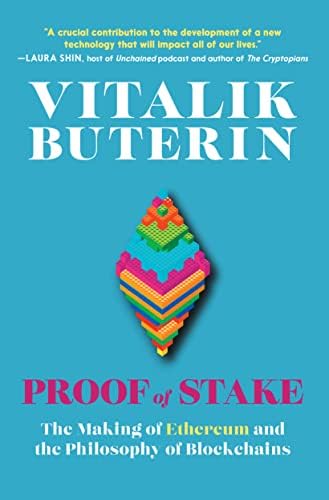

These notes may contain occasional inaccuracies. Learn how podbrain notes are made
More in Politics & Society

And, This Is Why Reid Hoffman Doesn’t Fear Artificial Intelligence
Jun 19, 2026And, This Is Hunter Biden Like You've Never Heard Him Before
Jun 12, 2026
Better Sex, Better Hair, Better Sleep: ‘Humanmaxxing’ Is Here
Jun 11, 2026
Introducing: OnlyFantasy (Leon's New Podcast)
May 21, 2026
Three young leaders changing the world one step at a time
May 21, 2026
A Defense of a Liberal Arts Education in the Age of A.I.
May 21, 2026

More episodes with Balaji
Balaji Srinivasan - The Mathematics of Collapse: Why The West Is Going To Zero

Ben Horowitz and Balaji Srinivasan on Netscape and Network States
Balaji Srinivasan — Bitcoin and Ethereum, Lee Kuan Yew, US vs China, and More

Cory Levy Interviews Balaji

Cory Levy and Balaji on Where Talent Should Go

.svg)