
A Defense of a Liberal Arts Education in the Age of A.I.
Jennifer Frey, a philosophy professor and liberal arts advocate, joins host Ross Douthat to discuss the crisis facing humanities education in America. Frey recently left her position as Dean of Honors at the University of Tulsa, where she built a successful great books program that attracted over a quarter of incoming...


- 01
"All learning is anti-forgetting, so spaced repetition is key" - Frey argues liberal education cultivates higher human capacities for their own sake, not just career preparation
- 02
At University of Tulsa, 26-28% of incoming freshmen enrolled in Frey's great books honors program despite it being completely voluntary and rigorous
- 03
"We are not here to prepare you for a job. We are here to prepare you for life and for being a human being" - Frey's mission statement to incoming honors students
- 04
Student interest and demand "simply does not matter" - Frey's program budget was cut by 92% despite strong enrollment and student enthusiasm
- 05
Most honors students were STEM majors who took the four-semester great books sequence parallel to their technical studies, creating unexpected intellectual community
- 06
"If we stop being invested in cultivating our own humanity and give ourselves over to robots, we will just be a bundle of desires" - Frey on AI's threat to human agency
- 07
The biggest resistance to great books education comes from over-professionalization: "I'm a literature scholar. I can't teach philosophy or history. It's just not my thing"
- 08
Red state legislation in Utah, Indiana, Ohio and Texas now requires workforce alignment metrics and threatens to eliminate general education for 90-credit degrees
Get the latest ideas from Interesting Times with Ross Douthat.
Plus the best new takeaways about education from other top podcasts — read in minutes, not hours.
By continuing, you agree to podbrain's Terms and Privacy Policy.
These notes may contain occasional inaccuracies. Learn how podbrain notes are made
Jennifer Frey, a philosophy professor and liberal arts advocate, joins host Ross Douthat to discuss the crisis facing humanities education in America. Frey recently left her position as Dean of Honors at the University of Tulsa, where she built a successful great books program that attracted over a quarter of incoming freshmen before being dismantled following administrative changes.
The conversation explores the fundamental tension between viewing education as workforce preparation versus human cultivation. Frey argues that liberal learning - what the Greeks called Paideia and Germans called Bildung - serves to develop higher human capacities for their own sake, following Aristotle's vision that "the goal of education is leisure." This classical approach stands in stark contrast to contemporary utilitarian metrics that judge academic programs primarily on employment outcomes and salary data.
Their discussion ranges from the democratic accessibility of great books education to the political pressures facing humanities programs from both left and right. Frey addresses critiques of canonical texts while defending the intrinsic value of encountering works like The Republic, Hamlet, and The Odyssey. The conversation concludes with reflections on how artificial intelligence might paradoxically clarify the essential need for cultivating human judgment and wisdom through sustained engagement with foundational texts.
Defending the Intrinsic Value of Liberal Learning
Frey argues that liberal education should cultivate "higher capacities in a person" for their own sake, following the Greek concept of Paideia and German Bildung, rather than serving purely instrumental career goals.
When challenged about Germany's cultured society producing Nazism, Frey counters that eugenics ideology actually emerged from elite universities in the US and UK, not from authentic liberal learning traditions.
"There is an inelimitable element of human freedom in education" - Frey emphasizes that students must choose self-cultivation, making education fundamentally different from forced indoctrination.
Great books education has historically served working-class liberation, from Frederick Douglass and W.E.B. Du Bois to British working-class movements that used liberal learning for spiritual rather than material transformation.
The Case for Literary and Artistic Hierarchy
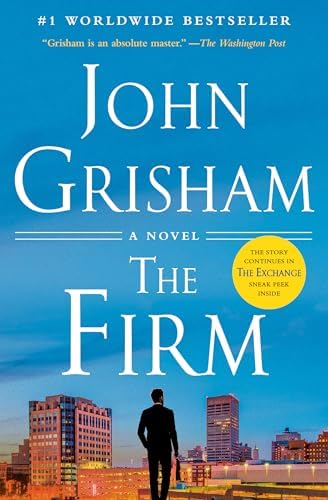
Defending Hamlet over John Grisham's The Firm, Frey argues that "Shakespeare's language is justly globally famous" and "really challenges you" in ways that create sustained intellectual engagement over years.
"Great art or high art really calls you to those transcendentals - truth, beauty, and goodness" - Frey distinguishes between entertainment and art that demands deeper reflection and ascension.
Hierarchy of goods doesn't require elitism: "This isn't like a science lab. I don't have a microscope that costs $30,000. It's really just you need some books, and they're pretty cheaply available these days."
Even within the classical tradition, there's disagreement about methods - The Republic shows Plato's skepticism of playwrights, yet Frey defends dramatic literature as a valid path to encountering greatness.
Building a Successful Great Books Program at Tulsa
The honors program attracted 26-28% of incoming freshmen with a four-semester sequence from "Homer to Hannah Arendt," starting with The Odyssey and The Republic in the "three ancient cities" curriculum.
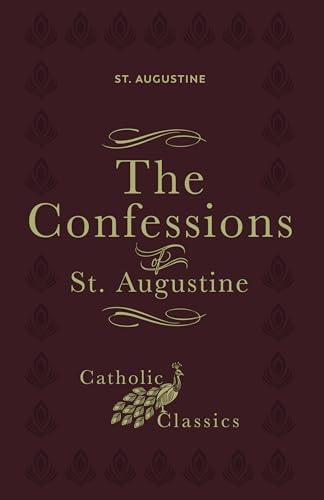
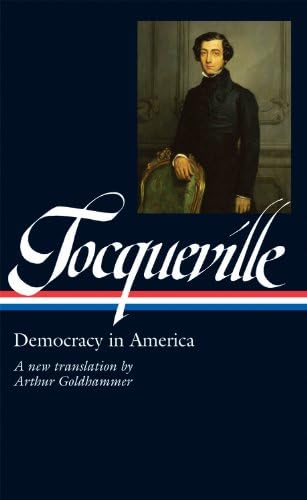
The curriculum progressed through "Long Middle Ages" beginning with Augustine's Confessions, then "birth of modernity" from Machiavelli to Mary Shelley, concluding with 19th-20th century starting with Tocqueville's Democracy in America.
"Most students were STEM majors" who took the great books sequence parallel to their technical studies, creating unexpected intellectual community around shared texts like Plato's Symposium.
The program emphasized three pillars: recognition of mortality as "the first step towards wisdom," residential community, and explicit cultivation of virtues like humility, civility, and "studiousness" as cultivated attention.
"They would spontaneously put on their own symposium" - students created intellectual community outside class, discussing challenging texts in their shared dormitory spaces.
The Collapse and Lessons About Institutional Resistance
Following a regime change at Tulsa, Frey was dismissed and the program's budget cut by 92%, with "literally everyone I hired" subsequently leaving the university.
"Student interest and demand simply does not matter" - despite strong enrollment and enthusiasm, administrative priorities focused on cost-cutting rather than educational value.
The biggest resistance came from "over-professionalization and hyper-specialization" where faculty refused to teach outside narrow expertise: "I'm a literature scholar. I can't teach philosophy or history."
Research university structure prioritizes "Wissenschaft" (scholarship) over educational encounter, forcing humanities into scientific expertise models that may not serve their flourishing.
Political Pressures from Left and Right
Left-wing critique sees canonical texts as "dead white male privilege" requiring deconstruction, while right-wing utilitarianism demands "workforce alignment" and questions "useless degrees."
"The utilitarian push is bipartisan" - Obama administration created major scorecards while red states like Oklahoma now mandate academic review based on "wages earned" and workforce readiness.
Oklahoma's recent executive orders effectively end tenure and investigate 90-credit degrees that would "basically get rid of most of general education" in favor of pure workforce training.
Civic centers movement, while supportive, "is not going to save the humanities" because they operate within disciplinary expertise models rather than broad liberal learning approaches.
AI as Clarifying the Stakes for Human Cultivation
"AI is good for the humanities because it clarifies in an especially forceful way what is at stake" - the fundamental question of who defines human goals and purposes.
The common argument that AI makes humanities valuable for "soft skills" is "exactly the wrong case" because it instrumentalizes and "denatures" liberal learning.
"If we stop being invested in cultivating our own humanity and give ourselves over to robots, we will just be a bundle of desires" - Frey warns against outsourcing human thinking and judgment.
"If they outsource their thinking, they're simply outsourcing their own humanity" - Frey tells students that using AI for coursework means abandoning the essential work of self-cultivation.





These notes may contain occasional inaccuracies. Learn how podbrain notes are made
More in Politics & Society

And, This Is How Democrats Lead Us To A Post Trump World With Brian Tyler Cohen
Jun 25, 2026
Is it Time for a New Sexual Revolution?
Jun 25, 2026And, This Is Why Reid Hoffman Doesn’t Fear Artificial Intelligence
Jun 19, 2026And, This Is Hunter Biden Like You've Never Heard Him Before
Jun 12, 2026
Better Sex, Better Hair, Better Sleep: ‘Humanmaxxing’ Is Here
Jun 11, 2026
.svg)