
Explaining the History of Trade (feat. Ryan Petersen of Flexport)
The episode features Rudyard Lynch, creator of WhatIfAltHist YouTube channel, and Ryan Peterson, founder and CEO of Flexport (one of The World's largest logistics companies), who is working on a historical atlas of trade.

Episode


- 01
"The shipping container invention in the mid-1960s brought down global shipping costs by about 90%, fundamentally enabling modern globalization" - Ryan
- 02
Global trade has grown at approximately 4% annually for 800 years since the Mongol invasions, creating exponential compound effects
- 03
"Property rights and rule of law are the most important things - I will sacrifice literally everything in a society before those" - Rudyard
- 04
Pre-industrial economies operated at 1-3% government spending versus 40%+ today, creating massive distortions in modern market signals
- 05
Healthcare now comprises 20% of the US economy while manufacturing dropped to 8-10%, driven by currency inflation favoring asset holders
- 06
"The economy has to be a reflection of reality - whatever distance you split between reality and the economy, you will suffer" - Rudyard
- 07
Medieval decentralized power structures in Europe (100+ countries, competing institutions) created dynamic innovation hubs like Venice and Florence
Get the latest ideas from History102.
Plus the best new takeaways about history from other top podcasts — read in minutes, not hours.
By continuing, you agree to podbrain's Terms and Privacy Policy.
These notes may contain occasional inaccuracies. Learn how podbrain notes are made
The episode features Rudyard Lynch, creator of WhatIfAltHist YouTube channel, and Ryan Peterson, founder and CEO of Flexport (one of The World's largest logistics companies), who is working on a historical atlas of trade.
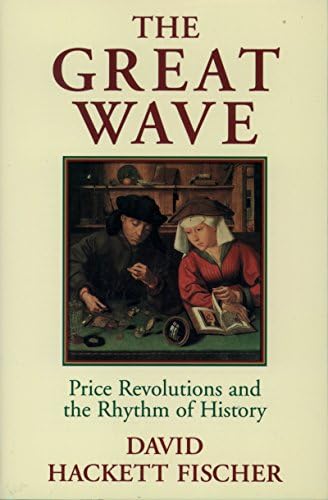
They explore global trade patterns throughout history using data-driven analysis, drawing from sources like Angus Maddison's Contours of refref-article-the-worldThe World Economy and David Hackett Fischer's The Great Wave.
The conversation examines how trade networks shaped civilizations from the Bronze Age through medieval Islamic golden ages to modern globalization, with particular focus on the unprecedented economic growth since the Cold War's end.
Discussion ranges from ancient Phoenician voyages and Viking trade networks to modern currency distortions, property rights as civilization's foundation, and the internet's impact on social organization and morality.
Unprecedented Modern Trade Growth and Historical Context
Global economic growth since the Cold War's end is "completely unprecedented" in scale, particularly in third world development, yet receives minimal attention in Western discourse according to Rudyard.
"The big innovation in the mid-60s was the shipping container - it brought down the cost of everything by about 90% to ship something across The World" - Ryan. This standardization enabled modern supply chains.
International trade has grown at approximately 4% annually for roughly 800 years since the Mongol invasions. "4% doesn't seem like much for those in Silicon Valley, but put it together for 800 years, it becomes a very big number" - Ryan.
The shipping container revolution destroyed traditional longshoreman culture that required large crews to manually load/unload ships. Rudyard's grandfather was a longshoreman in Jersey City's Irish ghetto before WWII.
Modern society operates at vastly higher complexity scales than pre-industrial worlds. The Roman Empire's entire population was 300 million; industrial revolution jumped from 800 million to 8 billion people today.
Ancient Trade Networks: Vikings, Phoenicians, and Medieval Systems
Phoenicians starting in Lebanon reached India, Britain, and the Atlantic, with proof they sailed around Africa's southern tip (descriptions only make sense from southern hemisphere perspective).
Vikings established enormous trade networks: huge hoards of Islamic gold found in Scandinavia and British Isles from slave and fur trade. Vikings reached Central Asia, America (Vinland/New York), North Africa, and Canary Islands.
Medieval Indian Ocean trade system was "by some metrics the wealthiest on earth," with horses from Arabia to India, frankincense from Somalia to China, and Southeast Asian luxuries flowing throughout the network.
Medieval China was an economic titan with records of exotic goods from off Australia's coast (sea slugs, bird feathers). Chinese explorers possibly reached Mexico (land called "Fusong" with jade dragons and pyramids).
Southeast Asian political stability directly correlated with China's economy - when China had civil wars, Southeast Asian governments collapsed due to trade dependence. Similar pattern seen in Colombia with coffee prices and democracy.
More Roman coins have been found in China than in Ireland, demonstrating extensive ancient interconnectivity. Romans sailed regularly up the Red Sea into Indian Ocean.
Currency, Measurement, and Economic Comparisons Across Eras
Comparing pre-industrial to modern economies is deceptive - "a penny was significant money in medieval England" versus worthless today. Pre-industrial world appears 1/100th modern size but had rich, complex societies.
Ryan calculated Roman soldier pay in gold weight versus modern value - only 2x more valuable today. "Gold was a terrible investment, but everything else got completely wiped out, so maybe gold was great."
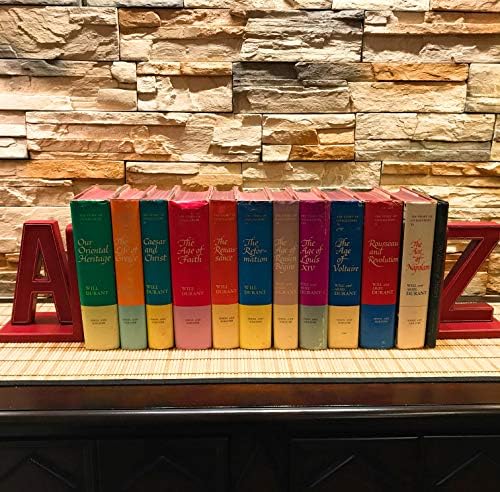
Will Durant's history books translate ancient currencies to "today's dollars" but he wrote 1930-1970, making those conversions meaningless for current readers.
Roman soldiers would bury gold salary underground before war and die, creating hoards found worldwide. Distribution of Roman coins reveals ancient trade networks' reach.
Pre-industrial economies operated at 1-3% government spending versus 40%+ in modern America (majority in Europe). Government sector is "mostly fake because it's not responsive to market demand."
European Age of Exploration: Drivers and Consequences
Portuguese exploration aimed to circumnavigate Africa to avoid Islamic middlemen controlling trade routes and reach "Prester John, the immortal Christian wizard who could lead a crusade against Muslims."
"Europeans are descendants of Vikings, Greeks, and original Indo-Aryans - a population that consistently goes to the edge of things, constantly breaking out across continents" - Rudyard. Age of exploration was emergent from European society.
Within 5 years of Columbus reaching the New World (1492), English reached Newfoundland and Portuguese reached Brazil. Many historians believe Europeans already knew about the New World but hid navigational charts.
Venice maintained wealth through mid-late 17th century despite new Atlantic trade routes. Will Durant argues Spanish authoritarian monopolistic regulations eventually impoverished Italy, not geographic disadvantage.
14th century Florence had higher total GDP than England despite 100,000 population versus England's 2-4 million. This statistical anomaly reflects coin-based versus credit-based economies, not actual power.
Most of England operated through IOU credit systems in villages and feudal lands, not coins. "David Graeber talks about alternation between credit-based and bullion-based economies" - Rudyard.
Banking, Finance, and Middlemen Minorities in Trade
Florentine banks financed much Spanish exploration. Genoese had major roles (Columbus and many others were Italians). "International logistics was the original venture capital - only small number of ships returned but made 10x returns" - Ryan.
Medici family were bankers who installed themselves as military dictators of Florence because banks had so much power. They funded much of the Renaissance.
Major 14th century Italian bank failure occurred when they loaned to King of England for Hundred Years' War and "the King having an army just said no, I'm not going to pay you."
Jewish Talmudic law allowed selling debt (you could transfer who owed you money), unlike Roman law. This innovation enabled securities, bonds, equities - "origin of securities law" - Ryan.
Geniza records from Cairo synagogue document medieval Jewish trade network stretching from England to China and Indonesia, providing best economic data for medieval period.
Middlemen minorities (Jews, Quakers, Armenians, Greeks, Chinese in Southeast Asia) built high internal trust as oppressed groups, enabling complex financial agreements across distances without physical gold transfer.
Property Rights and Rule of Law as Civilization's Foundation
"Property rights and rule of law are the most important things. I will sacrifice literally everything in a society before those, because as long as you have them, you can restart" - Rudyard.
"Every single society that has property rights and rule of law succeeds and grows wealthy, but there's always the temptation of the ring of power for elites who want to steal" - Rudyard.
England consistently respected property rights throughout history, even under Cromwell. This enabled England to "take over The World and launch the industrial, scientific, and democratic revolutions."
Latin America oscillates between "globalist technocrats and populist thugs." Rudyard predicted: "If Javier Milei fixes Argentina, they'll immediately grow arrogant and remove the things that made them wealthy."
14th century Islamic historian Ibn Khaldun wrote about importance of property rights and rule of law in Islam, noting degeneration in late Middle Ages contributed to Islamic decline.
Rule of law requires "culture of masculinity and honor" where populations can push back against elites. Germanic Europe maintained it as warrior culture; Islam lost it as Bedouin warrior edge wore off.
Asian Tigers: Land Reform and Export Requirements
Book How Asia Works identifies two keys to Asian tiger success: land reform creating broad-based ownership, and requiring companies to export (proving competitiveness) rather than just protecting domestic markets.
Malaysia's failed national car company attempt: erected tariff barriers with no competition, produced cars that "sucked," couldn't export them. "All you did was make your population have crappy cars" - Ryan.
Korea and Japan required companies to export: "If foreigners are buying your cars, you're making good cars. If not, you might suck and you're holding us all back" - Ryan.
"America is getting that wrong right now. We're putting up tariff barriers to protect ourselves but not requiring companies to export. You don't know if we're making good companies or just get crappy products" - Ryan.
Land reform started with MacArthur after WWII, imposing on Japan distribution of land to create stakeholders. Korea, Japan, Vietnam, and China all did land reform removing old nobilities (Korea had slavery until WWII).
Pre-modern political philosophy focused on "increasing total responsibility and stake in society. When you have stake, you use your life force to protect it" - Rudyard.
Technology's Impact: Horses, Camels, Ships, and Containers
Deep sea fishing records exist from last ice age. Lascaux caves in France portray deep sea animals. "I sometimes wonder what my ancestors' life was like - Lynch is Gaelic for fishermen, Irish last names are 2,000 years old."
Camel introduction from Central Asia to Arabia enabled Prophet Muhammad's Arabs to live in desert, storing huge water amounts and carrying more than horses. Enabled trans-Saharan trade to sub-Saharan Africa after Islam.
Horse breeding ("first genetic engineering") enabled Aryan invasions from Ireland to Bengal. Horses had to be crossbred extensively until large enough for humans to ride.
Astrolabe and compass enabled mathematical navigation - ships could stay indefinitely across oceans. Before, sailing relied on "rough heuristics" like "sail a few days north from Finisterre to England."
Latino sail introduced by Spaniards in Age of Exploration was actually Polynesian technology from Solomon Islands that traveled west through Muslim world. Polynesians navigated by "balancing testicles on boat to feel ocean direction."
USS Hornet aircraft carrier served through Vietnam War still using star-based navigation (modern astrolabe version) until GPS in 1970s. "Pretty recent thing" - Ryan.
Steamships, Railroads, and Continental Integration
Pre-steamship America was "almost entirely Northwest European among whites" because immigrants hopped on existing trade routes (England, France, Germany, British Isles only).
Steamship radically lowered costs, enabling Italian, Slav, Jewish, Chinese, and Japanese migration to America by eliminating dependence on wind patterns.
Pre-steamship: three times longer to go up Mississippi than down due to paddling against current. Steamship made people no longer reliant on wind patterns or river currents.
Sea traffic was approximately 90% cheaper than land traffic in pre-modern world. Roman Empire existed by hugging Mediterranean; China unified by hundreds-of-miles-long canal between Yellow and Yangtze rivers.
"America as modern country would not be tenable in pre-industrial world because California is not connected to the East" - Rudyard. First California settlers sailed around Patagonia.
New England Yankees dominated early San Francisco, sailing long way around. Used Hawaii as "de facto puppet state," hunted whales off Kamchatka, traded Alaskan furs to East Asia, dominated Pacific.
New England Yankees raided Indian Ocean in early 18th century, "taking down ships from Mughal emperor," seized Madagascar coastline as naval base. Traded 20% of opium to China (Forbes family, ancestors of John Kerry).
Geography, Politics, and Unpredictable City Formation
Singapore and Istanbul are "natural centers for big cities" as geographic straits. Phoenix and Las Vegas exist "purely for historic reasons" in middle of desert with no logical geographic advantage.
Ancient India placed cities "in middle of a plane because the king likes it, then craftsmen and economy congregates. When dynasty dies, city totally changes" - purely political reasons.
Madrid placed "in middle of a plane with no water source as a kind of power move" by King of Spain. Cairo, Illinois "should be major metropolitan area" where Ohio and Mississippi meet but isn't.
Midwest has important geographic choke points that didn't develop: Pittsburgh (three rivers meet), Buffalo (Niagara Straits), Detroit. "Didn't take off" after railroad made river traffic less critical.
Rwanda doing well because "fairly laissez-faire, business friendly government" - politics matters. Texas has climate "pretty comparable to North Africa but wildly different" outcomes.
"Switzerland is terrible geography, up in mountains, it is nothing. If you have property rights and rule of law, your society will be wealthy" - Rudyard. Finland as another example.
Currency Inflation and Economic Distortion in Modern America
Healthcare is 20% of US economy - bigger than next five sectors combined. Manufacturing only 8-10%. Most states were predominantly manufacturing in 1990, now most are healthcare.
"Government prints fake money. Fake money goes largely to baby boomers who fund it into healthcare" - Rudyard. Manufacturing requires cheap currency for exports like China and Japan achieved.
US has "most debt of any era ever in human history." If currency dropped, would make American cost of living cheaper and enable manufacturing powerhouse status due to efficiency and scale.
"Because we're inflating our currency, society and market can't correct. We have insanely artificial society because our economic system is artificial" - Rudyard.
BlackRock's control stems from deal with Democratic Party: "vast money printing ends up in these firms because free money ends up in stock market and capital accumulations, radically increases housing prices."
"General economy for most Americans is not good. But economy on paper is good because funded by fake economy which is continuous bluff. This entire system is a bluff" - Rudyard.
Historical Debt Cycles and Currency Collapse
Michael Hudson's The end of antiquity studies debt cycles in classical world. Debt slavery was "huge issue in ancient world" - Christianity and Judaism tried eliminating it (discussed extensively in Bible).
Three-quarters of Babylon's population were debt slaves by the end. Rome "kept hyperinflating its currency again and again" - part of what killed Rome.
Roman currency was "totally valueless by end of empire." Soldiers paid with sheepskins and iron because coins were worthless (clipped sides repeatedly).
Spain went from "greatest empire on earth with colonies on every continent" to "totally powerless, pathetic country" over 17th century due to currency hyperinflation.
"When you do not follow the Tao, you get neither wealth nor wisdom" - Rudyard's principle connecting economic reality to outcomes.
Austrian Economics, Keynesianism, and Government Intervention
"I'm significantly more Austrian than Keynesian. Keynesianism can work in highly specific situations with leadership class with profound discipline, but once you give it to them, they abuse it so quickly" - Rudyard.
Modern economics only looks at post-WWII data, "which is just mental illness" because post-WWII was "very brief blip of line go up" - not representative of historical patterns.
"The more you artificially control the economy, the more distorted it becomes because there isn't interactivity with nature. Economy needs to be reflection of nature or the Tao" - Rudyard.
Hayek's The Road to Serfdom: "Once government intervenes in economy a little bit, it adds up to serfdom. Once government's making economic choices, economy ends up in dependent relationship which snowballs."
Hayek predicted it would "take about a century until population is serf to state" with totally mixed economy. Book written 80 years ago - "we're coming up on that" - Ryan.
"Serfs only had to give 10% of crop to the Lord. Our tax rates are a lot higher than that" - Ryan.
China's Communist Party "largely not operating for economic reasons - using economics as tool for power, more common over history than purely economic considerations" - Rudyard.
Wokeness, Government Distortion, and Modern Feudalism
"Wokeness is society for locals in twisted paradoxical way - worldview only makes sense for small managerial class, progressive types, using foreigners as wedge" - Rudyard.
"Wokeness designed so you can make highly arbitrary rules so small managerial class can maintain total power. Pretending to be inclusive to maintain tight control" - Rudyard. Cites Aristotle: tyrants bring in foreigners to avoid responsibility to locals.
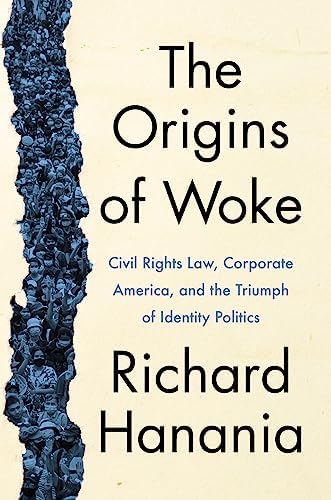
Richard Hanania's book documents how government created legal structures making it "very easy to sue if don't follow insane interpretation of discrimination law" (basically racial quotas).
Government comprises 40% of US economy (majority in Europe) versus 1-3% in pre-modern world. Government economy is "mostly fake, not responsive to market demand, often inflated."
Feminist movement "can't really exist without government distortion" - creation of large non-productive sectors motivated by government spending created wokeness.
"Modern feudalism" discussed by political figures from Yanis Varoufakis (Greek communist) to Tucker Carlson - "government working with private sector buddies against other people."
Rental society puts "most people in state of permanent poverty where they can't get out" - removes stakeholders from society, which is "very dangerous."
Societies for Travelers vs. Locals: Historical Oscillation
"Societies are either built for travelers or locals. That matters. Societies tend to oscillate between them" - Rudyard's framework for understanding civilizational cycles.
Soviet Union was "society built for locals" - post-hoc justification for "we are ethnic Slavs, Russian peasants, tired of society that simps for Western Europe so much."
Tsarist Russia was "rapidly industrializing, developing, liberalizing country. If statistical trajectory before WWI continued, Russia would be first world country."
Soviets "made incentives where no reason for productivity increases - shoved more inputs into economy without equivalent outputs."
Taliban is example of society for insiders. "Society purely open to outsiders has no soul. Society purely for insiders will die out due to stultification" - rhythmic historical pattern.
Axial Age: Coins, Morality, and Social Structure
David Graeber's theory: 500 BC saw emergence of Confucius, Lao Tzu, Buddha, Socrates because coinage developed across Eurasia, fundamentally changing social interactions.
Societies alternate between social capital currencies (village IOU systems tracking who owes what) and bullion-based economies (impersonal coin transactions).
"When you have social currency society, religion is shared social glue because system needs social trust. With bullion economy, agnosticism and atheism develops because social glue is impersonal" - Rudyard.
Rise of coins caused "social breakdown with slavery, people being terrible to each other, families collapsing" - period of nihilism and anarchy before 500 BC.
Axial Age philosophers developed "objective moral principles for new social structure - had to level up moral code to more complex level of social interaction."
Internet creates similar shift: "Dating apps are perfect example - you've dehumanized dating by making it transactional. Give someone coin, walk away, relationship's over."
Internet, AI, and Future Social Organization
"Internet is potentially profoundly good because it allows asynchronous organization independent from state. Machines can do social organization independent from bureaucracy managing things" - Rudyard.
Internet breaks down traditional communities and interaction methods. "Not healthy to spend entire life at house behind screen, living in horse stall apartment, spending job and pleasure on same screen."
"We're going to move past this because it's against our human nature. Have to figure out very tricky question: how does social species live with internet? Question of our day" - Rudyard.
Modern transactions eliminate human contact: "Don't have to talk to Uber driver anymore. Taxi driver was famous - whole TV shows about it. Uber setting: no, don't talk to me. Pay with QR code, Apple Pay, don't talk to cashier."
"You cannot escape your destiny. Have to grab it by its tongue. Already opened genie bottle of being disconnected. Can use methods to reintegrate people personality similar, not geographically similar" - network state concept.
Cryptocurrency, Privacy, and Freedom from State Surveillance
"I'm very firm believer in government not seeing my financial transactions. This is very important. Why do we live in 1984 timeline? Government can listen to everything we say, see all transactions" - Rudyard.
"They're going to turn us into slaves if this continues. If we develop currency independent from government and internet government cannot spy on, it will be greatest cry of freedom in human history" - Rudyard.
"Economy has to be reflection of reality. Degree to which you remove that is degree to which you suffer" - core principle connecting to cryptocurrency advocacy.
Medieval Decentralization vs. Modern Centralization
Medieval Europe had "vast decentralization of power - over 100 countries, church, state, nobility, peasants, merchant class all at odds, creating dynamic city-state cultures like Florence, Milan, Venice, Hanseatic League, Antwerp."
"Power naturally corrupts. More power can manipulate economy for own aims, more society suffers" - Rudyard citing Bertrand de Jouvenel's distinction between society and power.
Pre-modern political philosophy focused on "maximizing power of society" where human interactions were "consensual agreements for economic, religious, class, regional reasons."
"Feudal nobilities are private sector becoming government - family businesses. We trust family businesses more than joint stock companies over generations. That was logic for why feudal monarchies predominated" - Rudyard.
French monarchy's unification blocked power of sub-lords creating one national economy - initially boosted economy but eventually led to loss of diversity and innovation.
"Once you unify country, standardization breeds out diversity and interesting things. To generate culture, need small enclosed groups where people can talk ideas not acceptable to general public" - Rudyard.
Global Culture Homogenization and Loss of Local Stories
"Great innovations normally made by 1-3 scientists, usually in early 20s, when you can still pass on genes. I choose to pass on chinos" - Rudyard on innovation requiring small groups.
Second and third world media (Vietnamese pop, Russian propaganda, Afghan school content, Thai music) "parroting nationalism but using entirely Western cultural frame - looks American with 20% local culture as museum piece."
"Mass global society means no one can tell their story. Americans can't make stories of being American. Indonesians won't make stories about being Indonesian. Can't make movie about working class Polish guy in Pittsburgh" - unique stories lost.
Hollywood "panders to Indonesian and Ukrainian audiences so stories totally stripped of cultural context of any given society."
Historical pattern: "Global system grows, global system shrinks. Earlier eras, rolling means before dark ages, cultural forms grow and encapsulate world. Then deficiencies of scale grow, operate under smaller frame, shrink back down."
Dark Ages as Creative Destruction and Renewal
"School of history saying Dark Ages weren't real, just as advanced as Roman Empire - that's staggering cope. Western Europe genuinely took nosedive" - Rudyard rejecting revisionism.
"Difference between wise man and fool: when he suffers, wise man learns and fool does not. Can choose to take dark ages and grow, or choose to stagnate like Islam did" - Rudyard.
Medieval Islamic cities on Iranian plateau (Merv, Nishapur, Samarkand) had populations of 1 million during Islamic golden age, dependent on Silk Road trade.
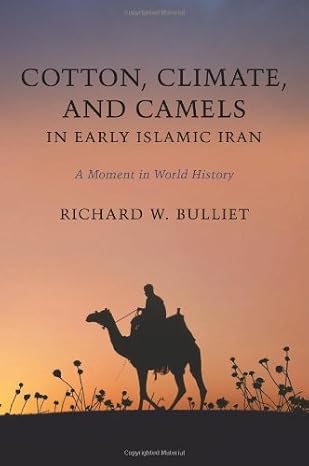
Book Camels, Cotton, Climate and Camels by Bulliet examines northeastern Iran when "artificially wet due to mini ice age" - Iran much more fertile with Arabic VC capital funding cotton growth.
Islamic dark ages were "post-apocalyptic where cities totally abandoned" - partly Islam's natural decay, partly barbarian invaders (Turks and Mongols). Islam used to have "stock market and capitalist economy."





These notes may contain occasional inaccuracies. Learn how podbrain notes are made
More in History

679. Germany: The Song Hitler Stole (Part 3)
Jun 14, 2026
Tom Holland Meets Paul McCartney
May 14, 2026Greece vs. Persia: The Battle of Marathon (Part 2)
May 13, 2026
Adolf Hitler (Part 3)
May 13, 2026Greece vs Persia: The Rise of the First Superpower (Part 1)
May 10, 2026


.svg)