
Greece vs. Persia: The Battle of Marathon (Part 2)
Tom Holland joins the podcast to discuss the Battle of Marathon in 490 BC, drawing from his book Persian Fire which provides the dramatic opening narration of the Athenian charge. The episode examines this pivotal clash between the Persian Empire under Darius the Great and the Athenian...


- 01
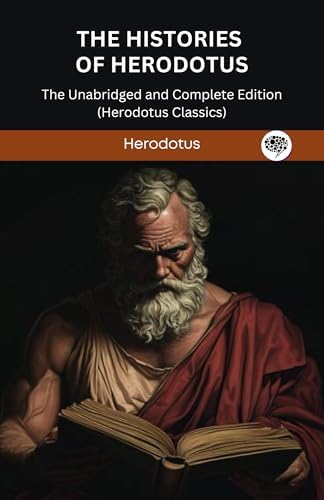
The Battle of Marathon in 490 BC was the first battle in European history that can be reconstructed in detail, thanks to The Histories by Herodotus
- 02
Only 192 Athenians died at Marathon while 6,400 Persians fell, marking the first Greek victory over Persian forces in open combat
- 03
Miltiades recognized the crucial moment when Persian cavalry departed, giving Athens its only chance to attack on the plain
- 04
The Athenians ran the final distance to prevent Persian archers from decimating their ranks - the first Greeks to use running as a battle tactic
- 05
John Stuart Mill declared Marathon 'more important than the Battle of Hastings' for enabling Western civilization to develop
- 06
The victory transformed Greek psychology, introducing the term 'barbaroi' for Persians and ending their instinctive fear of the empire
- 07
Without Marathon's outcome, there would likely be no Parthenon, no Greek tragedy, no Thucydides, and possibly no Plato's influence on theology
Get the latest ideas from The Rest Is History.
Plus the best new takeaways about history from other top podcasts — read in minutes, not hours.
By continuing, you agree to podbrain's Terms and Privacy Policy.
These notes may contain occasional inaccuracies. Learn how podbrain notes are made
Tom Holland joins the podcast to discuss the Battle of Marathon in 490 BC, drawing from his book Persian Fire which provides the dramatic opening narration of the Athenian charge. The episode examines this pivotal clash between the Persian Empire under Darius the Great and the Athenian democracy.
The battle represents a David versus Goliath moment where outnumbered Athenians faced the world's greatest superpower on the plain of Marathon. Using The Histories by Herodotus as the primary source, the discussion explores how this became the first reconstructable battle in European history.
The conversation covers the strategic decisions leading to the battle, the crucial intelligence about Persian cavalry movements, and the desperate charge that saved Athens from destruction. The episode also examines the long-term cultural and philosophical implications of this victory for Western civilization.
The Persian Landing and Athenian Response
The Persian task force under Datis landed at Marathon rather than Athens' port to avoid an opposed landing and utilize their cavalry advantage on the flat plain.
Miltiades convinced the Athenian assembly to march to Marathon and block the road to Athens, preventing Persian cavalry from breaking out across Attica.
The Athenians mustered approximately 10,000 men and marched 26 miles to Marathon, arriving in time to establish defensive positions on the heights overlooking the plain.
800 Plataeans joined the Athenian force in a 'little ships at Dunkirk moment' - Tom, providing crucial moral support despite their small numbers.
The Spartan Delay and Divine Intervention
Pheidippides ran 140 miles to Sparta in two days, but the Spartans couldn't march due to the religious festival of Carnea sacred to Apollo.
The god Pan appeared to Pheidippides in the mountains, promising to bring panic to the Persians if the Athenians honored him properly.
The Spartans promised to arrive in 10 days, creating a crucial window where the Persians needed to act before Spartan reinforcements arrived.
The Crucial Intelligence and Battle Decision
Ionian spies brought news that the Persian cavalry had departed - 'the cavalry have left' - creating the only opportunity for Greek victory.
Miltiades argued for immediate attack while the Persian force was divided, with cavalry being loaded onto ships for a flanking maneuver around Attica.
The ten generals split 5-5 on attacking, leaving the deciding vote to War Archon Callimachus, who sided with Miltiades' aggressive plan.
The Charge and Victory at Marathon
Miltiades thinned the center and extended the line to match Persian width, with Themistocles commanding the weakened center and Plataeans holding the left wing.
The Histories records that Athenians were 'the very first Greeks anywhere to make use of running towards an enemy as a tactic' - Herodotus.
The bronze-clad Athenians smashed into lightly-armored Persians, with Pan's promised panic afflicting the enemy wings while the center held briefly.
War Archon Callimachus died in the fighting at the ships, along with another general and the brother of playwright Aeschylus, who lost his hand to a Persian axe.
The Athenians captured some Persian ships but most of the fleet escaped, prompting the famous marathon run back to Athens to defend against a potential flanking attack.
Historical Impact and Legacy Questions
John Stuart Mill declared Marathon 'more important than the Battle of Hastings' because it enabled Western civilization to develop rather than remaining 'wandering in the woods.'
The victory introduced the term 'barbaroi' (barbarians) for Persians and ended Greek psychological submission to Persian power, as documented in The Histories.
Without Athens surviving, there would be no Parthenon, no Greek tragedy, no Thucydides, and crucially no Plato - whose influence shaped both Christian and Islamic theology for centuries.
Tom Holland argues that modern America resembles the Persian Empire more than Athens - a superpower intervening against 'rogue states' on the periphery.

These notes may contain occasional inaccuracies. Learn how podbrain notes are made
More in History

682. South Africa: Mandela and the Death of Apartheid (Part 6)
Jun 24, 2026
681. Brazil: The Emperor’s Anthem (Part 5)
Jun 21, 2026679. Germany: The Song Hitler Stole (Part 3)
Jun 14, 2026
Tom Holland Meets Paul McCartney
May 14, 2026
Adolf Hitler (Part 3)
May 13, 2026.svg)