
The Mystery of the Mona Lisa
Tom Holland and Dominic Sandbrook explore the extraordinary history of the world's most famous painting, the Mona Lisa, tracing its journey from a Florentine merchant's commission to global cultural icon.

Episode


- 01
The 2005 discovery of Agostino Vespucci's 1503 margin note definitively proved the Mona Lisa portrays Lisa Gerardini, wife of Francesco del Giacondo
- 02
Walter Pater's 1869 purple prose describing the Mona Lisa as a vampiric figure 'older than the rocks' transformed public perception of the painting
- 03
The 1911 theft by Italian decorator Vincenzo Perugia, who kept it under his bed for two years, catapulted the Mona Lisa to global fame
- 04
Leonardo's sfumato technique creates 'a precisely rendered indefiniteness' that makes the painting nearly impossible to reproduce accurately
- 05
The Louvre receives 9 million visitors annually, with over half specifically coming to see the Mona Lisa in its dedicated room
- 06
President Macron plans to move the Mona Lisa to an exclusive underground gallery opening in 2031 as part of his 'new Renaissance' project
- 07
Francesco del Giacondo rose from barrel-making origins to become wealthy through textiles, silk, money lending, and Atlantic sugar trade
- 08
Photography technology only became sophisticated enough to accurately capture the Mona Lisa's essence by the 1880s, enabling mass reproduction
Get the latest ideas from The Rest Is History.
Plus the best new takeaways from other top podcasts — read in minutes, not hours.
By continuing, you agree to podbrain's Terms and Privacy Policy.
These notes may contain occasional inaccuracies. Learn how podbrain notes are made
Tom Holland and Dominic Sandbrook explore the extraordinary history of the world's most famous painting, the Mona Lisa, tracing its journey from a Florentine merchant's commission to global cultural icon.
The discussion begins with Walter Pater's influential 1869 description of the painting as a vampiric figure embodying all of history's women, then examines the revolutionary 2005 discovery that definitively identified the subject as Lisa Gerardini, wife of wealthy Florentine businessman Francesco del Giacondo.
The hosts analyze how Leonardo da Vinci's innovative sfumato painting technique, the rise of Romanticism, and especially the dramatic 1911 theft transformed a relatively obscure Renaissance portrait into the ultimate symbol of high art and global tourism.
The Mystery Behind the World's Most Famous Face
The Mona Lisa depicts a woman in three-quarter pose with pale skin, brown eyes, no eyebrows, long curling hair covered by a translucent veil, wearing a plain dark dress with no jewelry, set against a fantastical landscape of jagged mountains and winding roads.
Leonardo's sfumato technique creates what Martin Kemp describes as 'a precisely rendered indefiniteness' - the corners of her eyes and mouth are deliberately blurred, making her expression impossible to read definitively.
German philosopher Hegel described the effect in the 1820s: 'Nowhere is there any harsh or sharp line. Transition is everywhere. Light and shadow shine into one another, just as an inner force works throughout an external thing.'
The Da Vinci Code popularized modern conspiracy theories, with Dan Brown claiming the painting 'embodies the sacred feminine' and represents 'the divine union of male and female' through the anagram Mona Lisa/Amun-Isis.
Leonardo's Return to Florence and the Commission
In April 1500, Leonardo returned to Florence after 18 years in Milan, carrying 600 ducats (enough to rent a nice house for 30 years) but bearing a reputation for never finishing projects.
The most notorious example was his abandoned equestrian monument to Ludovico Sforza's father - the French used the bronze for artillery and shot up the clay model when they occupied Milan.
Francesco del Giacondo represented the classic Florentine success story: his grandfather started as a barrel-maker, his father moved into textiles, and Francesco expanded into silk, money lending, and the Atlantic sugar economy.
Francesco married 15-year-old Lisa Gerardini from an ancient Tuscan family in 1495 - she brought aristocratic pedigree while he provided wealth, and Leonardo's father Sir Piero served as Francesco's lawyer.
The 2005 Bombshell That Solved the Mystery
Dr. Armin Schlechter's discovery of Agostino Vespucci's 1503 margin note in a Cicero text definitively proved Vasari's account in The Lives of the Artists was correct.
Vespucci wrote: 'That is what Leonardo da Vinci does in all his pictures as in the head of Lisa del Giacondo and Anne the mother of Mary' - dated October 1503.
The timing makes perfect sense: Leonardo had just returned from working as Cesare Borgia's chief engineer in 1502, and Lisa had recently given birth to her second son.
Despite this definitive identification, the mystery remains why Leonardo never delivered the painting to Francesco and kept it with him until his death in France in 1519.
From Royal Obscurity to Romantic Obsession
For two centuries after Leonardo's death, the Mona Lisa remained relatively obscure - in 1750, it wasn't even among the top 110 paintings displayed from the Royal Collection at Versailles.
The French Revolution transformed its fortunes by moving it to the new public museum in the Louvre, though it briefly resided in Napoleon's bedroom from 1800-1804.
Romanticism's worship of genius and fascination with mysterious, incomplete works elevated Leonardo to 'universal genius' status, making the Mona Lisa seem like a 'universal woman.'
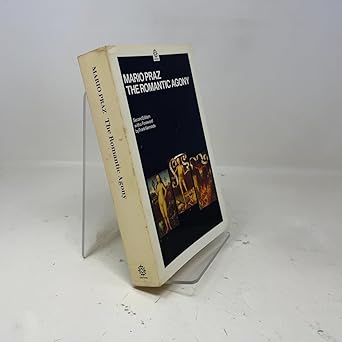
The Romantic Agony by Mario Praz documented how 19th-century artists became obsessed with female beauty 'tainted with pain, corruption and death' - beauty that had become 'illumined with the smile of the Giaconda.'
The 1911 Theft That Created a Global Icon
On August 21, 1911, Italian decorator Vincenzo Perugia simply lifted the painting from its frame during the Louvre's Monday cleaning closure and walked out under his coat.
The theft made front pages worldwide - the Petit Parisienne, then the world's largest circulation newspaper, sarcastically noted 'at least we still have the frame.'
Suspects included poet Guillaume Apollinaire and Pablo Picasso, both of whom were arrested and tried before being acquitted in the desperate investigation.
Perugia kept the painting under his bed for two years before attempting to 'return' it to Florence's Uffizi for patriotic reasons, believing Napoleon had stolen it from Italy.
The theft transformed the Mona Lisa from 'it' to 'she' in media coverage - 'She is coming back to Paris. She is returning to the Louvre' - cementing her status as the ultimate embodiment of high art.
Modern Fame and Future Plans
Andy Warhol chose the Mona Lisa as the first painting he reproduced in 1963, inspired by its diplomatic visit to America as a gift from de Gaulle to Kennedy.
The Louvre now receives 9 million visitors annually, with surveys showing more than half come specifically to see the Mona Lisa in its dedicated room with specialized crowd management.
President Macron's 'new Renaissance' project will move the Mona Lisa to an exclusive underground gallery opening in 2031, where Lisa Gerardini will have her own suite of rooms.
As Donald Sassoon concluded in his definitive history: 'the Mona Lisa acquired its special status because of its association with Leonardo, not the other way round.'


![Civilization Kenneth Clark[first Edition]](https://m.media-amazon.com/images/I/51v+jjstt3L._AC_.jpg)

These notes may contain occasional inaccuracies. Learn how podbrain notes are made
More in History

679. Germany: The Song Hitler Stole (Part 3)
Jun 14, 2026
Tom Holland Meets Paul McCartney
May 14, 2026Greece vs. Persia: The Battle of Marathon (Part 2)
May 13, 2026
Adolf Hitler (Part 3)
May 13, 2026Greece vs Persia: The Rise of the First Superpower (Part 1)
May 10, 2026.svg)