
Explaining the Soviet Union
The episode features Rudyard Lynch (WhatIfAltHist) and Austin Padgett exploring the Soviet Union as a uniquely strange historical period that attempted to create a civilization operating under completely different principles from natural social structures.


- 01
"The Soviet Union was the continuation of trends already seen under the Tsars" - Rudyard, where autocratic structures and centralized control predated communism
- 02
Stalin killed 20 million people while Lenin killed millions; both established totalitarian machinery worse than anything the Tsars did
- 03
Russia would be a wealthy first world country with 100 million more people if communism never arose - economic growth was exponential under Tsars, arithmetic under Marxists
- 04
"We've seen the future and it works" - Western journalist on Soviet Union, exemplifying how propaganda deceived intellectuals into supporting genocidal regimes
- 05
Soviet Union had higher inequality than the West during Cold War; difference between commissar and worker exceeded CEO-to-employee gap in 1960s America
- 06
Holodomor killed at least 5 million through collectivization; Stalin deliberately destroyed productive kulak farmers, creating artificial famine concentrated in Ukraine
- 07
"Political correctness" originated as Soviet term; East Germany is most right-wing region today because they experienced same manipulation tactics earlier
- 08
Soviet Union's collapse came from above, not below - Gorbachev dismantled it after visiting West, but society couldn't adapt after being trained as "docile slaves"
Get the latest ideas from History102.
Plus the best new takeaways about military & strategy from other top podcasts — read in minutes, not hours.
By continuing, you agree to podbrain's Terms and Privacy Policy.
These notes may contain occasional inaccuracies. Learn how podbrain notes are made
The episode features Rudyard Lynch (WhatIfAltHist) and Austin Padgett exploring the Soviet Union as a uniquely strange historical period that attempted to create a civilization operating under completely different principles from natural social structures.
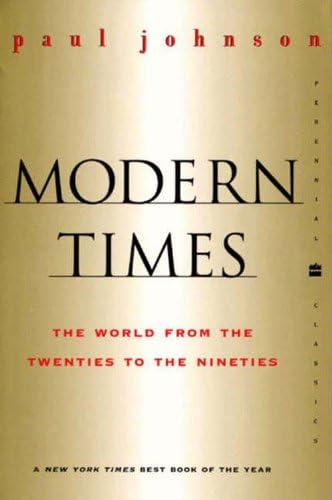
Lynch recently read Modern Times by Paul Johnson, which reframed his understanding of the 20th century as an era when older social structures broke down and failed replacements emerged, with the Soviet Union representing the logical extension of this insanity.
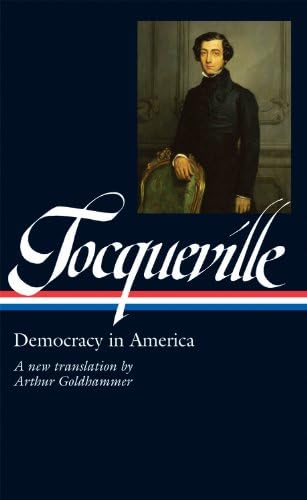
The discussion traces how French thinkers like Alexis de Tocqueville in the 1840s predicted Russia and America would become the great powers of the next century, examining Russia as what would happen if French autocracy had lasted and gone "way, way worse."
The conversation covers the trajectory from Tsarist reforms through the Russian Revolution, Stalin's terror, World War II's devastation, the Cold War stagnation, and the eventual collapse in 1989-1991, emphasizing how communism created worse conditions than the regime it replaced.
Tsarist Russia's Path to Revolution
De Tocqueville's friend wrote an anthropological report on Russia in the 1840s, observing that Russian nobility referred to themselves as "your humble slave" to the Tsar, establishing incentives toward lying, deceit, and authoritarianism because status depended on having the right blood or pleasing the right people.
Russian serfdom affected 80% of the population in conditions comparable to black American slavery - serfs could be worked all hours, sold to different landlords, beaten or raped by masters, and never leave their lord's land.
After losing the Crimean War in the 1850s, Russia ended serfdom and went through Stolypin reforms, but this created a new problem: former serfs had no cultural training in freedom, which is "a skill that's transmitted culturally" requiring responsibility for outcomes and distinct individual identity.
Russia had staggering economic growth in decades before World War I as one of the most rapidly industrializing countries, but this came at the expense of increasing income inequality - Russia became the most chronically unequal country in Europe by 1914.
The end of serfdom destroyed a class of lower nobility who could no longer support themselves, so they moved to cities and became overeducated. The Russian economy didn't produce enough education-focused jobs, creating massive elite overproduction - these "trust fund academics" became the biggest supporters of communism.
Revolutionary Networks and Lenin's Rise
Revolutionary culture became a social archetype in Russian society, with underground cells operating across Russia after Polish revolutionaries introduced revolutionary sentiment when Russia conquered Poland. One political boss in St. Petersburg kept operations going for decades despite constant secret police pressure.
Lenin was based in Switzerland for years before Germany sent him back to Russia in 1917 as a "gadfly" to hurt the Russians during World War I. The Germans didn't realize Lenin was "one of the great men of the 20th century" who would change history through his iron will and intellectual framework.
The Bolsheviks were less than 2% of Russia's population but won because they maintained "hyper-ideological rigidity and hierarchical structure" - they were a tiny group who shot dissenters and self-policed, achieving higher in-group cooperation than any other faction.
"Lenin offered all of those things he offered. I'm going to take care of your material needs. We're going to end the war with the Germans" - Rudyard. The average Russian peasant wanted bread, land, and peace, which Lenin promised while Kerensky refused to end the war.
Lenin killed millions of people and established the totalitarian machinery that Stalin later used. "People say that Lenin meant well, which was not true. He was the person who established the totalitarian machinery that Stalin created" - Rudyard.
Stalin's Terror and Collectivization
Stalin was Lenin's "bureaucracy paper guy" - a thug from Georgia who loved managing boring back-end work. He built respect as "a real man, the kind of guy who could manage things" while Lenin was the intellectual, ultimately outmaneuvering Trotsky after Lenin's death.
The singular thing Stalin did that killed the most people was killing off the kulaks - middle-class farmers who often had a few extra cows or land. This destroyed all the most productive farmers and created the Holodomor famine that killed at least 5 million people, concentrated in Ukraine.
Stalin committed genocide against multiple groups: Cossacks, Kazakhs (moved thousands of miles), Chechens, Volga Germans, Poles, Catholics, priests, the wealthy, and nobility. The goal was to eliminate all distinct subgroups that could provide social leadership to replace them with the total state.
Before the German invasion, Stalin killed 80% of the Russian top officer corps, which was disastrous for the coming war. Russia lost three men for every German casualty because they had killed off all their pre-established leadership and training.
Beria, Stalin's attack dog who ran the NKVD secret police, raped thousands of women by telling them "I'll let your husband live if you sleep with me" then killing the husband anyway. Stalin and Beria had a mutual understanding as monsters who were "okay with that sort of arrangement."
Life Under Soviet Totalitarianism
Soviet command economy was so inefficient that every factory had an unofficial "fixer" role - someone with black market connections to obtain leather for shoe factories or iron when supplies didn't arrive, because thousands of Moscow planners couldn't coordinate the economy.
"There's no place for you to have private life" - Rudyard. Every Soviet apartment building had a designated informant reporting on conversations. In Mao's China, people had to write down private conversations with friends and family, creating an "air of fear and mistrust."
The Soviet Union created a system where weekends were assigned per person rather than having a standard weekend, which destroyed friend groups and families because there was no time to meet up. They eventually abandoned this because it was too inefficient.
Soviet brutalist architecture and hospitals were so unpleasant they contributed to Russia's birth rate collapsing from 6-7 children per woman in 1914 to below replacement level by 1970 - 30 years before America despite being much poorer.
The Soviet Union had higher inequality than the West during the Cold War. The new nobility lived in palaces of old Russian nobility with expensive meals, and inequality across society was "vastly higher than in the West" - the difference between commissar and worker exceeded 1960s American CEO-to-employee gaps.
World War II and Soviet Victory
World War II killed 30 million Russians - making it the third bloodiest war in history just for Russian casualties. If the German advance from the Polish border were mapped onto America's East Coast, they would have reached Kansas.
Russians used human wave tactics where they would "march into the middle of rivers because their orders would tell them to march a certain distance, and if they didn't follow the orders exactly right, they'd die. So they'd march into the river and die, which was better than staying on the other side of the river and getting shot."
The Leningrad siege was "by far the most brutal siege in world history," lasting years with food only deliverable in winter when they could drive over Lake Ladoga's ice. The famine was as much artificial from Soviet agricultural inefficiency as from German occupation - even highest-ranking commissars ate well.
The communists had to make peace with the church during World War II in a way they hadn't before. "A lot of Russian orthodoxy or Russian nationalism comes from the World War II period because that's when they let little glimmers of the religion back in" - Rudyard.
Russia won a Pyrrhic victory through wearing down Germans with more people and land plus American and British support, but "Russia lost something vital in the same process" - Eastern Europe's potential was wasted by two cruel totalitarian regimes grinding humanity between them.
Cold War Stagnation and Collapse
Soviet manufacturing was not competitive - by the 1960s and 1970s their factories couldn't compete with the West. They were reliant on grain from America and their oil supply was "one of the very few things that kept them going."
"Political correctness" was actually a Soviet term. They had diversity quotas for ethnicities and social classes, and pushed anti-Nazi guilt among Germans. This is why East Germany is the most right-wing area of Germany today - they were "inoculated using the same technologies by the Soviets earlier."
For over a decade before collapse, no one in the Soviet Union believed what their elites said. Adam Curtis calls this "hyper-reality" - when public facing image and lived reality are miles apart, requiring constant code switching. "It's probably the biggest marker of totalitarianism you could choose to look for" - Rudyard.
Gorbachev visited Western Europe and said "I don't believe in communism anymore. We can just let go and try to be a West European country." He created universal suffrage and freedom of speech, but the Soviet Union fell within years because it was held together only by shared brutality.
The Soviet Union fell from above, not below. In Romania, dictator Ceaușescu walked before a crowd and "there was a moment of flicker where they just turned and said, no" and started booing. In the Baltics, people formed human rings around borders and Russian tanks refused to shoot them.
Western Complicity and Propaganda
Western journalists wrote glowing reviews of Stalin after visiting staged villages with "paid actors" as local people. The line "I've seen the future and it works" came from a Western journalist who went to Russia, while the Western press made it "very easy to pretend that the Soviet Union was a good country."
"A lot of people in Roosevelt's administration were Marxist spies" - Rudyard. The Soviets had spies in highest ranks of British intelligence and were big in Hollywood. Western elites kept giving concessions thinking Marxists were like them, when "the reality is that the Marxists do genuinely believe the things they say."
The international left took orders directly from Moscow until the Nazi-Soviet pact divided Poland, which made Western leftists realize "Stalin doesn't actually have our interests because he worked with the Nazis." This split the Western left from the Eastern left.
Americans operated out of a "defensive scarcity mindset" during the Cold War even though fundamentals were significantly stronger than communism. Wars like Vietnam and Korea happened because "we thought communism was this irrepressible force that would keep growing" when it was actually declining.
Soviet psychological warfare techniques survived much longer than the Soviet Union itself. "The techniques that the Soviet experts like Yuri Bezmenov would use, they just became the dominant ruling ideology of the West" - Rudyard.

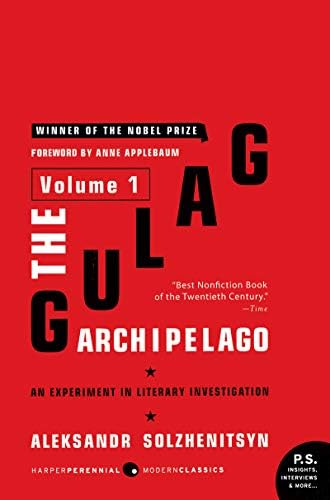

These notes may contain occasional inaccuracies. Learn how podbrain notes are made
More in History

682. South Africa: Mandela and the Death of Apartheid (Part 6)
Jun 24, 2026
681. Brazil: The Emperor’s Anthem (Part 5)
Jun 21, 2026679. Germany: The Song Hitler Stole (Part 3)
Jun 14, 2026
Tom Holland Meets Paul McCartney
May 14, 2026Greece vs. Persia: The Battle of Marathon (Part 2)
May 13, 2026
Adolf Hitler (Part 3)
May 13, 2026
More episodes with Rudyard
Explaining the Rise + Fall of Modern Britain

Explaining the History of Trade (feat. Ryan Petersen of Flexport)

How Marxism and Modernity Destroyed Our Culture — Rudyard Lynch (WhatIfAltHist) x Tom Bilyeu

Explaining Capitalism's Rise + Fall + Rise

Explaining Steppe Empires


.svg)