
Henry Oliver on Measure for Measure, Late Bloomers, and the Smartest Writers in English
Tyler Cowen interviews Henry Oliver, research fellow at Mercatus and author of Second Act about late bloomers. Oliver also writes a substack and co-authors another with Rebecca Lowe on liberalism.

Episode


- 01
Measure for Measure explores whether mercy can exist in human government - 'the quality of mercy is very strained' unlike in The Merchant of Venice
- 02
Isabella gets a terrible outcome despite the play's Christian framework - forced marriage without consent while Angelo faces lesser consequences
- 03
Shakespeare experiments with substitutions and body tricks to avoid actual rape, asking if artifice can reconcile erotic and political tensions
- 04
Second Act succeeded because people want serious answers about late blooming, not just 'resilience and stamina' platitudes
- 05
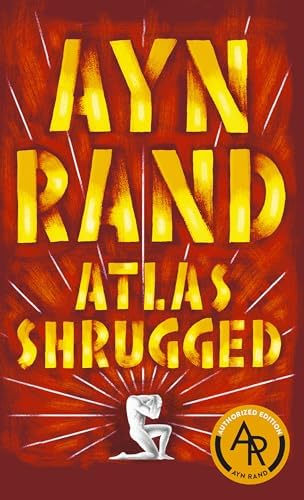
Atlas Shrugged works as 'maybe the best genre novel ever written' with first-rate dialogue despite philosophical objections
- 06
The Faerie Queene and Bleak House represent the most underrated great works - 'top 10 work of all time' and 'best novel in English'
Get the latest ideas from Conversations with Tyler.
Plus the best new takeaways from other top podcasts — read in minutes, not hours.
By continuing, you agree to podbrain's Terms and Privacy Policy.
These notes may contain occasional inaccuracies. Learn how podbrain notes are made
Tyler Cowen interviews Henry Oliver, research fellow at Mercatus and author of Second Act about late bloomers. Oliver also writes a substack and co-authors another with Rebecca Lowe on liberalism.
The conversation centers on Shakespeare's Measure for Measure, examining why this problem play fell into non-popularity and what it reveals about justice, mercy, and Christian governance. Oliver argues it picks up where The Merchant of Venice leaves off, exploring whether mercy can actually exist in human government.
They discuss how the play's ending violates expectations - Isabella faces forced marriage while Angelo gets off relatively lightly. The conversation expands to cover Oliver's background in advertising, his views on late bloomers, and wide-ranging literary opinions from Gulliver's Travels to Atlas Shrugged.
Why Measure for Measure Fell from Favor
The play is 'very difficult to enjoy on the stage' with an unsatisfactory ending from an entertainment perspective - 'Shakespeare was experimenting with a comedy that had an unhappy ending'
The rapid delivery of Shakespearean acting makes the complex arguments hard to follow, and audiences want happier stories than this experimental form provides
On rereading, Oliver was surprised that 'the scenes between Isabella and Angelo are so enthralling and so passionate' - some of Shakespeare's best work rather than just a play of ideas
The Play as Christian Pragmatism
Measure for Measure continues themes from The Merchant of Venice: 'the quality of mercy is very strained, and it does not drop like the gentle rain' - mercy becomes 'a contrivance of human government'
The play demonstrates that 'no individual can be consistent with their own ideas' - Isabella repeatedly notes 'we cannot weigh our brother with ourself'
Shakespeare presents pragmatic resolution: 'either we sort of force everyone to get married, or they all end up worse off' - the alternative would be tragedy with multiple deaths
Isabella's Terrible Bargain
Cowen reads the play as feminist critique: Isabella 'gets a terrible outcome in all regards' - can't join the convent, must confront rulers, thinks her brother is executed, then faces forced marriage
The Duke takes Isabella 'without any of her consent' in what amounts to 'a form of rape or even worse, enslavement' with no property rights in the relationship
Oliver sees this as Kafka-esque reality where 'she in fact is good, and everyone else is the problem' - she's been 'broken' by the system's demands
Contrasts with The Rape of Lucrece
The Rape of Lucrece presents Shakespeare's first scenario: actual rape occurs, victim kills herself, autocracy falls because it's seen as evil
Measure for Measure offers different resolution through 'body tricks and substitutions and various deceits' - rape is avoided but autocracy stays in power
Shakespeare asks 'is that a better scenario?' - can artifice reconcile erotic and political tensions when the alternative is tragic death?
James I and Contemporary Politics
The play was performed at James I's court in 1604, addressing his interests in 'justice and law' and 'how to deal with religious tension, sexual behaviour south of the river'
References to the Duke not being 'inclined toward women' may allude to James's affair with the Duke of Buckingham and his reluctance to appear in public
Shakespeare presents pragmatic message James could accept: 'at the end of the day, the king is going to come in and impose the law, and that's just how it should be'
Jane Austen's Debt to Adam Smith
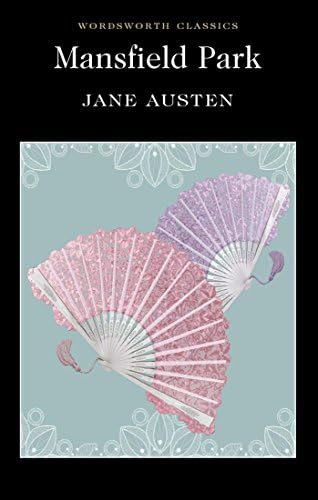
Austen took 'almost everything' from Smith - interested in 'how to be good in a commercial society' using his ideas for both moral content and narrative techniques
Her positioning of perspective and information delivery serves to show 'we have to create our own impartial spectator inside ourselves' - a very Smithian concept from The Theory of Moral Sentiments
Despite loving Shakespeare performances, Austen is 'one of the least Shakespearean of the English novelists' - distinguished as her own writer and thinker
Swift's Political Intelligence
Gulliver's Travels prepared Oliver for politics work: 'I was often startled by how much Swift understood about the day-to-day life of politics, the way people interact'
Swift has 'very different sort of intelligence to Shakespeare' - can deal with practical questions 'in both a fictional and a non-fictional manner'
Gulliver's Travels ranks as 'one of the very few great books ever written in English' with Swift managing 'not to express his own opinions' through incredible ambivalence
The Success of Second Act
Second Act succeeded because 'a lot of people want to be a late bloomer' and wanted 'a serious answer' rather than typical 'resilience and stamina' advice
Late bloomers often experience dramatic external events: 'Someone shoots themselves. They get caught in a hotel fire' - then decide 'I simply have to change everything'
Others 'become their own interruption' - looking in the mirror and saying 'really? You're going to die without doing it? You're not getting any younger'
Literary Ratings and Recommendations
Paradise Lost is 'easily one of the best poems in English, and it's not read enough' despite Johnson's criticism that 'no man ever wished it was longer'
The Faerie Queene is 'seriously underrated' and 'a top 10 work of all time' - even reading excerpts from the Oxford Book of English Verse reveals Spencer's 'great power'
Bleak House is 'the best novel in English' and 'really just an extraordinary piece of writing' - underrated among literary people who haven't read it
Atlas Shrugged is 'extraordinarily good' and 'maybe the best genre novel ever written' with 'first-rate B-movie dialogue' despite philosophical objections



These notes may contain occasional inaccuracies. Learn how podbrain notes are made
More in Philosophy

You Need An Ethical Will | Lt. Gen. Mark Hertling
Jun 21, 2026
Hollywood, The CIA & UFOs: The History Beyond Spielberg
Jun 20, 2026
What Our Fathers Teach Us, For Better Or Worse | Tom Junod
Jun 20, 2026
How To Love Your Country Without Lying About It | Ty Seidule
Jun 19, 2026
Recognize These Signs of Weakness | 7 Daily Habits That Will Change Your Life
Jun 15, 2026.svg)