
Harvey Mansfield on Machiavelli, Straussianism, and the Character of Liberal Democracy
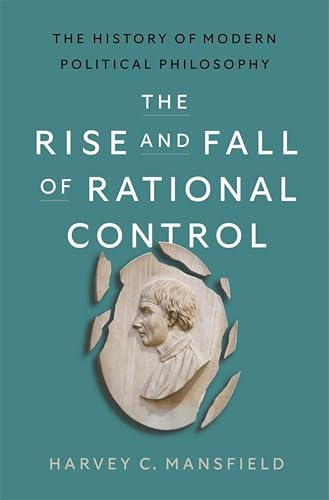
Tyler Cowen interviews Harvey Mansfield, professor emeritus at Harvard University and author of the new book The Rise and Fall of Rational Control. Mansfield is a leading Straussian scholar known for his work on political philosophy, Machiavelli, and classical...

Episode


- 01
Machiavelli invented the concept of 'effectual truth' - what comes out of statements rather than their intent, forming the foundation of modern science
- 02
The word 'fact' was developed by Machiavelli and later thinkers, representing things without wish or intent attached - 'I love you' effectually means 'I want something from you'
- 03
Technology, especially military technology like gunpowder, drives irreversible modernity because nations must match each other's defensive capabilities
- 04
The longest chapter in Machiavelli's works is on conspiracy (Discourses book 3, chapter 6), providing detailed instructions for before, during, and after stages
- 05
All politics requires secrecy and equivocation - even a babysitter cannot tell the baby everything they know
- 06
Great books guarantee their own future through superiority - we still read Plato's Republic after 2,500 years because of logographic necessity
- 07
Strauss treats arguments as if they were in a play with plot and context, while analytic philosophy abstracts arguments from their original setting
- 08
Only a small percentage of Machiavelli's empirically testable propositions would be true because he deliberately exaggerates to make his points
Get the latest ideas from Conversations with Tyler.
Plus the best new takeaways from other top podcasts — read in minutes, not hours.
By continuing, you agree to podbrain's Terms and Privacy Policy.
These notes may contain occasional inaccuracies. Learn how podbrain notes are made
Tyler Cowen interviews Harvey Mansfield, professor emeritus at Harvard University and author of the new book The Rise and Fall of Rational Control. Mansfield is a leading Straussian scholar known for his work on political philosophy, Machiavelli, and classical political thought.
The conversation explores Machiavelli's foundational role in modern political thought, examining how The Prince and Discourses on Livy introduced concepts like effectual truth and systematic approaches to conspiracy. They discuss the irreversibility of modernity, the nature of political secrecy, and contemporary applications of classical political theory.
Mansfield addresses the future of Straussian scholarship, comparing it to analytic philosophy and materialist approaches. The discussion covers Shakespeare's insights into political leadership, the decline of great book writing, and concludes with reflections on Manliness, aging, and their influence on political thinking.
Machiavelli's Revolutionary Concept of Effectual Truth
Machiavelli invented 'effectual truth' - the actual outcome rather than stated intent, as when 'I love you' effectually means 'I want something from you' - forming the foundation of modern science
The word 'effectual' was brand new, invented by Machiavelli from Latin 'facer' (to make), leading to our modern concept of 'fact' as something without wish or intent attached
Modern science follows Machiavelli's approach - Galileo didn't ask public opinion about earth's movement but looked for factual evidence, departing from Plato and Aristotle's speech-based philosophy
The Irreversible Nature of Technological Modernity
Technology, especially military technology like gunpowder, makes modernity irreversible because 'once somebody has gunpowder, then others must have it' for national defense
Strauss believed modernity wasn't reversible but was improvable, with ancients offering more insight on 'how should I live' than moderns
The improvement wouldn't be marginal - Strauss began from the ancient world that produced Machiavelli's modern revolution, not from the modern world itself
Conspiracy as the Heart of Machiavellian Politics
The longest chapter in The Prince and Discourses on Livy is on conspiracy (book 3, chapter 6), providing detailed instructions for three stages: before, during, and after
Machiavelli wants readers to think of politics conspiratorially - what happens behind the scenes is more important than public principles and justifications
All politics requires secrecy because 'you can't ever speak without holding back something' - even a babysitter cannot tell the baby everything they know
American 20th-century wars were defensive rather than conspiratorial, showing where Machiavelli got it wrong - 'America saved the world from three great invasions'
Shakespeare's Political Insights and Trump's Vulgarian Democracy
Macbeth offers insights into ambition's nature and the debate between pre-Christian revenge and Christian peace, highlighting political science's neglect of human ambition
Trump fits Shakespeare's 'vulgarian' characters - 'not a gentleman' who works at the level of 'discordant impulse' and seeks to strike rather than persuade
Trump is 'more democratic than the rest of us' because he understands and impresses people who are not refined in thinking and ways, like Shakespeare's vulgar characters around Falstaff
The Future of Straussian Scholarship and Great Books
The future of Straussianism is 'pretty good' because it's based on great books like The Republic, which guarantee their own future through superiority - 'we still read Plato's Republic 2,500 years ago'
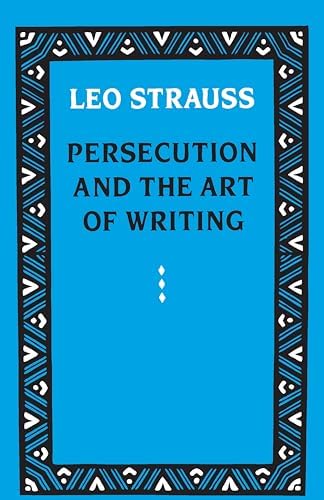
Best way to learn Straussian methods: 'Look for a Straussian. Look at Strauss' books, especially Natural Right and History' and Persecution and the Art of Writing
Strauss had 'logographic necessity' - everything in a great book must be where it is, with no accidents, requiring attention to what is said, how it's said, and where it's placed
Only Heidegger and Strauss wrote truly great books in the 20th century, with the supply drying up because philosophy has been historicized and authors no longer try to write 'a possession for all times'
Straussian vs. Analytic Philosophy Methods
Strauss treats arguments 'as if they were in a play' with plot and context, while analytic philosophy 'tries to withdraw the argument from where it was in Plato'
Every Platonic dialogue 'leaves something out' and contains 'intentionally bad arguments' meant for particular people, requiring readers to raise them to Socrates' level
The key difference is 'the lack of irony in analytic philosophy' - philosophy must account for non-philosophers and not 'give a flat statement of what you think is true'
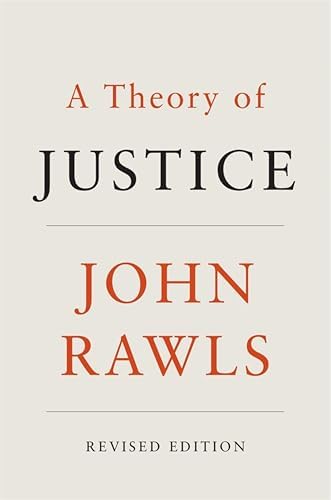
Rawls' 'public reason' meant his private reasoning equaled his public reasoning, whereas Straussian reason 'is never public or universal' because it considers the audience's character
Critique of Hayekian Spontaneous Order
Hayek's spontaneous order is 'an advanced version of what was originally intended' by Machiavelli - letting nobles and plebs fight it out as in Rome
The Hayekian view 'overlooks the necessity of liberating spontaneity' - spontaneous order needs to be liberated from inhibitions and doesn't happen spontaneously
Modern order originally came from liberation, not imposition, but liberation itself requires imposition to remove what prevents spontaneous order





These notes may contain occasional inaccuracies. Learn how podbrain notes are made
More in Philosophy
You Need An Ethical Will | Lt. Gen. Mark Hertling
Jun 21, 2026
Hollywood, The CIA & UFOs: The History Beyond Spielberg
Jun 20, 2026
What Our Fathers Teach Us, For Better Or Worse | Tom Junod
Jun 20, 2026
How To Love Your Country Without Lying About It | Ty Seidule
Jun 19, 2026
Recognize These Signs of Weakness | 7 Daily Habits That Will Change Your Life
Jun 15, 2026.svg)