
Dan Wang on What China and America Can Learn from Each Other
Tyler Cowen interviews Dan Wang, author of the bestselling Breakneck China's Quest to Engineer the Future, in the Mercatus Center studio. Wang, a technology analyst who has lived extensively in China, brings unique perspectives from his time between Ann Arbor...

Episode


- 01
Dan Wang argues America has excellent infrastructure for car owners but lacks transit options, with NYC subway noise exceeding danger levels
- 02
China will build 300 gigawatts of solar this year versus America's 30 gigawatts, with 33 nuclear plants under construction
- 03
Wang identifies China as 'possibly the most technology-obsessed large institution in the world' due to historical humiliations from lacking technology
- 04
Chinese healthcare ranks among the world's worst for quality and corruption, even compared to Mexico, while US leads globally
- 05
Wang describes China's economy as '50% dysfunctional but 5% going splendidly well' - focusing on manufacturing superstars
- 06
Liu Cixin, author of The Three-Body Problem, is identified as the greatest living Chinese novelist
- 07
Wang calls the Communist Party 'a Leninist technocracy with grand opera characteristics' that studies the Catholic Church's organizational model
- 08
Yunnan Province offers perfect weather year-round, extraordinary food diversity, and geopolitical importance controlling major Asian waterways
Get the latest ideas from Conversations with Tyler.
Plus the best new takeaways from other top podcasts — read in minutes, not hours.
By continuing, you agree to podbrain's Terms and Privacy Policy.
These notes may contain occasional inaccuracies. Learn how podbrain notes are made
Tyler Cowen interviews Dan Wang, author of the bestselling Breakneck China's Quest to Engineer the Future, in the Mercatus Center studio. Wang, a technology analyst who has lived extensively in China, brings unique perspectives from his time between Ann Arbor and Palo Alto, with family origins in China's southwestern Yunnan Province.
The conversation explores fundamental questions about infrastructure, manufacturing, and technological competition between the US and China. Wang argues that China's engineering mindset and long-term focus on market share over profitability gives it advantages in manufacturing, while Cowen counters that American strengths in healthcare, suburbs, and AI development represent more important measures of success.
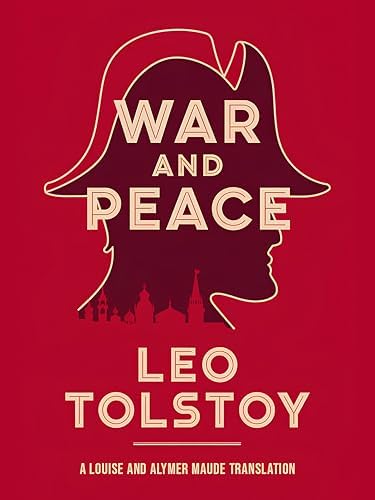
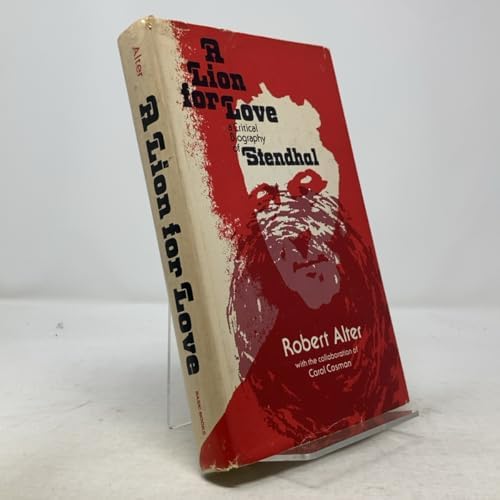
Beyond geopolitics, they delve into Chinese culture, literature, and Wang's personal background, including his preference for Anna Karenina over War and Peace, his admiration for Stendhal's The Red and the Black, and his analysis of James C. Scott's works including The Art of Not Being Governed.
America's Infrastructure Paradox: Cars vs Transit
Wang argues American infrastructure works excellently 'if you own a car' but lacks adequate transit options, with BART and NYC subway noise 'sometimes exceeding danger levels experienced by most people.'
Cowen counters that infrastructure problems are 'relatively minor' and questions whether fixing them would increase GDP by more than 1%, emphasizing that Americans can choose to avoid problematic cities.
Wang challenges Cowen's suburban preference, noting the irony that Cowen lives in 'the most boring part of the country' yet loves visiting 'vibrant cities of Asia' with excellent walkability and rail systems.
China's Manufacturing Dominance and Energy Investment
China will build approximately 300 gigawatts of solar capacity this year compared to America's 30 gigawatts, with 33 nuclear power stations currently under construction.
Wang describes China as 'possibly the most technology-obsessed large institution in the world' because they understand their 'self-described humiliations' over two centuries as stemming from lacking technology when facing European and Japanese forces.
Chinese businesses focus more on market share than profitability, unlike American companies obsessed with 'financial measures like profitability as well as these other ratios,' enabling greater long-term investment.
Healthcare: America's Hidden Advantage Over China
Cowen argues US healthcare represents a major advantage over China, noting Chinese healthcare is 'about the worst Chinese sector in terms of quality, corruption, what you have to pay the doctor.'
Wang acknowledges healthcare quality differences but criticizes that 'what we have is bioprosperity for not just the 1%, but let's call it the top half' while the bottom half receives inadequate care.
The pandemic revealed American healthcare's mixed performance, with Wang noting the US 'underperformed Europe by many, many measures' despite excelling at vaccine development and distribution.
The Engineering vs Lawyers Thesis Examined
Wang's thesis that China succeeds because it's 'a nation of engineers' while America is 'a nation of lawyers' faces scrutiny when examining other successful East Asian economies.
Cowen points out that Taiwan's presidents were mostly lawyers, South Korea had economists and lawyers in leadership, and Singapore's Lee Kuan Yew was a lawyer who 'thinks in a very lawyerly manner.'
Wang concedes the engineering variable matters more due to China's scale and the Communist Party's bureaucratic incentives, while acknowledging that 'China should be more lawyerly' to provide liberal checks on government power.
Why China Hasn't Democratized Like Other East Asian Nations
Wang rejects political science explanations for China's authoritarian persistence, arguing East Asian democratization was 'highly contingent' rather than income-driven.
He identifies three institutions China has studied extensively: 'the Catholic Church' for organizational doctrine, Japan to avoid economic malaise, and most importantly 'the Soviet Union' to avoid Gorbachev's fate.
The Communist Party maintains 'very intense Leninist focus on not being dissolved' with leaders feeling it's 'a life and death struggle' daily, preventing liberalization that might threaten party survival.
China's Economic Reality: 50% Dysfunction, 5% Excellence
Wang describes China's economy as '50% pretty dysfunctional, but 5% is going splendidly well,' with his analysis focusing on 'the top 5% of China's economy' that 'goes from strength to strength.'
Despite declining total factor productivity growth, China remains 'on track to be the global center for automotives' and controls 'about a third of global manufacturing capacity.'
Wang predicts 'a second China shock coming for America's manufacturing industries' as China gains dominance in drones, electronics, and continues 'deindustrializing Germany in particular, as well as Japan and South Korea.'
Chinese Culture and Literature Through Wang's Eyes
Wang identifies Liu Cixin, author of The Three-Body Problem, as 'the greatest living Chinese novelist,' praising Volume One as 'the most Chinese of the three' for integrating Cultural Revolution themes.
He finds Nobel laureate Mo Yan's magical realism unexceptional, preferring directors like Zhang Yimou and recommending films like 'Mountains May Depart' and 'Raise the Red Lantern.'
Contemporary Chinese culture has 'gotten steadily worse over the last 10 years of Xi Jinping's rule' with increased censorship affecting films, visual arts, and music, noting even The Three-Body Problem was mostly written before Xi came to power.
Yunnan Province: Wang's Personal Paradise
Wang describes Yunnan as having 'perfect weather most of the time' year-round, 'extraordinary diversity of food,' and geopolitical importance as the source of major rivers including the Yangtze and Mekong.
The province offers extreme diversity from tropical rainforests in Xishuangbanna to near-Himalayan peaks in the north, with excellent infrastructure including four-hour high-speed rail from Kunming to southern regions.
Drawing from The Art of Not Being Governed, Wang appreciates Yunnan's Zomia characteristics - mountainous regions where people historically 'decided to hide out from the state' - reflecting his own outsider perspective on Chinese power.
Literary Preferences and Cultural Formation
Wang prefers Anna Karenina to War and Peace and Buddenbrooks to The Magic Mountain, explaining 'I prefer perfection a little bit more than you do' and favoring linear narratives over sprawling complexity.
His favorite novelist Stendhal, author of The Red and the Black, represents 'voluptuous excess' and musicality, with Wang having reread the novel four times and finding it 'still holds up very well.'
Wang learned to write by copying out musical scores and New Yorker articles by hand, developing sensitivity to 'cadences,' 'beat,' and 'the musicality of the effect' in both music and prose.




These notes may contain occasional inaccuracies. Learn how podbrain notes are made
More in Philosophy
You Need An Ethical Will | Lt. Gen. Mark Hertling
Jun 21, 2026
Hollywood, The CIA & UFOs: The History Beyond Spielberg
Jun 20, 2026
What Our Fathers Teach Us, For Better Or Worse | Tom Junod
Jun 20, 2026
How To Love Your Country Without Lying About It | Ty Seidule
Jun 19, 2026
Recognize These Signs of Weakness | 7 Daily Habits That Will Change Your Life
Jun 15, 2026

.svg)