
Cass Sunstein on Liberalism and Rights in the Age of AI
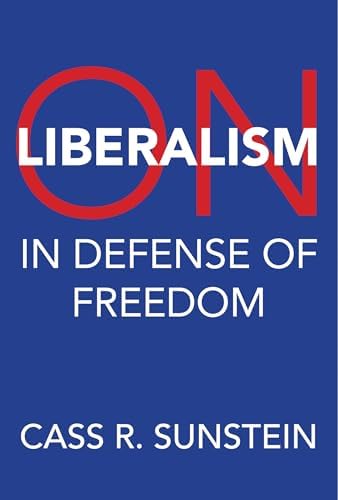
Tyler Cowen interviews Cass Sunstein, the most widely cited legal scholar of all time, at Harvard Law School. Sunstein has released five books in 2024, including On Liberalism In Defense of Freedom, Manipulation, and...

Episode


- 01
Liberalism faces threats not from self-undermining but from 'something illiberal in the human heart' - Sunstein
- 02
Rereading 1984 reveals Orwell's complex relationship with tyranny, showing both liberal opposition and erotic fascination
- 03
Immigration enforcement requires illiberal means at margins, creating tension between liberal values and practical border control
- 04
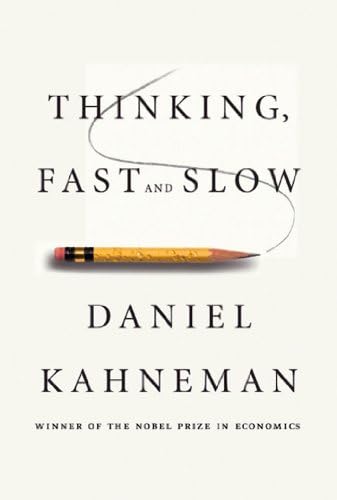
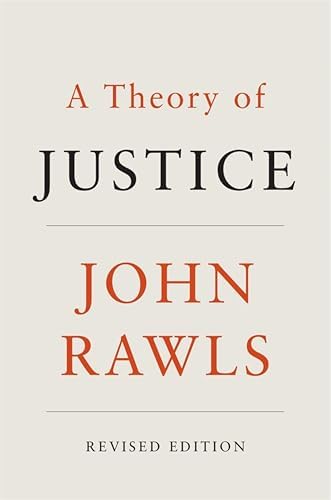
Contemporary liberal philosophy has shifted from philosophers like Rawls to social scientists like behavioral economists
- 05
AI should lack First Amendment rights, but humans interacting with AI retain full speech protections
- 06
Legal system needs new 'right not to be manipulated' similar to privacy rights developed in early 20th century
- 07
The Subjection of Women by Mill remains foundational but can lead to illiberal 'woke' finger-wagging and shaming
- 08
Bob Dylan embodies liberal values through self-invention, freedom, and 'smiling at impermanence' throughout his career
Get the latest ideas from Conversations with Tyler.
Plus the best new takeaways from other top podcasts — read in minutes, not hours.
By continuing, you agree to podbrain's Terms and Privacy Policy.
These notes may contain occasional inaccuracies. Learn how podbrain notes are made
Tyler Cowen interviews Cass Sunstein, the most widely cited legal scholar of all time, at Harvard Law School. Sunstein has released five books in 2024, including On Liberalism In Defense of Freedom, Manipulation, and Imperfect Oracle on AI's strengths and limits, with another on Separation of Powers coming in February.
The conversation explores liberalism's vulnerabilities, from immigration policy tensions to the evolution of liberal thought from classical philosophers to contemporary behavioral economists. They discuss how 1984 reveals complex human attitudes toward freedom and tyranny, and how Mill's The Subjection of Women influences modern social movements.
Sunstein shares insights from his government service at the Department of Homeland Security, examining border policy realities and the moral complexities of immigration enforcement. The discussion ranges from AI's First Amendment implications to the need for new legal frameworks around manipulation, concluding with Dylan's embodiment of liberal values through artistic reinvention.
The Illiberal Heart: Internal Threats to Liberal Democracy
Liberalism's primary threat comes not from self-undermining but from 'something illiberal in the human heart' that can override liberal commitments through fear and security concerns.
Rereading 1984 reveals Orwell's ambivalence: 'Orwell is into illiberal tyranny. He almost has an erotic connection to it, and that comes through the book' - Sunstein.
Liberalism struggles because it 'doesn't create the conditions for its own self-perpetuation' and lacks resources to respond when other forces undermine essential norms.
Immigration Policy: Liberal Values Meet Practical Brutality
Liberal immigration policies create moral tensions: 'Liberal societies ultimately, at some margin, have to use illiberal means to keep out or deport immigrants' - Cowen.
Sunstein's border experience revealed human dignity concerns: encountering two Russian men, he felt 'there, but for the grace of God go I' - a fundamentally liberal recognition of moral equivalence.
Effective border control requires 'three things: infrastructure, technology, and people' with walls alone insufficient as 'they can scale walls' according to border officials.
Deportation can be conducted 'more in sadness than in anger' without necessarily being brutal, though prison system quality and court backlogs create unintended suffering.
The Evolution of Liberal Thought: From Philosophy to Social Science
Contemporary liberal thinking has shifted from philosophers like Rawls and Dworkin to social scientists: 'The great liberal thinkers now who are younger may be in the social sciences' - Sunstein.
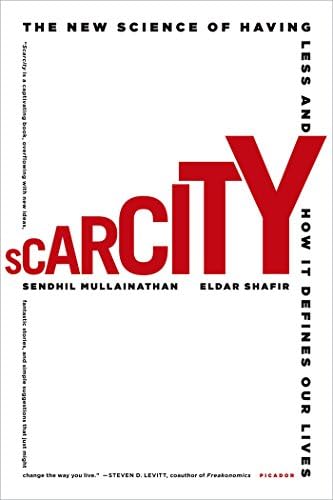
Behavioral economists like Sendhil Mullainathan represent new liberal thought, with Scarcity described as 'a path-breaking liberal book' examining how resource constraints affect agency.
The Subjection of Women by Mill, called one of 'the very best books of all time,' provides foundational insights on group subordination that influence contemporary social movements.
Modern 'woke' movements derive from Mill's liberal insights but can become illiberal through 'finger-wagging' and 'shaming people all the time,' undermining respect for persons.
AI and First Amendment Rights: Human Agency in Digital Age
AI systems lack First Amendment rights like 'a toaster' or 'vacuum cleaner,' but humans interacting with AI retain full speech protections against government restrictions.
Content-based restrictions on AI interactions violate human First Amendment rights: if government banned questions to AI about Israel, 'that's a violation of your free speech rights.'
Co-authored human-AI outputs receive First Amendment protection, with Sunstein noting his books Imperfect Oracle and Manipulation include AI quotations that would be protected.
Regulation depends on speech content and justification: political speeches using AI receive strongest protection, while commercial deep fakes may be regulable for fraud prevention.
Manipulation and Legal Innovation: Beyond Privacy Rights
Legal systems need a new 'right not to be manipulated' similar to privacy rights developed 'at the turn of the 20th century' when privacy became a recognized legal concept.
Manipulation differs from fraud: 'if the term is there, no fraud, just manipulation' when companies use hidden terms to trick users into unfavorable agreements.
Commercial manipulation should allow lawsuits for 'a very small monetary sum and a correction' when businesses use trickery that undermines deliberative capacities.
AI-generated political misinformation poses the greatest current threat: 'political information that makes it hard for people to have a clear sense of what the world is actually like.'
Dylan's Liberal Philosophy: Freedom Through Artistic Reinvention
Bob Dylan embodies liberal values through constant self-reinvention: 'this is America. You can change your name... I was born. I didn't think I was born kind of with the right name.'
'Like a Rolling Stone' functions as 'an anthem of freedom' where being 'like a complete unknown, like a rolling stone' becomes liberation rather than curse.
Blood on the Tracks represents liberal philosophy through 'smiling at impermanence' - accepting change as fundamental to freedom rather than seeking permanence.
Dylan's artistic evolution parallels liberal intellectual development: 'I like it when I think something I thought was wrong... I feel excited that I'm less wrong now' - Sunstein.






These notes may contain occasional inaccuracies. Learn how podbrain notes are made
More in Philosophy

Hollywood, The CIA & UFOs: The History Beyond Spielberg
Jun 20, 2026
What Our Fathers Teach Us, For Better Or Worse | Tom Junod
Jun 20, 2026
How To Love Your Country Without Lying About It | Ty Seidule
Jun 19, 2026
Recognize These Signs of Weakness | 7 Daily Habits That Will Change Your Life
Jun 15, 2026A Stoic's Guide To Looksmaxxing
Jun 14, 2026
.svg)